
Why Apple Essence Production Cost Matters to Investors and Advisers
Apple essence occupies a small but genuinely profitable niche inside the flavor and fragrance industry. It's the concentrated aromatic fraction recovered during apple juice processing, packed with the volatile compounds that give apple products their characteristic smell and taste. Beverage companies, bakery formulators, and flavor houses all buy it to reinforce or replicate apple character in products where fresh fruit simply isn't practical. That demand is steady, but the margins depend entirely on how efficiently a plant can recover and concentrate these volatiles, which is exactly why the Apple Essence Production Cost deserves serious scrutiny before any capital gets committed.
What makes this product interesting from an investment standpoint is its dependency on an existing juice processing operation. Essence recovery is almost always a byproduct stream, bolted onto a juice concentrate line rather than run as a standalone operation from raw apples. That changes the entire cost conversation. A business broker evaluating an essence recovery unit isn't just pricing equipment and labor, they're assessing how that unit interacts with an existing juice plant's throughput and seasonality. Corporate advisers and finance companies underwriting this kind of asset need to know whether the incremental revenue from essence recovery genuinely clears its incremental cost, or whether it's a marginal add-on that looks better on paper than in practice. A detailed cost report is the only way to answer that with confidence.
What a Production Cost Report for Apple Essence Actually Covers
A proper cost report for apple essence walks through the recovery process from incoming juice or pulp all the way to the concentrated, packaged final product. It starts with a process overview explaining how essence is stripped and concentrated from the apple juice stream, typically during the evaporation stage of concentrate production.
From there, raw material consumption gets quantified, showing how much apple juice or pulp input is needed to yield a given volume of essence, since recovery rates from this dilute aromatic fraction are naturally low. Utilities form a substantial section given how energy-intensive distillation and evaporation are; steam and electricity consumption often represent a meaningful share of total operating cost. Infrastructure costs cover the building space, tankage, and utility tie-ins needed to integrate an essence recovery unit into an existing juice processing footprint. Machinery and equipment costs, usually dominated by stripping columns, rectification columns, and refrigeration for essence condensation, form one of the largest capital lines. Manpower costs layer in the operators and quality staff needed to run and monitor the recovery and concentration process, which tends to require less labor than a standalone food manufacturing line since it's integrated into a larger juice operation. Packaging costs cover the drums or smaller specialty containers essence typically ships in, since it's sold in far smaller volumes than the juice concentrate it comes from. Transportation, finally, accounts for both the internal movement from the juice line to the essence recovery unit and outbound shipping to flavor houses and beverage manufacturers.
Structured this way, a report gives an investor a clear line of sight into where cost accumulates and where the real margin opportunity sits, rather than a single opaque number.
Raw Materials Required for Apple Essence Production
The primary input for apple essence isn't a separately purchased raw material in most operations, it's the juice stream generated during apple processing for concentrate or fresh juice production. Essence is recovered from the vapor released during the initial evaporation stages of juice concentration, meaning the "raw material" cost is really an opportunity cost tied to how that vapor stream is used.
That said, standalone essence recovery operations, or ones sourcing juice specifically for this purpose, do need to account for apple juice or pulp as a direct purchased input, and apple pricing itself is seasonal and variety-dependent, fluctuating with harvest yields and regional weather conditions. Water is used for cleaning and in some cases dilution during the concentration process. Refrigerants and cooling media are needed for the low-temperature condensation stage that captures the volatile aroma compounds without losing them to further processing heat.
Because the aromatic yield from apple juice is genuinely small, often well under one percent of total juice volume, the economics hinge heavily on processing enough volume to make the recovery unit worthwhile, which is why most commercial essence production happens as an add-on to large-scale juice operations rather than as a dedicated fruit-to-essence facility.
The Production Process Behind Industrial Apple Essence Manufacturing
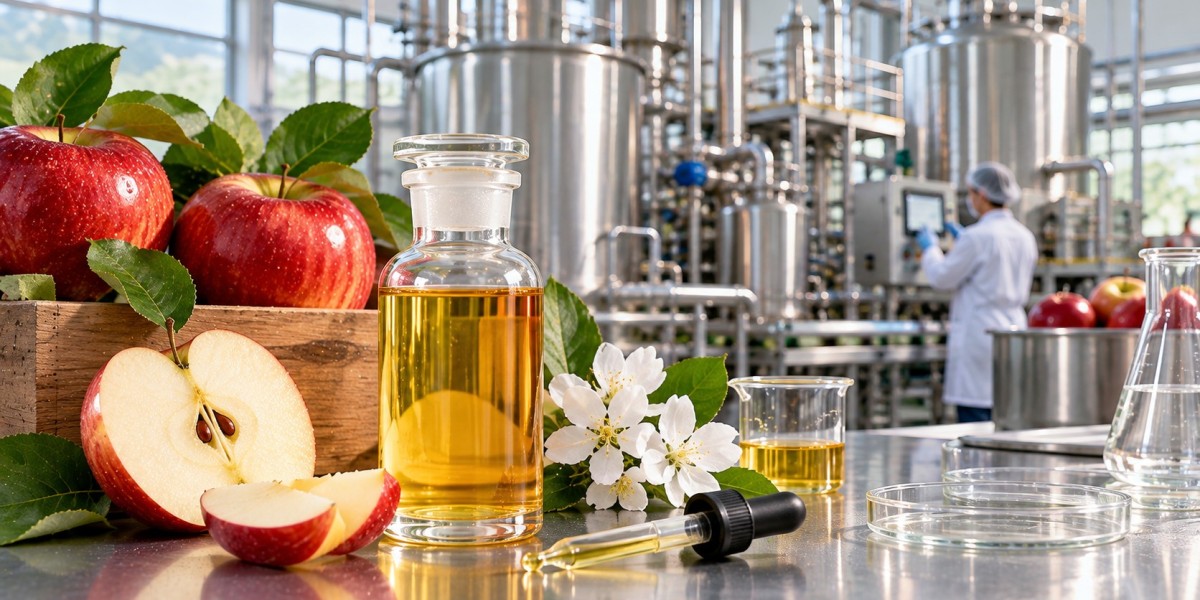
Apple essence recovery begins with fresh apple juice, typically the same juice stream feeding a concentrate evaporation line. Before full evaporation begins, the juice is passed through an essence recovery unit where it's gently heated to release the volatile aromatic compounds without degrading them through excessive thermal exposure.
The released vapor then moves into a stripping column, where the volatile aroma compounds are separated from the bulk water vapor through controlled distillation. This stripped vapor stream is comparatively dilute, so it moves on to a rectification stage where the aromatic compounds are concentrated further, often to a ratio many times stronger than the original juice. Precise temperature and pressure control through this stage matters enormously, since apple aroma compounds are heat-sensitive and can degrade or lose character if the process runs too hot or too long.
Once concentrated, the essence vapor is condensed under refrigeration, capturing the aromatic liquid while minimizing loss of the most volatile, and often most valuable, compounds. The condensed essence is then typically de-aerated to remove dissolved oxygen that could cause oxidative degradation during storage, before being packaged, usually in smaller sealed containers designed to limit air exposure. Does the base juice stream, after essence has been stripped, still work for concentrate production? Generally yes, which is exactly why essence recovery makes economic sense as an add-on rather than a cost burden, the juice continues down its normal concentration path largely unaffected.
Capital Investment and Plant Setup Cost Factors
Capital costs for an apple essence recovery operation are shaped heavily by whether it's being added to an existing juice plant or built as part of a new facility, and that distinction changes the numbers substantially.
Land costs are often minimal or nonexistent for retrofit installations, since the unit slots into space within an existing juice processing footprint. Equipment costs dominate the capital picture regardless of setup type, covering the stripping and rectification columns, refrigeration systems for condensation, and de-aeration equipment, all of which need to be sized appropriately relative to the juice throughput feeding them. Engineering and installation costs cover the piping and integration work required to tie the essence recovery unit into the existing evaporator and juice handling systems, and this integration complexity is often underestimated in early cost planning.
Working capital needs are relatively modest compared to a standalone manufacturing operation, since the essence recovery process doesn't require large raw material inventories the way a dedicated fruit-processing line would. Financing structure still matters, though, particularly for smaller processors where the essence unit represents a meaningful incremental capital outlay relative to their existing juice operation's balance sheet.
One detail worth flagging for anyone evaluating this investment: because essence recovery units are almost always sized to a specific juice line's throughput, retrofitting one onto an undersized or highly seasonal juice operation can leave expensive equipment underutilized for large portions of the year.
Operating Cost Factors That Shape Long-Term Profitability
Once running, an essence recovery operation's cost structure looks quite different from a standalone manufacturing line, since much of its fixed infrastructure cost is already absorbed by the host juice plant. Variable costs are dominated by energy, specifically steam for the stripping stage and refrigeration for condensation, both of which scale with the volume of juice processed through the recovery unit.
Fixed costs include maintenance of the specialized distillation and refrigeration equipment, along with a smaller allocation of general plant overhead. Labor costs tend to be modest relative to other food processing operations, since essence recovery is typically monitored by existing juice plant staff rather than requiring a fully separate workforce, though quality control does need dedicated attention given how sensitive aroma compounds are to processing conditions.
Maintenance costs run higher than one might expect for a unit this size, largely because distillation columns and refrigeration systems handling volatile, sometimes corrosive aromatic compounds require more frequent servicing than standard juice processing equipment. Financing costs and depreciation apply to the specialized equipment base, and because this equipment is fairly specific in function, its resale value if a plant needed to exit the business is often lower than more generalized food processing machinery, which is worth factoring into any long-term investment model.
What Pushes Apple Essence Production Costs Up or Down
A handful of factors reliably explain why cost per unit of essence varies from one operation to another.
Feedstock volume and seasonality sit at the center of this. Since essence recovery is a byproduct process, it depends on a steady, sufficiently large flow of apple juice through the host plant, and operations with shorter processing seasons see their essence recovery economics suffer from underutilized equipment during the off-season. Apple variety and quality matter too, since aroma compound concentration and profile differ meaningfully between apple cultivars, which affects both yield and the market value of the resulting essence.
Technology and process efficiency shift costs considerably; more advanced stripping and rectification systems can recover a higher percentage of available aroma compounds and produce a more concentrated, higher-value essence from the same juice volume. Scale plays its usual role, though with a twist here, since scale in this case is tied to the host juice plant's capacity rather than the essence unit standing alone. Regional factors, including energy pricing and the availability of skilled operators familiar with distillation processes, also swing the total cost baseline, along with proximity to flavor house customers who often prefer shorter supply chains for a product this sensitive to degradation during transport.
Frequently Asked Questions
Q: Can apple essence be produced without an existing juice operation? Technically yes, but it's rarely done commercially. The economics depend on processing large volumes of apple juice to recover a very small fraction of aromatic essence, so standalone facilities built purely for essence production almost never pencil out compared to add-on units integrated with existing juice concentrate plants.
Q: How much does energy really factor into total production cost? Quite a bit, honestly. The stripping and rectification stages rely on steam-driven distillation, and the condensation stage needs sustained refrigeration, both of which are genuinely energy-intensive relative to the small output volume of essence produced. It's one of the largest controllable cost levers in this process.
Q: Does apple variety affect production cost, or just product quality? Both, actually. Different apple varieties yield different concentrations of aroma compounds, which affects how much juice needs to be processed to hit a target essence yield. Lower-yielding varieties push effective per-unit cost higher even if the base processing steps stay identical.
Q: Is essence recovery worth it for a smaller juice processor? It depends heavily on throughput. Smaller operations may find the capital cost of a dedicated stripping and rectification system hard to justify against the essence volume they'd actually recover, especially with seasonal processing gaps. Larger, higher-throughput plants generally see better returns on the same equipment investment.
Q: Why would a finance company want a detailed cost report for something that sounds like a minor byproduct business? Because "minor" doesn't mean low-risk. The capital involved is specialized and not easily repurposed, and the revenue depends on a fairly narrow set of buyers in the flavor industry. A detailed report helps lenders understand utilization risk, energy cost exposure, and how the essence unit's economics hold up if the host juice plant's throughput changes.
Why a Professional Cost Report Should Guide Your Next Decision
Evaluating an apple essence recovery investment without a rigorous cost breakdown means missing the details that actually determine whether the unit pays for itself. The headline concept, capturing valuable aroma compounds that would otherwise be lost during juice processing, sounds appealing on its face. But the real economics live in energy consumption, equipment utilization tied to a host plant's seasonality, and how efficiently the recovery process captures and concentrates a genuinely small yield fraction.
For investors, business brokers, corporate advisers, and finance companies, a well-documented Apple Essence Production Cost analysis turns a niche byproduct opportunity into something that can be properly underwritten. It clarifies where margin is real, where utilization risk hides, and whether a proposed unit's assumptions actually hold up against the host operation's throughput profile. Whether the goal is structuring an add-on investment, advising a juice processor on expansion, or underwriting the capital behind it, that level of detail is what turns a plausible-sounding pitch into a properly evaluated decision.