
The rapid development of blockchain technology is transforming how financial assets and ownership rights are represented, transferred, and managed. While cryptocurrencies and digital-native assets initially dominated the blockchain landscape, attention is increasingly shifting toward real-world assets, commonly known as RWAs. These include tangible and financial assets such as real estate, commodities, private credit, government securities, infrastructure, art, and intellectual property.
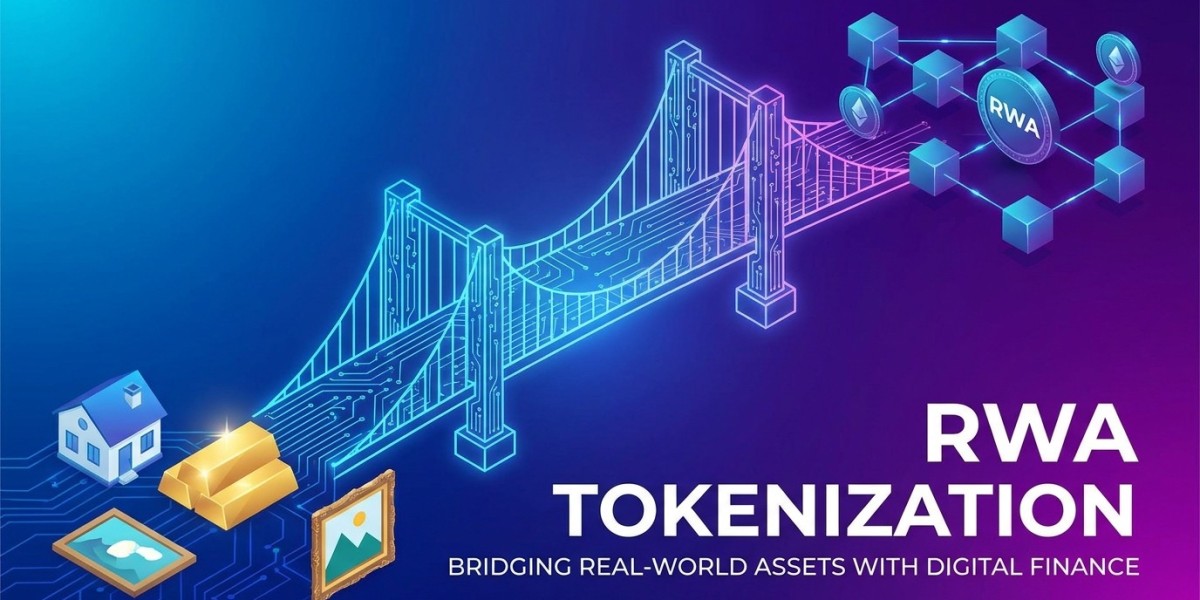
RWA tokenization refers to the process of representing rights to real-world assets through blockchain-based digital tokens. By connecting traditional assets with blockchain infrastructure, tokenization has the potential to improve transparency, automate administrative processes, expand investment accessibility, and create more flexible financial markets. However, successful tokenization requires far more than simply creating a digital token. Legal ownership, regulatory compliance, custody, valuation, investor rights, cybersecurity, and market liquidity all play critical roles.
As financial institutions, asset managers, technology companies, and startups explore blockchain-based financial infrastructure, understanding RWA tokenization has become increasingly important. This guide explains how the process works, why businesses are adopting it, the opportunities and challenges involved, and how organizations can build effective tokenization ecosystems.
What Is RWA Tokenization?
RWA Tokenization is the process of creating blockchain-based digital representations of ownership rights, economic interests, or claims associated with physical or traditional financial assets.
In conventional markets, ownership is generally documented through legal agreements, certificates, registries, or centralized databases. Tokenization introduces a blockchain-based layer that can represent specific rights connected to an underlying asset. Depending on the structure, one token may represent an ownership interest, a claim on cash flows, a share in a legal entity holding the asset, or another legally defined economic right.
For example, consider a commercial property valued at $10 million. Instead of requiring a single investor to purchase the entire property, a tokenization structure could potentially divide the economic interests into a large number of digital units. Investors could acquire tokens representing defined interests in the legal structure that owns or controls the property, subject to applicable securities laws and other regulations.
The blockchain itself does not necessarily change the underlying legal ownership. Rather, it can provide a digital infrastructure for recording, transferring, and managing rights that are legally established outside the blockchain. This distinction is crucial because tokenization is ultimately a combination of legal structuring, financial engineering, technology, and asset management.
How Does RWA Tokenization Work?
The tokenization process generally begins with identifying an asset that can be legally and economically represented through a blockchain-based structure. The asset could be a property, bond, private credit instrument, commodity, artwork, or another eligible investment.
The next step involves establishing the legal framework. A special-purpose vehicle or another legal entity may be created to hold the underlying asset, depending on the jurisdiction and transaction structure. The digital tokens are then designed to represent specific rights associated with that entity or asset.
Once the legal and technical framework is established, blockchain developers create smart contracts that govern token issuance and transfers. These smart contracts can automate certain predefined functions, such as distribution calculations, transfer restrictions, or compliance-related rules.
Investors may then acquire tokens through an approved platform. Depending on the asset and jurisdiction, investors may be required to complete identity verification, accreditation checks, or other compliance procedures.
The lifecycle can be broadly understood as:
- Asset identification and due diligence
- Legal and regulatory structuring
- Asset valuation and documentation
- Token design and economic modeling
- Smart contract development
- Compliance and investor onboarding
- Token issuance
- Distribution and secondary trading
- Ongoing reporting and asset management
This process demonstrates why tokenization should not be viewed simply as a blockchain development project. It requires cooperation between legal experts, financial institutions, asset managers, technology providers, custodians, and compliance professionals.
Which Real-World Assets Can Be Tokenized?
Almost any asset with clearly definable ownership or economic rights may be considered for tokenization, although the feasibility depends heavily on local laws and market infrastructure.
Real Estate
Real estate is one of the most frequently discussed use cases. Properties can be represented through tokenized ownership interests or investment structures, potentially allowing investors to participate with lower minimum investment amounts.
Government and Corporate Bonds
Traditional fixed-income securities are another important area. Tokenized bonds can potentially streamline issuance, settlement, recordkeeping, and payment processes. Financial institutions have already experimented with blockchain-based bond issuance, demonstrating the potential for digital infrastructure to complement traditional capital markets.
Private Credit
Private credit and lending markets can benefit from tokenization by creating transparent records of loan participation and automating certain payment processes. However, credit underwriting and legal enforceability remain essential.
Commodities
Gold, precious metals, agricultural products, and other commodities may be represented through digital tokens linked to physical reserves or contractual claims. The credibility of such systems depends heavily on reliable custody and independent verification.
Art and Collectibles
High-value artwork and collectibles can potentially be divided into investment interests through tokenization. This may allow investors to gain exposure to assets that were historically difficult to access, although valuation, provenance, insurance, and liquidity remain significant concerns.
Infrastructure and Alternative Assets
Infrastructure projects, renewable energy facilities, intellectual property, and other alternative assets may also benefit from tokenization. These assets often generate long-term cash flows that could potentially be represented through structured digital instruments.
Why Are Businesses Exploring RWA Tokenization?
The strongest argument for tokenization is not simply that assets become "digital." Its potential value comes from improving the infrastructure surrounding ownership, investment, settlement, and asset administration.
Traditional financial markets often involve multiple intermediaries. Transactions can require brokers, custodians, registrars, clearing systems, transfer agents, and settlement institutions. These systems provide important safeguards but can also introduce complexity and operational costs.
Blockchain technology can create a shared record of transactions and ownership-related information. When properly designed, this can reduce reconciliation requirements and improve visibility across participating parties.
Tokenization may also support greater investment accessibility. An asset that traditionally requires a large minimum investment could potentially be structured into smaller investment units. However, fractionalization does not automatically make an asset legally available to everyone. Regulatory restrictions, investor eligibility requirements, and transfer limitations still apply.
Another advantage is programmability. Smart contracts can automate predefined actions based on transparent rules. For example, a tokenized investment structure could potentially automate certain distribution calculations or enforce transfer restrictions.
The result is a potential shift from manually managed asset administration toward programmable financial infrastructure.
RWA Tokenization Company: What Services Should You Expect?
A professional RWA Tokenization Company typically combines blockchain expertise with financial, legal, and compliance considerations. The exact service offering varies, but organizations exploring tokenization often require support across several stages.
A capable provider may assist with tokenization strategy, asset structuring, blockchain selection, token economics, smart contract development, investor platforms, wallet integration, compliance features, and administrative dashboards.
The choice of blockchain infrastructure is also important. Developers must evaluate transaction costs, scalability, security, ecosystem maturity, interoperability, and regulatory requirements. Public blockchains can provide transparency and broad accessibility, while permissioned networks may offer stronger control over participant access.
Smart contract security is another critical consideration. Token contracts should undergo rigorous testing and independent security audits before deployment. A vulnerability in a smart contract can create significant financial and reputational risks.
A strong RWA Tokenization Company should therefore approach the project as a complete ecosystem rather than merely delivering a token contract. The technology should align with the asset's legal structure, investor requirements, compliance obligations, and long-term operational strategy.
The Role of Regulation and Legal Compliance
Regulation is one of the most important aspects of RWA tokenization. Depending on the asset and jurisdiction, tokenized interests may fall under securities laws or other financial regulations.
A token that represents an investment contract, ownership interest, or entitlement to financial returns may be regulated differently from a utility token or digital collectible. Businesses cannot determine regulatory treatment solely based on the technical characteristics of a token.
Compliance may involve:
- Know Your Customer procedures
- Anti-Money Laundering requirements
- Investor eligibility checks
- Securities regulations
- Data protection requirements
- Tax considerations
- Custody arrangements
- Transfer restrictions
The legal structure should be established before the technical architecture is finalized. This prevents situations where a technically functional tokenization platform cannot legally operate in its intended market.
Benefits and Limitations of RWA Tokenization
RWA tokenization offers several potential advantages, but these should be evaluated realistically.
Potential Benefits
Improved transparency: Blockchain records can provide greater visibility into transactions and asset-related activities.
Operational efficiency: Smart contracts may automate selected administrative processes.
Fractional investment: Assets can potentially be divided into smaller investment units, subject to legal restrictions.
Global accessibility: Properly regulated platforms may reach investors across multiple jurisdictions.
Faster settlement: Blockchain-based infrastructure may reduce settlement times in certain transaction models.
Programmability: Digital assets can incorporate predefined rules and automated functions.
However, tokenization also introduces challenges. Blockchain does not automatically guarantee liquidity. A tokenized property may still have few buyers. Similarly, fractional ownership does not eliminate valuation uncertainty or market risk.
There is also an "oracle problem" involving the connection between blockchain records and real-world information. If a token represents a physical asset, the system must reliably verify that the asset exists, remains properly valued, and is controlled by the appropriate legal entity.
Custody is another major concern. Token holders may own digital representations, but the underlying physical asset still requires secure management. A token representing gold is only as credible as the custody and verification mechanisms supporting that claim.
A Practical Example of Tokenizing Real Estate
Consider a developer who owns a commercial building valued at $20 million. The developer establishes a legal entity that owns the property and creates a compliant investment structure. Digital tokens are issued to represent defined economic interests in that structure.
Investors complete the required onboarding and compliance procedures before purchasing tokens. Smart contracts manage token transfers according to established rules, while rental income generated by the property is distributed according to the legal terms of the investment.
In this scenario, blockchain does not replace property management, legal ownership, or regulatory oversight. Instead, it provides a digital layer for managing investment interests.
The example demonstrates the importance of integrating multiple systems. Property valuation, tenant management, rental collection, legal ownership, investor reporting, compliance, and blockchain infrastructure must work together. Tokenization is successful only when the entire ecosystem is reliable.
Challenges That Could Limit Mass Adoption
Despite its potential, RWA tokenization faces several obstacles before it can become a mainstream component of global financial markets.
The first is regulatory fragmentation. Different jurisdictions may classify and regulate tokenized assets differently, making cross-border operations complicated.
The second challenge is interoperability. Tokenized assets may exist across different blockchain networks, financial platforms, and custody systems. Without effective interoperability, liquidity can become fragmented.
Third, investors need confidence in the connection between the token and the underlying asset. Independent audits, legal documentation, transparent reporting, and reliable custodians are essential.
Finally, adoption depends on market infrastructure. Tokenization becomes significantly more valuable when investors have efficient platforms for purchasing, holding, transferring, and potentially trading assets. Without sufficient participation, tokenized markets may remain illiquid despite strong technical foundations.
The Future of RWA Tokenization
The future of RWA tokenization is likely to involve increasing integration between traditional finance and blockchain infrastructure. Rather than completely replacing existing financial systems, tokenization may gradually modernize selected components of them.
Financial institutions may use blockchain for settlement and recordkeeping, while investment managers may develop tokenized funds and private-market products. Real estate companies may explore fractional investment structures, and businesses may tokenize debt or other financial instruments.
The most successful projects will likely be those that focus on genuine efficiency improvements rather than speculative token launches. Regulatory clarity, institutional adoption, interoperability, and investor protection will be critical factors in determining the speed of adoption.
As blockchain infrastructure matures, tokenized assets could become an increasingly important part of the broader digital economy. The long-term opportunity lies not merely in putting assets on a blockchain but in creating a more connected, transparent, programmable, and efficient financial ecosystem.
Conclusion
RWA tokenization represents a significant evolution in how real-world assets can be structured, managed, and accessed through blockchain technology. From real estate and bonds to commodities and private credit, tokenization can potentially improve transparency, fractionalize investment opportunities, automate processes, and modernize traditional financial infrastructure. However, successful implementation requires careful attention to legal frameworks, regulatory compliance, asset custody, smart contract security, valuation, and liquidity. Businesses considering this transformation should work with experienced technology and blockchain professionals who understand both the opportunities and complexities of the sector. Blockchain App Factory provides best services for businesses seeking reliable RWA tokenization, blockchain development, and customized digital asset solutions designed to support innovative real-world asset ecosystems.