
A purchase manager once told us he picked a bearing supplier the same way he picked printer paper — lowest quote wins, reorder when it runs out. Six weeks later a gearbox was down for four days because the Spherical Roller Bearings he'd bought carried the right part number and the wrong internal clearance for his plant's operating temperature. Nobody checked. That's the thing about choosing bearings: the mistake almost never shows up on the invoice. It shows up on the maintenance log, months later, wearing a different name.
Specification — What "Right" Actually Means on a Spec Sheet
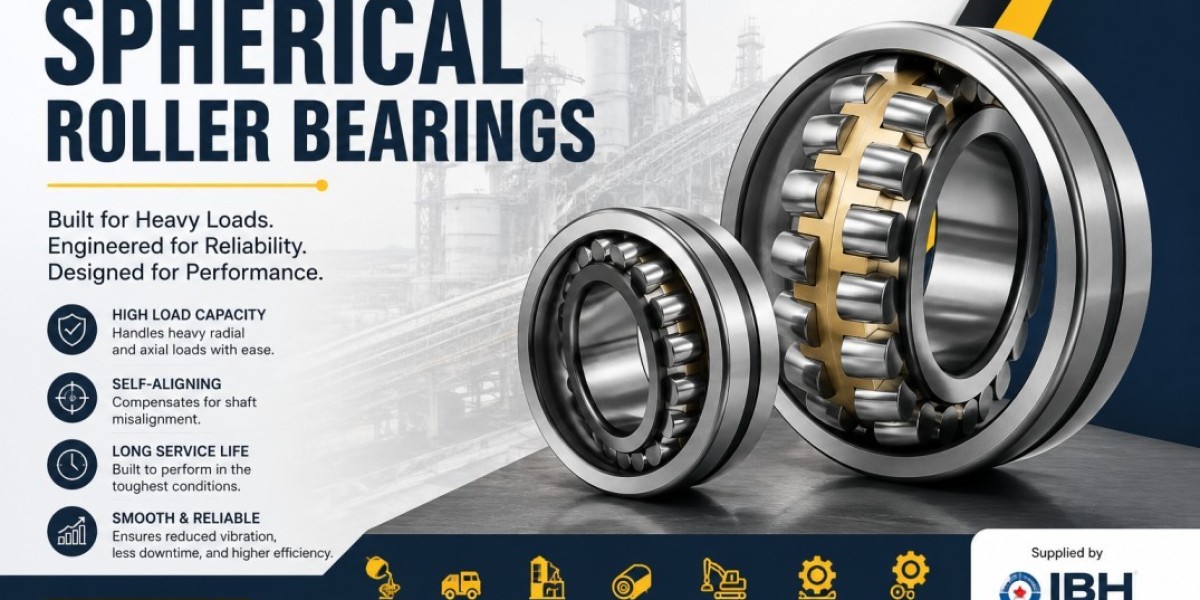
Choosing correctly starts with understanding what you're actually choosing between. A spherical roller bearing uses two rows of barrel rollers on a shared spherical outer raceway, which lets it carry heavy radial and axial load together and tolerate shaft misalignment that would finish off a standard bearing fast.
Bore Size Isn't the Whole Decision
Most buyers stop at bore diameter and load rating. Nachi's range across the 213, 222, 223, 230, 231, 232, and 240 series covers bore sizes from around 25 mm up past 750 mm, and picking within that range by size alone gets you maybe halfway to the right bearing.
The Clearance Class Question Nobody Asks
Here's what actually separates a correct choice from a technically-matching one: radial internal clearance. CN or C3 works for most standard-temperature jobs. Run a hot process line, or mount the bearing with an interference fit, and you likely need C4 or higher — otherwise the bearing runs pre-loaded from the first hour and burns through fatigue life that was never supposed to disappear that fast. Nobody flags this at order time. It's the single most common reason a "correctly sized" bearing still underperforms.
Sealed vs. Open — Choose Based on the Floor, Not the Catalogue
Open bearings are the cheaper, faster-to-source option, and they're fine — genuinely fine — in clean, controlled environments. Sealed and shielded variants exist for mining, cement, and paper processing, where contamination, not load, usually decides how long the bearing survives.
Objective — 5 Criteria for Choosing a Supplier You Can Actually Trust
Choosing the right bearing means nothing if the supplier behind it can't back it up. Here's what to actually check:
Manufacturer traceability. A supplier who hands over batch numbers and a certificate tracing straight back to Nachi is doing this properly. "We source from various channels" isn't traceability — it's a way of avoiding the question.
A defect policy you can read, not one you're told about. Timelines and replacement terms in writing beat "we'll handle it case by case" every time. That phrase isn't flexibility. It's a negotiation you'll lose the day your shipment actually has a problem.
Do they ask before they quote, or after? A good supplier wants to know shaft speed, load direction, and contamination exposure before pricing anything. One who quotes off a bare part number is selling paper, not a solution.
Confirmed stock, not a catalogue PDF. Ask them to confirm actual availability on your exact size before you commit. A wide-looking catalogue tells you what they could theoretically get, not what they have.
How openly they talk about counterfeits. Suppliers who walk you through etching, seals, and dealer certification without being asked have nothing to hide. The ones who go quiet or defensive usually do.
Benefits — What Choosing Correctly Actually Protects
Get the clearance class and sealing right, and the bearing runs its full fatigue life instead of failing early from preload or contamination — which is worth more to a maintenance schedule than most people realize until they've lived through the alternative.
The cost math changes too, once you actually do it. A bearing that's ₹1,500 cheaper and dies in five months isn't cheaper at all — measure per operating hour instead of per invoice line, and the "expensive" bearing usually wins by a wide margin.
Choosing a spherical roller bearing over alternatives also buys you real misalignment tolerance, somewhere in the 2–3° range, which matters enormously on long shaft runs where perfect alignment exists only in the CAD drawing. A few more worth naming quickly: one component handling both radial and axial load instead of two separate bearing types to stock and track; a paper trail if something does fail, assuming the supplier could actually trace the stock in the first place; and replacement cycles that follow a curve you can plan a maintenance calendar around, instead of failures that show up whenever they feel like it.
Availability — Sourcing the Right Bearing, at the Right Speed, Across India
Choosing well also means choosing someone who can actually get it to you in time — which is a supply chain question, not just a technical one. We operate out of Delhi NCR, which keeps us on workable logistics lanes into the steel belt of eastern India, cement clusters up north, and manufacturing hubs further west.
Worth saying plainly: if you're in the paper and pulp belt, or somewhere in the mining regions further from NCR, add a day or two onto whatever the courier tracking estimate shows. Heavy bearing housings don't travel at parcel speed, and buyers who plan around the optimistic delivery date are the same ones improvising with a mismatched interim bearing three weeks later.
We're an authorized Nachi Spherical Roller Bearings supplier and distributor with dispatch reach across India, not a single-city outfit dressed up to sound bigger on a website.
About Us
We're IBH Bearings, working as an authorized Nachi distributor across ball, cylindrical roller, tapered roller, spherical roller, and plummer block housing lines. The reason we ask so many questions before quoting isn't procedure for its own sake — it's because we kept seeing the same complaint land back on our desk: a bearing matching every number on the spec sheet, still failing early, because nobody had asked what clearance class the application actually called for.
So we ask now. Shaft speed, load direction, ambient temperature, contamination exposure. A part number by itself doesn't tell us enough to make a good recommendation, and we'd rather ask an extra question upfront than sell someone the wrong bearing twice.
Call to Action
Tell us the bearing size or part number, the application — machine type, shaft speed, operating environment — and how many you need. We'll confirm pricing and stock availability within one business day. No minimum order on standard catalogue sizes; bulk pricing applies above 10 units per SKU. Reach IBH Bearings Pvt. Ltd. at +91-11-40110440, email info@ibhindia.in, or send your enquiry through ibhindia.in.
Conclusion
Choosing the right Spherical Roller Bearings isn't really about the bearing at all — it's about whether anyone asked the right questions before the order went out. Clearance class, sealing, load direction: none of it shows up on a quick comparison of price and delivery date, and that's exactly why so many buyers get it wrong the first time. The plants that stop repeating the same failure are the ones that started treating bearing selection as an engineering decision, not a procurement checkbox.
FAQs
What's the biggest mistake buyers make when choosing Spherical Roller Bearings?
Stopping at bore size and load rating without checking clearance class or sealing type against the actual operating environment. That's how a bearing that matches every number on paper still fails in a few months.
How do I choose between different Nachi Spherical Roller Bearings suppliers in India when the quotes look similar?
Ask for manufacturer batch traceability and a written defect policy from each one. The gap between a vague answer and a confident one tells you more than the price difference ever will.
Are Nachi Spherical Roller Bearings distributors and dealers in India held to the same standards?
Not necessarily — the terms get used loosely across the trade, so don't assume one label means more accountability than the other. What actually matters is whether they're genuinely authorized with traceable stock, regardless of what they call themselves.
How do I choose the right clearance class for a high-temperature application like a cement kiln?
This needs a conversation, honestly, not a guess off a chart — ambient temperature, mounting method, and interference fit all factor in. We'd rather ask a few questions upfront than sell a bearing that runs hot and fails early.
What lead time should I expect from Nachi Spherical Roller Bearings dealers in India once I've chosen a bearing?
For sizes we hold in ready stock, 24 to 48 hours to dispatch. Less common bore sizes take longer, and we'll tell you that upfront rather than promise a date we're not confident about.