
Let me start with something I see almost every week. A patient walks in, holding their neck stiffly. They tell me they have been ignoring a dull ache for months. Sometimes the pain shoots down their arm. Sometimes their fingers feel numb. They thought it was stress or a bad pillow. But it is not going away.
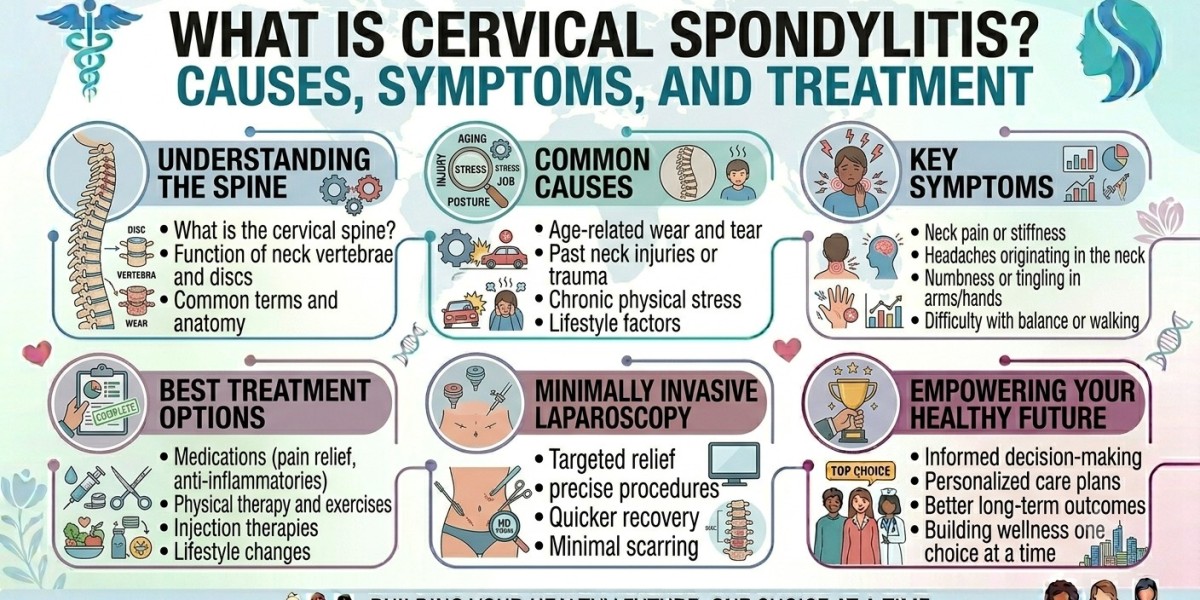
That patient often has cervical spondylitis. Let me explain in simple terms. Your neck has seven small bones called vertebrae. Between them are discs that act as cushions. As you age, those discs lose water and become thinner. Your body tries to compensate by growing extra bone. That extra bone can press on nerves or your spinal cord. That is cervical spondylitis.
Most people with this condition never need surgery. But ignoring it can make it worse. Let me walk you through what you need to know.
What Causes Cervical Spondylitis?
Age is the biggest factor. By 60, most people have some degree of cervical spondylitis on X-ray. Many have no symptoms. For those who do, several things contribute.
Repetitive neck strain is a major factor. Jobs that require looking down for hours – dentists, jewellers, surgeons, people on computers or phones – put constant stress on your neck. Your head weighs about five kilograms. When you tilt it forward, the load on your neck increases dramatically.
Past neck injuries can accelerate things. A whiplash injury from a car accident or a fall can start degeneration earlier than normal. Genetics play a role too. Some people develop this in their thirties. Others reach their seventies with a perfectly healthy neck.
Symptoms You Should Not Ignore
Symptoms come on slowly. That is why people wait so long to seek help.
Neck pain is the most common. It might be a dull ache or a sharp stab. It often gets worse with activity or after sitting in one position too long. It might improve when you lie down.
Stiffness is another early sign. You might have trouble turning your head to check your blind spot while driving. You might wake up unable to move your neck freely.
Pain that spreads to your shoulders, shoulder blades, or down your arm is a red flag. That means a nerve is being compressed. You might also feel numbness, tingling, or pins and needles in your arm, hand, or fingers.
Weakness in your arm or hand is more serious. You might drop things. You might have trouble buttoning your shirt or gripping a pen.
When Is It an Emergency?
Most cervical spondylitis is not an emergency. But if you have difficulty walking, trouble with balance, loss of bladder or bowel control, or weakness in both legs, go to an emergency room immediately. That could be spinal cord compression. It is rare but serious.
How Is It Diagnosed?
Diagnosis starts with a conversation. Your doctor will ask about your symptoms, your job, your past injuries, and your family history. Then they will examine you. They will check your neck range of motion, arm strength, reflexes, and sensation in your hands.
X-rays show the bones of your neck. They reveal bone spurs, loss of disc height, or narrowing between vertebrae. MRI is the best test for soft tissues. It shows discs, nerves, and the spinal cord. If you have significant symptoms or weakness, your doctor will likely order an MRI.
Treatment Options: From Simple to Surgical
Surgery is rarely the first option. Most people improve without it.
Physical therapy is the cornerstone. A good therapist teaches you exercises to strengthen neck muscles and proper posture. Many patients see significant improvement with therapy alone.
Medications help control pain and inflammation. Over-the-counter NSAIDs like ibuprofen or naproxen are often enough. For more severe pain, your doctor may prescribe muscle relaxants or stronger medications.
Activity modification is essential. If your job requires looking down all day, raise your computer screen to eye level. Take frequent breaks. Stretch your neck every hour.
Cervical traction gently stretches your neck to create more space between vertebrae. Epidural steroid injections can provide temporary relief for nerve pain. The effect lasts weeks to months.
When Is Surgery Needed?
Surgery is reserved for specific situations. If you have progressive weakness in your arm or hand, surgery may prevent permanent damage. If you have spinal cord compression causing trouble walking or loss of bladder control, surgery is necessary. If you have tried nonsurgical treatments for six months to a year with no improvement and you are still in significant pain, surgery is an option.
The most common surgeries are anterior cervical discectomy and fusion (ACDF) and cervical disc replacement. Both remove the damaged disc and take pressure off the nerve or spinal cord.
What You Can Do at Home
Pay attention to your posture. Keep your ears aligned with your shoulders. Do not let your head drift forward. Set up your workspace so your screen is at eye level. Do not cradle your phone between your ear and shoulder.
Take breaks. Every 30 minutes, look away from your screen. Tilt your head slowly. Roll your shoulders back. Stand and walk.
Sleep smart. Use a supportive pillow. Do not sleep on your stomach. It twists your neck. Back or side sleeping is better.
Apply heat for stiff muscles. Apply ice for sharp pain.
When to See a Specialist
If you have tried home care for a few weeks and symptoms are not improving, or if pain, numbness, or weakness is getting worse, you need a specialist.
If you are in Ranchi, you can ask for treatment from neurosurgeon in Ranchi who specialises in spine conditions. They will perform a thorough examination, order the right imaging, and explain your options. For ongoing management or severe symptoms, you can book an appointment with neurosurgeon in jharkhand who offers everything from physical therapy referrals to advanced surgical care.
Final Thoughts from My Desk
Cervical spondylitis is common, especially as we age. Most people manage it well with simple measures – good posture, regular breaks, physical therapy, and occasional medication. Surgery is needed only in a minority of cases.
Do not ignore symptoms that are getting worse. Numbness that spreads, weakness that progresses, or pain that interferes with your daily life deserves attention. Your neck supports your head every waking moment. Take care of it. It is the only one you will ever have.