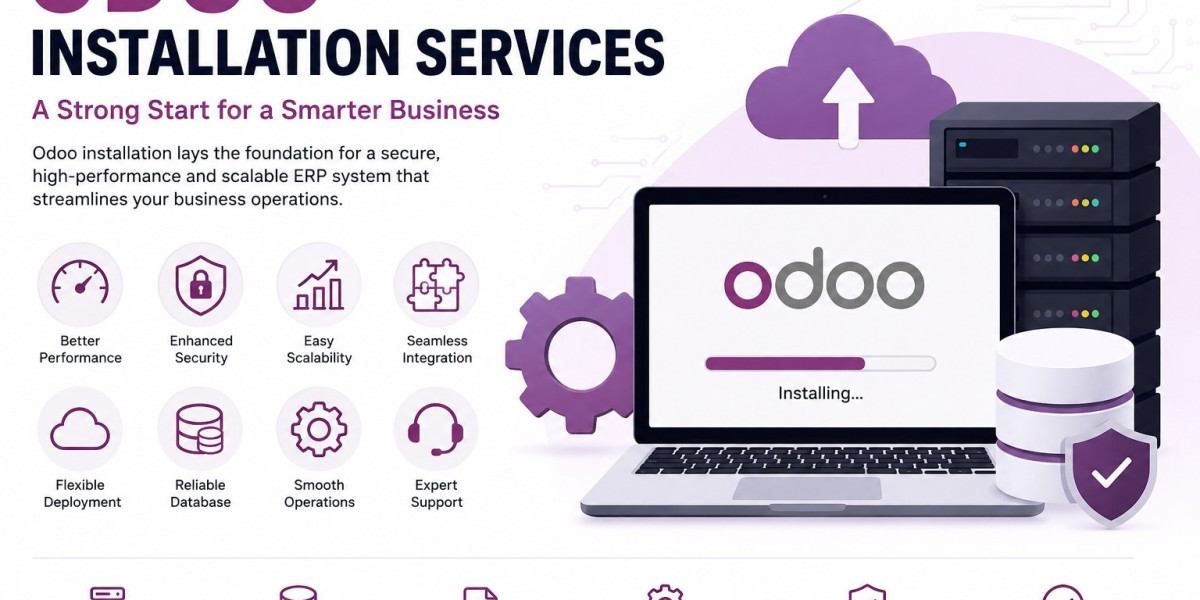

Odoo has become one of the leading ERP platforms because it combines multiple business functions into a single, user-friendly system. However, the success of any ERP platform begins with proper installation and configuration.
Odoo installation is more than simply downloading software. It involves server preparation, database setup, security configuration, module management, and performance optimization. A professionally installed Odoo environment ensures stability, speed, and flexibility for businesses of all sizes.
Understanding Odoo Installation
Odoo installation refers to the complete deployment process of the Odoo ERP system on a server, cloud infrastructure, or local environment. The goal is to create a stable and secure platform where businesses can manage operations efficiently.
The installation process includes:
- Configuring the operating system
- Installing required dependencies
- Setting up PostgreSQL databases
- Deploying Odoo applications
- Optimizing server performance
- Securing the ERP environment
A properly installed ERP system reduces technical problems and creates a reliable foundation for future business expansion.
Why Odoo Installation Matters
Many businesses underestimate the importance of correct ERP deployment. Improper installation can lead to slow performance, security risks, system crashes, and integration failures. That is why companies often prefer professional Odoo installation services.
Better Operational Efficiency
A correctly installed Odoo system works faster and handles business processes more smoothly. Employees can access data quickly, manage tasks efficiently, and avoid unnecessary delays.
Enhanced Data Security
ERP systems contain sensitive company information such as financial records, customer details, and inventory data. Professional installation includes security measures that protect business data from unauthorized access.
Easy Scalability
As companies grow, their ERP systems must support additional users, applications, and workflows. A well-planned Odoo installation allows businesses to scale operations without performance issues.
Seamless Integration
Odoo can connect with payment gateways, shipping providers, eCommerce platforms, CRM systems, and third-party tools. Proper installation ensures these integrations work smoothly.
System Requirements for Odoo Installation
Before deployment, businesses should ensure their infrastructure meets the necessary technical requirements.
Supported Operating Systems
Odoo performs best on Linux-based operating systems such as:
- Ubuntu
- Debian
- CentOS
Linux environments are generally preferred because they provide better stability, performance, and security.
Essential Software Components
Several tools and dependencies are required during installation, including:
- Python
- PostgreSQL
- Git
- Node.js
- Pip libraries
These components support reporting, database management, and module functionality within Odoo.
Different Methods of Odoo Installation
Businesses can choose from several installation approaches depending on their operational needs.
On-Premises Installation
This method involves installing Odoo on a company’s internal server. It offers greater control over infrastructure and data management.
Cloud Deployment
Cloud-based installation allows users to access the ERP system remotely through the internet. It provides flexibility, automatic backups, and easier maintenance.
Dedicated Server Setup
Large organizations often prefer dedicated servers for higher performance, better security, and resource isolation.
Docker-Based Installation
Docker containers simplify deployment and make environment management easier for developers and IT teams.
Main Steps in the Odoo Installation Process
Installing Odoo involves several technical stages that must be completed carefully to ensure system stability.
Preparing the Server
The installation begins with updating the operating system and configuring server settings for optimal performance.
Database Configuration
Odoo relies on PostgreSQL databases. Administrators create secure database users and configure permissions during this stage.
Installing Required Packages
Necessary software libraries and development tools are installed to support Odoo operations.
Deploying Odoo Source Files
The latest version of Odoo is downloaded and configured according to business requirements.
Configuring Odoo Settings
The configuration file defines database connections, add-on paths, ports, and system parameters.
Starting the Odoo Service
After setup is complete, the Odoo server is launched and tested for functionality.
Web Server Integration
Many deployments use Nginx or Apache as reverse proxies to improve speed and security.
SSL and Security Setup
SSL certificates encrypt data transmission and help create a secure ERP environment.
Common Challenges During Odoo Installation
Although Odoo is flexible and powerful, installation can become complex without proper technical knowledge.
Dependency Conflicts
Incompatible software versions may cause installation failures or module errors.
Database Connectivity Problems
Incorrect PostgreSQL settings can prevent Odoo from connecting to the database.
Slow Performance
Insufficient server resources can negatively affect speed and user experience.
Third-Party Module Issues
Custom modules may not always be compatible with newer Odoo releases.
Security Vulnerabilities
Weak server configurations can expose the ERP system to cyber threats.
Advantages of Professional Odoo Installation Services
Businesses often rely on experienced ERP professionals to ensure a successful deployment process.
Professional Odoo installation services typically include:
- Server setup and optimization
- Security configuration
- Performance tuning
- Module installation
- Backup management
- Database setup
- Technical support
- Migration assistance
These services help organizations reduce downtime and avoid technical complications.
Best Practices for Successful Odoo Deployment
Following proven installation practices can improve system reliability and long-term performance.
Choose Stable Odoo Versions
Stable releases provide better reliability and fewer technical issues.
Schedule Regular Backups
Automatic backups protect business data from accidental loss or system failures.
Monitor System Performance
Regular monitoring helps identify resource bottlenecks before they become major problems.
Test Before Production Launch
Businesses should thoroughly test workflows, reports, and integrations before going live.
Strengthening Security Measures
Using firewalls, SSL certificates, and strong authentication improves system protection.
The Future of Odoo Installation
Modern ERP deployment methods are evolving rapidly with advancements in cloud computing and automation technologies. Businesses are increasingly moving toward scalable cloud infrastructure and containerized deployment solutions.
Future Odoo installations are expected to focus on:
- Faster cloud deployment
- AI-powered automation
- Improved cybersecurity
- High-availability hosting
- Automated updates
- Better remote accessibility
These innovations will continue to improve the efficiency and reliability of ERP systems worldwide.
Conclusion
Odoo installation plays a vital role in the overall success of an ERP implementation project. A properly configured system delivers strong performance, secure operations, and long-term scalability for growing businesses.
Whether deployed on-premises or in the cloud, Odoo provides organizations with a centralized platform to manage accounting, sales, inventory, customer relationships, and more. By choosing professional installation services and following industry’s best practices, businesses can create a stable ERP environment that supports operational excellence and future growth.