
Introduction
Why do some drugs successfully treat diseases while others—seemingly perfect molecules—fail in clinical trials? The answers often lie in a microscopic world tens of thousands of times smaller than the width of a human hair, hidden deep inside our cells.
In this world, proteins play starring roles. They are the messengers that transmit signals, and the gateways that viruses exploit to break in. For decades, scientists could only infer the shapes of these proteins through indirect experiments—like trying to determine a person's exact facial features by studying their shadow.
Today, however, one field of science has given researchers a pair of "super-goggles" to peer into this atomic landscape. It allows us to see, with unprecedented clarity, the three-dimensional structures of countless disease-related proteins. This field is structural biology, and it is fundamentally reshaping how we understand health and disease.
Structural Biology—The Art of Photographing Life's Molecules
At its core, structural biology is the study of the three-dimensional architecture of biological macromolecules—primarily proteins and nucleic acids. But its goal extends far beyond capturing static "molecular photographs." Scientists want to understand a fundamental truth: the shape of a molecule determines how it works.
Think of each protein as an intricately designed machine. To understand how it operates—how it binds to other molecules, catalyzes chemical reactions, or transmits signals—you first need to see how its parts are assembled and where its moving components are located. That is the mission of structural biology: to reveal the atomic-level structure of proteins and, in doing so, unlock the secrets of their function.
So how exactly do scientists "see" objects thousands of times smaller than the wavelength of visible light?
The answer lies in three landmark technologies, each honored with a Nobel Prize:
X-ray crystallography was the first to crack the code. Its principle can be illustrated by a simple analogy: if you cannot see inside a lock, you can try inserting different key blanks and infer the lock's shape from how they fit. Similarly, X-ray crystallography beams X-rays through protein crystals and analyzes how the rays scatter. From these scattering patterns, computers reconstruct the protein's atomic coordinates. This technique has given us an enormous wealth of protein structures—but it has one major bottleneck: proteins must first be coaxed into forming orderly crystals, which is often the hardest part of the entire process.
Nuclear magnetic resonance (NMR) offered a different approach. It does not require crystals and can observe proteins in solution, capturing their dynamic movements. However, it typically works only for relatively small proteins.
Then came the game-changer: cryo-electron microscopy (cryo-EM). Think of it as an ultra-rapid "molecular ice sculpture" competition. A solution containing proteins is flash-frozen so quickly that water molecules do not have time to form ice crystals—instead, they form glass-like ice, trapping the proteins in their natural state. A beam of electrons then passes through the sample, capturing millions of particle images in random orientations. Powerful computers then reconstruct these projections into a high-resolution 3D model, similar to assembling a 3D image from countless flat photographs.
The revolutionary power of cryo-EM lies in this: it bypasses the need for crystals entirely. Scientists can now study large, dynamic protein complexes that were previously impossible to visualize—and even capture them in different conformational states as they perform their functions. We have moved from looking at static photographs to watching movie clips of life's molecular machinery in action.
Seeing the Enemy—How Structural Biology Cracked the Mystery of Viral Invasion
In early 2020, as a novel virus began sweeping across the globe, scientists faced an urgent question: How does SARS-CoV-2 actually enter human cells?
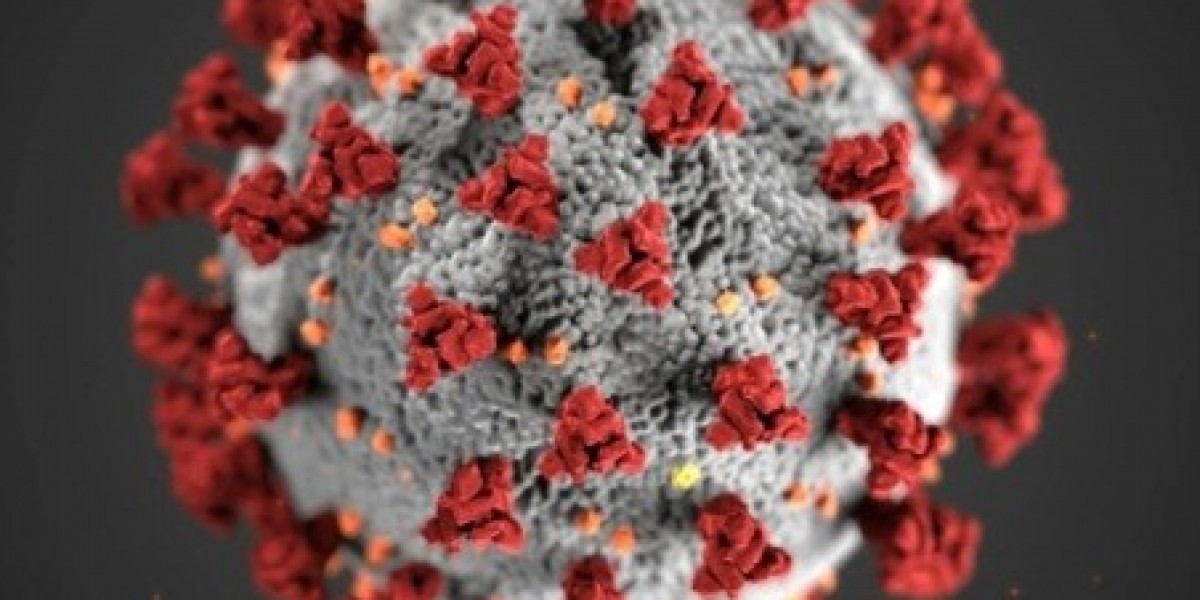
The answer was hidden in a protein protruding from the virus's surface—the now-famous spike protein.
Picture the virus as a warship preparing to attack a cell. The spike protein is its grappling hook. To succeed, this hook must latch precisely onto a receptor on the human cell surface—a protein called ACE2. But what did this grappling hook look like? How did it engage with its target? At the pandemic's outset, these were complete mysteries.
This was structural biology's moment to shine.
Within months of the outbreak, multiple research teams around the world used cryo-EM to determine the high-resolution 3D structure of the SARS-CoV-2 spike protein bound to the human ACE2 receptor. The results, published in Science and Nature, revealed stunning details.
First, one of the spike protein's three receptor-binding domains "snaps up" like a switchblade, inserting itself precisely into a pocket on the ACE2 receptor. The binding strength was far stronger than initial estimates—a structural explanation for why this virus is so highly transmissible.
Second, the images showed that the spike protein is covered with sugar molecules, like a layer of camouflage, helping the virus evade immune surveillance.
This "molecular snapshot" was far more than a scientific curiosity. It instantly became a battle map for researchers worldwide racing to develop countermeasures:
Antibody developers could now design molecules that precisely block the spike-ACE2 binding site.
Vaccine designers could use the stable structure to engineer antigens that trigger effective immune responses.
Drug screening teams could computationally test millions of small molecules against the 3D structure, searching for candidates that might block the spike–ACE2 interaction interface.
The lesson was profound: In the fight against disease, seeing your enemy clearly is often the first step toward victory. Structural biology gave us that clear vision.
Beyond viruses, structural biology is rewriting medical textbooks in another critical area: understanding the body's own signaling networks.
Consider G protein-coupled receptors (GPCRs). This vast family of proteins is embedded in cell membranes, where they act as the cell's eyes and ears. They receive external signals—hormones, neurotransmitters, light, odors—and translate them into internal cellular commands. GPCRs are the gateways of cellular communication, and they are also the single most important target family in modern medicine: more than one-third of all drugs on the market work by binding to GPCRs.
For years, studying GPCRs was extraordinarily difficult. They are unstable and embedded in membranes, defying traditional methods. Scientists could only infer their workings indirectly, like trying to understand a critical conversation through frosted glass.
Then cryo-EM changed everything. For the first time, scientists could visualize GPCRs in different activation states and complexes with signaling proteins.: how a drug molecule slips in like a key turning a lock, triggering a cascade of tiny but precise shape changes inside the receptor, and ultimately activating signaling pathways within the cell. These high-resolution structural snapshots are now helping researchers design smarter drugs—molecules that activate only specific pathways while leaving others untouched.