
Facial symmetry and proper jaw alignment contribute to a person's appearance and everyday oral function. However, differences in jaw growth can cause one side of the face to look different from the other. Some people also develop an underbite, crossbite, or open bite that makes chewing and speaking uncomfortable. When these concerns originate from the position of the jawbones, Jaw Surgery in Islamabad may be considered as part of a carefully planned treatment approach.
Corrective jaw surgery, medically known as orthognathic surgery, changes the position of the upper jaw, lower jaw, or both. The purpose is to improve the relationship between the jaws and create a more functional bite. In selected cases, the procedure can also improve facial balance. The treatment requires a detailed assessment because facial appearance alone cannot determine whether someone needs surgery.
How Jaw Asymmetry Develops
Facial asymmetry refers to differences between the left and right sides of the face. Minor differences are common and do not usually require treatment. More noticeable asymmetry can develop when the jawbones grow unevenly or when an underlying condition affects facial development.
Several factors may contribute to jaw asymmetry.
Unequal Jaw Growth
During childhood and adolescence, the upper and lower jaws develop as part of normal facial growth. Sometimes, one side grows differently from the other. This can shift the chin away from the centre of the face and create an uneven jawline.
Congenital Conditions
Some individuals are born with differences in facial bone development. These conditions may affect the size, shape, or position of the jaw and can require specialist evaluation as the person grows.
Previous Injury
An injury involving the jaw during childhood or adulthood can sometimes affect bone development or healing. Depending on the injury, the patient may develop changes in jaw movement, bite alignment, or facial symmetry.
Jaw Joint and Other Conditions
Certain conditions affecting the temporomandibular joints or facial structures can contribute to changes in jaw position or movement. A specialist needs to distinguish these problems from skeletal asymmetry before recommending corrective treatment.
Signs That Jaw Alignment May Need Professional Assessment
Not every visible difference in the jaw indicates a medical problem. However, certain symptoms may suggest that the teeth and jawbones are not working together properly.
Common signs include:
The chin appears shifted to one side.
The lower jaw looks noticeably wider or longer on one side.
The upper and lower teeth do not meet evenly.
One side of the mouth contacts the opposite teeth earlier during biting.
The patient has difficulty chewing on one side.
The front teeth show an underbite or open bite.
The lips do not close comfortably in a relaxed position.
The face appears unbalanced when viewed from the front.
These symptoms do not confirm the need for surgery. Dental examination and appropriate imaging help determine whether the issue comes from tooth alignment, jawbone position, muscle function, or another cause.
Difference Between Dental Asymmetry and Skeletal Asymmetry
Understanding the source of an alignment problem is essential when selecting treatment.
Dental asymmetry occurs when the teeth are positioned unevenly. For example, one dental arch may have crowding, rotated teeth, or an uneven bite. Orthodontic treatment can often correct these concerns.
Skeletal asymmetry involves differences in the underlying jawbones. One side of the lower jaw may be longer, or the upper jaw may be positioned unevenly. Braces alone cannot always correct these structural differences.
Some patients have a combination of dental and skeletal problems. In these cases, orthodontics and corrective jaw surgery may work together to improve the final bite.
Which Jaw Surgery Procedures Can Improve Alignment?
The appropriate surgical technique depends on the location and severity of the skeletal discrepancy. An oral and maxillofacial surgeon evaluates the patient's anatomy before selecting an approach.
Upper Jaw Repositioning
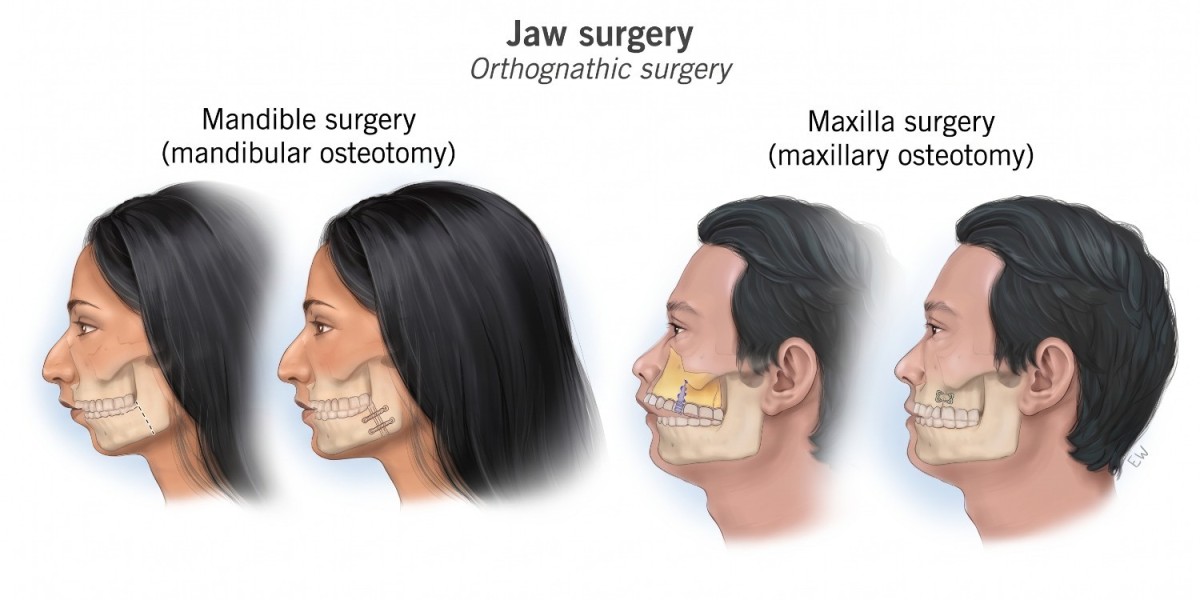
A Le Fort I osteotomy allows the surgeon to reposition the maxilla, or upper jaw. This procedure may be appropriate when the upper jaw sits too high, too low, too far forward, or too far backward.
It can also address certain cases of an uneven upper jaw that contribute to bite problems or facial imbalance.
Lower Jaw Correction
Bilateral sagittal split osteotomy (BSSO) is a common technique for repositioning the mandible, or lower jaw.
Depending on the treatment plan, the surgeon can move the lower jaw forward or backward. This may help correct a significant underbite, overbite, or certain forms of skeletal asymmetry.
Double Jaw Surgery
When both jaws contribute to the facial or bite discrepancy, a surgeon may recommend repositioning the upper and lower jaws.
Double jaw surgery allows the treatment team to coordinate the position of both structures rather than trying to correct a complex problem through movement of only one jaw.
Chin Surgery
Genioplasty changes the position or shape of the chin. It may improve chin proportions in selected patients, sometimes alongside corrective jaw surgery.
However, genioplasty does not correct an underlying bite problem. If the upper and lower teeth do not meet correctly because of skeletal misalignment, chin surgery alone will not address the cause.
How Specialists Plan Surgery for Facial Balance
Facial balance involves more than making the left and right sides look identical. The surgeon must consider the position of the nose, lips, chin, cheekbones, teeth, and jaw joints.
A treatment plan should focus on functional improvement while respecting the patient's natural facial structure.
Step 1: Discussing the Patient's Concerns
The consultation begins with a review of the patient's symptoms, medical history, dental background, and treatment goals.
The specialist may ask whether the patient experiences chewing difficulties, bite discomfort, speech concerns, or problems opening and closing the mouth.
Step 2: Examining the Face and Bite
The surgeon evaluates facial proportions from different angles. They also assess the position of the chin, symmetry of the jawline, dental midlines, and relationship between the upper and lower teeth.
Jaw movement and joint function may also require assessment.
Step 3: Reviewing Diagnostic Images
Different imaging methods help identify the underlying skeletal differences.
Panoramic X-rays provide an overview of the teeth and jaw structures.
Cephalometric X-rays help measure facial and jaw relationships.
CBCT scans provide three-dimensional information when clinically necessary.
Dental scans or impressions record the position of the teeth.
The specialist chooses investigations according to the patient's needs rather than automatically ordering every available scan.
Step 4: Coordinating Orthodontic and Surgical Treatment
The orthodontist and surgeon work together to determine how the teeth and jawbones should be positioned.
They consider the required bone movement, tooth alignment, facial proportions, and expected healing process. This coordination helps reduce the risk of treating the teeth and jaw as separate problems.
Why Orthodontic Treatment Is Often Necessary
Orthodontics plays an important role in many jaw surgery cases. Although surgery repositions the jawbones, the teeth still need to fit together correctly.
Before the Operation
Braces may be used to move the teeth into positions that support the planned surgical correction.
Some patients notice that their bite looks more pronounced during this stage. This can happen because orthodontic treatment removes the natural dental adjustments that previously concealed the skeletal discrepancy.
Patients should discuss these temporary changes with their orthodontist so they understand the purpose of each adjustment.
After the Operation
Following surgery, orthodontic treatment continues when necessary. The orthodontist makes smaller adjustments to improve tooth contact and achieve a stable bite.
The length of treatment depends on the initial condition, the procedure performed, and the patient's response to orthodontic care.
Preparing for the Surgical Procedure
Preparation helps patients understand what will happen during surgery and what they should expect afterward.
The medical team reviews the patient's health history, current medication, allergies, and relevant test results. The surgeon also explains the planned movements and discusses possible complications.
Patients should ask about:
The exact procedure being recommended
Whether one jaw or both jaws require correction
Expected hospital admission
Anaesthesia arrangements
Dietary restrictions before and after surgery
Medication instructions
Recovery expectations
Follow-up appointments and orthodontic adjustments
Jaw surgery is generally performed under general anaesthesia in an appropriately equipped hospital. The procedure often uses incisions inside the mouth, although the technique depends on the surgical plan.
After repositioning the bone, the surgeon usually uses small plates and screws to stabilize the new position.
Recovery After Jaw Surgery
Recovery requires patience because the tissues and bones need time to heal. Patients may experience swelling, bruising, discomfort, and temporary changes in sensation.
The exact recovery experience differs according to the procedure and individual healing response.
Early Recovery
During the first few days, swelling may increase before gradually improving. The surgeon provides instructions for medication, rest, oral hygiene, and managing discomfort.
Some patients experience numbness around the lips, chin, or cheeks. This can improve gradually, although persistent sensory changes are a recognised surgical risk.
Diet and Nutrition
A liquid or soft-food diet is commonly required during the early healing period. Patients should avoid hard, crunchy, and chewy foods until the surgeon allows them to return to a wider diet.
Protein-rich foods and adequate fluid intake can support general recovery. The treating team can provide suitable meal recommendations based on the procedure.
Oral Care
Keeping the mouth clean is important, but brushing may need to be modified around healing areas.
Patients should follow the surgeon's instructions regarding toothbrush use, prescribed rinses, and cleaning around orthodontic appliances.
Gradual Return to Normal Activities
Strenuous exercise and activities that could cause facial injury should be avoided until medical clearance.
Follow-up appointments allow the surgeon to monitor swelling, bone healing, bite alignment, and jaw movement. Orthodontic treatment may continue during this period.
Can Jaw Surgery Improve Both Function and Appearance?
Corrective jaw surgery can improve the relationship between the upper and lower teeth when a significant skeletal discrepancy is present. This may support more effective biting and chewing.
The operation can also change facial proportions because repositioning the jawbones affects the surrounding soft tissues.
However, functional and cosmetic outcomes are not identical for every patient. The final appearance depends on the original anatomy, planned bone movement, healing, and individual tissue response.
Patients should discuss their expectations during consultation. The aim should be a suitable functional correction and a balanced facial result, not a promise of perfect symmetry.
Understanding Jaw Surgery Cost in Islamabad
The financial requirements of corrective jaw treatment depend on the surgical plan and the services included in the overall treatment.
Patients researching Jaw Surgery cost should consider the complete treatment journey rather than focusing only on the surgeon's fee.
The main cost factors include:
Surgical technique: Upper jaw, lower jaw, and double jaw procedures involve different requirements.
Case complexity: Significant asymmetry may require more detailed planning and surgical correction.
Surgeon's fees: Specialist qualifications and experience influence professional charges.
Hospital facilities: Operating room use, admission, and postoperative monitoring contribute to expenses.
Anaesthesia: The anaesthesia team's services and procedure duration affect the total.
Diagnostic investigations: X-rays, CBCT imaging, dental scans, and laboratory tests may be required.
Orthodontics: Braces and adjustments before and after surgery may involve separate expenses.
Postoperative care: Medication, reviews, and additional treatment can contribute to the final amount.
An itemised written estimate helps patients understand which services are included and whether additional expenses may arise during treatment.
Selecting an Appropriate Surgical Team
Choosing the right specialist is an important part of the decision-making process. Corrective jaw surgery involves facial bones, nerves, teeth, and the structures responsible for normal jaw movement.
Patients should look for an appropriately qualified oral and maxillofacial surgeon with relevant experience in orthognathic procedures.
It is also useful to understand how the surgeon works with an orthodontist, which hospital will provide surgical facilities, and how postoperative concerns will be managed.
People seeking general dental information or an initial dental assessment can visit Dental Clinic Islamabad. However, complex jawbone discrepancies require assessment by a qualified oral and maxillofacial surgeon. The decision to proceed with surgery should follow specialist evaluation and an appropriate hospital-based treatment plan.
Frequently Asked Questions
1. Does jaw surgery make the face symmetrical?
Jaw surgery can improve asymmetry caused by differences in jawbone position. However, perfect symmetry cannot be guaranteed because facial appearance also depends on soft tissues and other anatomical structures.
2. Can an uneven jawline be corrected with braces?
Braces can correct uneven tooth positioning, but they cannot always correct differences in jawbone size or position. A specialist can determine whether orthodontics alone is suitable.
3. Is double jaw surgery necessary for facial asymmetry?
Not in every case. Some patients need correction of only the upper or lower jaw. Double jaw surgery may be recommended when both jaws contribute to the problem.
4. Does jaw surgery change the chin?
Repositioning the lower jaw can change the chin's position and overall profile. Additional genioplasty may be considered in selected cases, depending on the treatment goals.
5. How long does it take to recover?
Initial recovery generally takes several weeks, while bone healing and complete functional recovery can take longer. The surgeon provides a personalised timeline based on the operation.
6. Can adults undergo corrective jaw surgery?
Yes. Adults may undergo jaw surgery when they have a suitable medical condition and the jaw growth is complete. Their treatment plan depends on bone health, general health, and the severity of the discrepancy.
7. Is jaw surgery only performed for cosmetic reasons?
No. Corrective jaw surgery primarily addresses skeletal and bite problems. Changes in facial appearance may occur as part of correcting the underlying jaw position.
Conclusion
Facial asymmetry and bite problems can have different causes, so accurate diagnosis is essential before selecting treatment. When the underlying issue involves the position or development of the jawbones, corrective surgery may help improve jaw alignment, chewing function, and facial balance.
A suitable treatment plan combines specialist assessment, diagnostic imaging, orthodontic coordination, surgical care, and regular follow-up. Anyone considering jaw surgery in Islamabad should discuss their concerns with a qualified oral and maxillofacial surgeon and understand the expected benefits, limitations, recovery requirements, and possible risks before making a decision.