
Losing a tooth can affect chewing, speech and the appearance of a smile. Even when the missing tooth is not visible, the empty space can allow neighbouring teeth to move over time and make oral hygiene more challenging. Replacing it can help restore normal dental function and maintain a balanced bite.
Two common options for replacing missing teeth are dental implants and dental bridges. Both can provide fixed replacement teeth, but they work differently. A dental implant uses an artificial root placed in the jawbone, while a traditional dental bridge relies on neighbouring teeth for support.
For patients comparing dental implants vs dental bridges in Islamabad, the right choice depends on several factors, including the condition of surrounding teeth, available jawbone, treatment time, budget and long-term oral health goals.
What Is the Difference Between Dental Implants and Dental Bridges?
Although both treatments replace missing teeth, their structures and placement methods differ.
What Are Dental Implants?
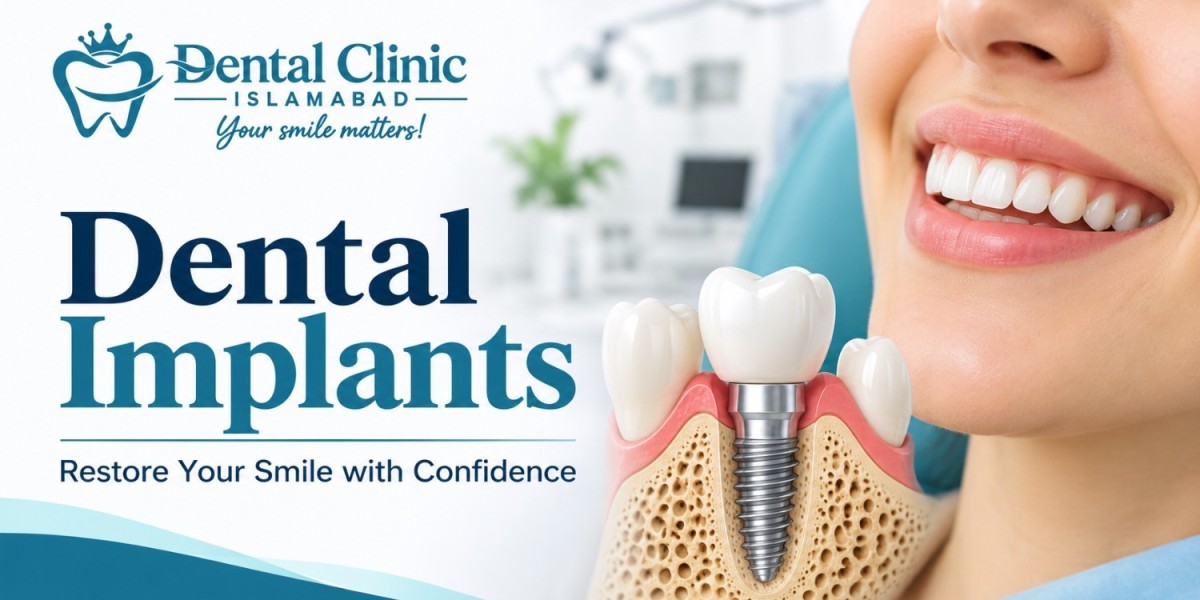
A dental implant is a small post, commonly made from titanium, that a dentist places inside the jawbone to replace the root of a missing tooth. As the surrounding bone heals, it attaches to the implant through a process called osseointegration.
Once the implant becomes stable, the dentist connects an abutment and places a custom-made dental crown over it.
A single dental implant can replace one missing tooth without using the neighbouring natural teeth as support. Dentists can also use multiple implants to support bridges or full-arch restorations.
What Is a Dental Bridge?
A traditional dental bridge replaces one or more missing teeth by using the natural teeth on either side of the gap for support.
The dentist prepares these supporting teeth by reshaping them to accommodate dental crowns. The crowns connect to an artificial tooth, known as a pontic, which fills the empty space.
Once the dentist cements the bridge in place, it functions as a fixed restoration. Patients do not remove it for everyday activities, but they need to clean carefully underneath the replacement tooth.
Dental Implants vs Dental Bridges: Key Differences
Both options can restore chewing function and improve smile appearance. However, their differences may make one more suitable than the other for a particular patient.
| Comparison | Dental Implants | Traditional Dental Bridges |
|---|---|---|
| Support | Anchored in the jawbone | Supported by neighbouring teeth |
| Treatment | Requires a surgical procedure | Usually does not require implant surgery |
| Adjacent teeth | Usually remain untouched | Often need preparation for crowns |
| Bone support | Can help maintain bone in the implant site | Does not replace the missing tooth root |
| Treatment time | Often takes several months | Often completed in fewer visits |
| Cleaning | Brushing and cleaning around the implant | Requires cleaning underneath the bridge |
| Initial cost | Generally higher | Often lower |
| Suitability | Depends on bone, gum and general health | Depends on the condition of supporting teeth |
The table provides a general comparison. The actual treatment plan depends on the patient's dental condition and the type of restoration required.
1. How Do Both Treatments Affect Healthy Neighbouring Teeth?
One of the biggest differences between implants and traditional bridges is how they use the teeth around the missing space.
A single dental implant stands independently in the jawbone. The dentist generally does not need to reshape healthy neighbouring teeth to support it.
A traditional bridge, however, relies on adjacent teeth. The dentist usually prepares these teeth for crowns, which means removing some natural tooth structure. This preparation is irreversible.
If the neighbouring teeth already have large fillings, damaged structures or crowns, using them as bridge supports may be reasonable in certain situations. However, reshaping otherwise healthy teeth may make an implant worth considering.
A dental examination helps determine whether the surrounding teeth are strong enough to support a bridge.
2. Which Option Helps Maintain Jawbone Health?
The jawbone needs stimulation from tooth roots to maintain its structure. After losing a natural tooth, the bone in that area may gradually shrink because it no longer receives the same functional stimulation.
A dental implant replaces the missing root with an artificial fixture. Once it integrates with the surrounding bone, it transfers chewing forces to the implant site and can help maintain the bone in that region.
A traditional dental bridge replaces the visible part of the missing tooth but does not replace its root. Therefore, it does not provide the same stimulation to the bone beneath the gap.
This difference can matter when planning long-term tooth replacement. However, implant placement does not guarantee that all bone changes will stop, and the surrounding tissues still need regular monitoring.
3. Which Treatment Takes Less Time?
Treatment duration is another important consideration, especially for patients who want to restore a missing tooth quickly.
Dental Implant Treatment Time
Implant treatment generally involves several stages:
Initial examination and dental imaging.
Tooth extraction or bone grafting, if required.
Implant placement.
Healing and osseointegration.
Abutment placement and final crown fitting.
The implant may need several months to integrate with the jawbone before the dentist places the final restoration. Patients who require bone grafting or additional procedures may need more time.
In selected cases, a dentist may provide a temporary tooth or immediate restoration, but this depends on implant stability and individual clinical conditions.
Dental Bridge Treatment Time
A traditional bridge usually requires fewer treatment stages. The dentist examines the supporting teeth, prepares them, takes impressions or digital scans and places a temporary restoration when necessary.
After the dental laboratory prepares the final bridge, the dentist checks its fit and bite before cementing it in place.
Many conventional bridges can be completed within a few visits, although additional dental treatment may extend the timeline.
Patients who prioritise a shorter treatment process may prefer a bridge, provided the supporting teeth are suitable.
4. Which Option Looks and Feels More Natural?
Both dental implants and bridges can provide natural-looking results when the dentist plans the restoration carefully.
For an implant crown, the dentist considers the shade, shape, size and position of the replacement tooth. The gumline and surrounding teeth also influence the final appearance.
A dental bridge uses connected crowns and artificial teeth to fill the missing space. The dental laboratory designs the restoration to match the surrounding smile.
For front teeth, appearance can require additional attention because even small differences in tooth shape, shade or gum contour may become noticeable.
The dentist should evaluate the patient's bite, gum condition and available space before choosing the restoration. Neither option guarantees an identical match to natural teeth, but careful planning can produce a balanced appearance.
5. Which Treatment Is Easier to Maintain?
Both restorations need daily cleaning and professional dental check-ups.
Maintaining Dental Implants
Implant crowns do not develop tooth decay like natural teeth. However, plaque can accumulate around the implant and affect the surrounding gums and bone.
Patients should brush twice daily, clean between teeth and use suitable interdental cleaning tools. Regular dental visits help identify inflammation or other problems before they progress.
Maintaining Dental Bridges
A bridge also needs daily cleaning. However, its connected structure creates an area underneath the artificial tooth where food particles and plaque can collect.
Patients may need floss threaders, interdental brushes or specialised cleaning tools to reach this area.
The natural teeth supporting the bridge remain vulnerable to decay and gum disease. If one of these supporting teeth develops a serious problem, the entire bridge may require treatment or replacement.
Good oral hygiene and regular check-ups help maintain both types of restorations.
6. Dental Implant vs Dental Bridge Cost in Islamabad
The cost of replacing a missing tooth varies according to the materials, clinical requirements and complexity of treatment.
Dental implants generally involve a higher initial expense because the treatment includes surgical placement, implant components and a custom-made crown.
A traditional bridge may cost less initially because it does not require implant surgery. However, its total cost can change if the supporting teeth need root canal treatment, additional crowns or other procedures.
Factors that influence the treatment estimate include:
Number of missing teeth.
Type and material of the restoration.
Condition of the surrounding teeth and gums.
Implant brand and system, where applicable.
Need for tooth extraction or bone grafting.
Laboratory work and additional dental procedures.
Follow-up and maintenance requirements.
Patients should compare complete treatment plans rather than looking only at the initial price. A written estimate should explain the components included and any additional procedures that may affect the final cost.
When Are Dental Implants a Better Option?
Dental implants may be worth considering when:
One or more teeth are missing.
The neighbouring teeth are healthy and do not need crowns.
The patient has sufficient jawbone or can undergo suitable bone augmentation.
The gums are healthy or have received appropriate treatment.
The patient can undergo surgery and follow the healing instructions.
The patient wants an independent replacement that does not rely on adjacent teeth.
Implants are not suitable for everyone. Uncontrolled diabetes, active gum disease, smoking and certain medical conditions can affect healing and treatment outcomes. The dentist needs to review these factors before recommending implant placement.
When Might a Dental Bridge Be More Suitable?
A traditional bridge may be a practical option in situations such as:
The teeth on either side of the gap already need crowns.
The patient wants to avoid implant surgery.
The jawbone is not suitable for an implant and additional grafting is not appropriate.
A shorter treatment timeline is important.
The patient's medical condition makes implant surgery unsuitable.
A bridge can provide a fixed replacement without placing a fixture inside the jawbone. However, the dentist must confirm that the supporting teeth can handle the additional chewing forces.
Can You Replace an Old Dental Bridge With Dental Implants?
Some patients who already have a dental bridge may consider implants when their existing restoration becomes damaged or needs replacement.
The dentist first examines the bridge, supporting teeth, gums and underlying bone. If the supporting teeth have developed decay, fractures or other problems, the dentist evaluates whether they can be restored.
If the existing bridge is no longer suitable, implants may provide an alternative. However, the decision depends on the condition of the jawbone and the health of the surrounding tissues.
Removing an old bridge does not automatically make someone suitable for implants. Some patients may need tooth extraction, gum treatment or bone grafting before implant placement.
How to Choose Between Dental Implants and Bridges in Islamabad
Choosing between these treatments requires an individual assessment rather than relying only on general comparisons.
At Dental Clinic Islamabad, patients can discuss missing-tooth concerns and explore suitable replacement options based on their oral health and treatment goals.
During the consultation, the dentist may examine the following:
Condition of adjacent teeth: Healthy teeth may favour an implant when avoiding unnecessary preparation is a priority. Teeth that already need crowns may make a bridge worth considering.
Jawbone condition: Bone height and width influence whether an implant can be placed safely. Dental imaging helps assess the available support.
Gum health: Active gum disease should receive appropriate treatment before either restoration.
Bite and chewing forces: The dentist evaluates how the replacement tooth will function with the opposing teeth.
Treatment expectations: Patients should understand the differences in treatment time, maintenance, cost and possible complications.
For patients exploring Dental Implants in islamabad, a professional assessment can clarify whether an implant-supported crown, bridge or conventional dental bridge better suits their situation.
Final Thoughts
Dental implants and dental bridges can both replace missing teeth, but they serve patients in different ways. Implants provide independent support through the jawbone and can help maintain bone in the treated area. Traditional bridges offer a fixed replacement without implant surgery, but they usually require preparation of neighbouring teeth.
The right choice depends on the condition of the surrounding teeth, available bone, gum health, treatment timeline and budget. A dentist can assess these factors and explain the advantages and limitations of each option.
Replacing a missing tooth is not simply about filling an empty space. It is about restoring comfortable chewing, maintaining oral health and choosing a solution that fits the patient's long-term needs.