
IMARC Group has recently released a new research study titled “Neurotechnology Market Report by Product Type, End User, and Region, 2026-2034,” which offers a detailed analysis of the market drivers, segmentation, growth opportunities, trends and competitive landscape to understand the current and future market scenarios.
Neurotechnology Market Size, Growth, and Forecast (2026-2034)
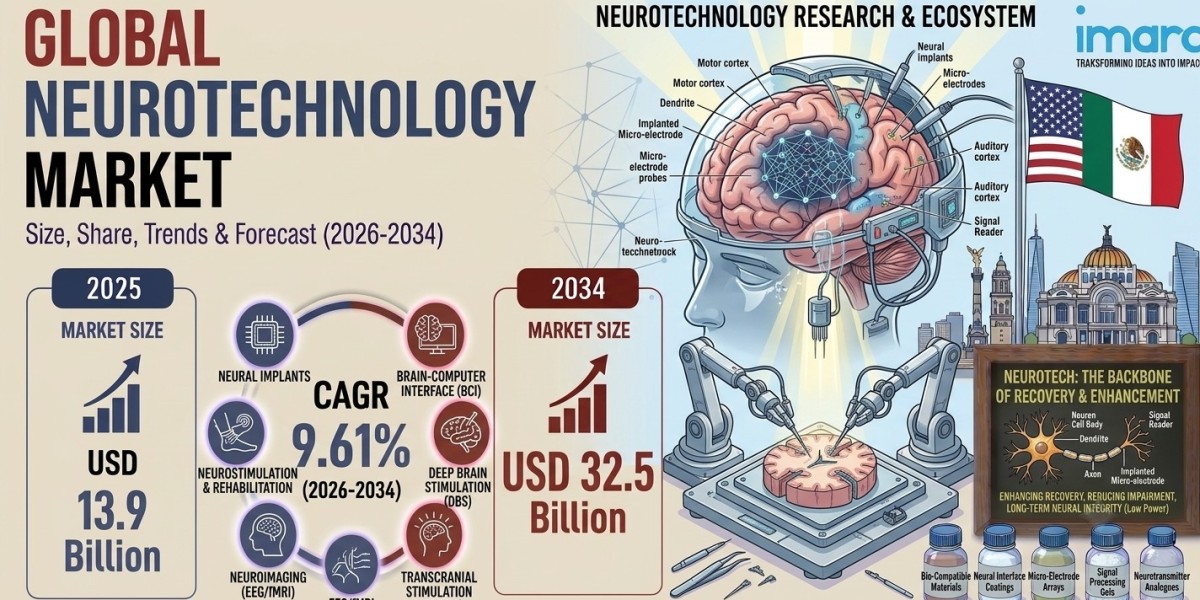
The neurotechnology market size reached USD 13.9 Billion in 2025 and is projected to reach USD 32.5 Billion by 2034, growing at a CAGR of 9.61% during 2026-2034. The rising prevalence of central nervous system (CNS) disorders, supportive government policies, and the introduction of wearable neurotechnologies are the primary factors driving the neurotechnology market.
Neurotechnology refers to the tools and devices used to image, monitor, stimulate, and interface with the brain and nervous system. It spans imaging systems, neurostimulation devices, EEG and MEG measurement equipment, and neurological implants used for diagnosis, treatment, and rehabilitation. Together, these neurotechnology products make up a fast-expanding neurotech device market.
Conditions such as stroke, epilepsy, Parkinson's disease, Alzheimer's disease, and multiple sclerosis are becoming more common as populations age. Neurotechnology is also being used to monitor and diagnose psychiatric disorders such as depression, anxiety, schizophrenia, and obsessive-compulsive disorder (OCD), strengthening demand across hospitals and diagnostic settings.
Explore Growth Opportunities in the Neurotechnology Market - Grab Your Sample Report for Evaluation: https://www.imarcgroup.com/neurotechnology-market/requestsample
Key Trends Driving the Neurotechnology Market
- Rising prevalence of neurological disorders: Neurological disorders are becoming more common worldwide. A study published in The Lancet Neurology found that more than three billion people were living with a neurological condition in 2021, while the Alzheimer's Association estimated that 6.9 million Americans aged 65 and older were living with Alzheimer's disease in 2024. This growing burden is lifting demand for neurodiagnostics and neurotechnology products.
- Adoption of wearable neurotechnology: Rising awareness of brain health and mental well-being is supporting non-invasive tools such as brain-computer interfaces (BCIs) and neurostimulators. For instance, in September 2024, Neurable Inc. and Master & Dynamic introduced the MW75 Neuro smart headphones with BCI technology to help users track cognitive health and manage burnout, widening the neurotech device market.
- Technological innovations: Integrating artificial intelligence (AI) and machine learning (ML) is improving diagnostic accuracy and enabling predictive modeling for neurological diseases. For instance, in March 2024, Philips and Synthetic MR launched an AI-based quantitative brain imaging system to improve the diagnosis of multiple sclerosis, traumatic brain injuries, and dementia, supporting the neurodiagnostics market.
Neurotechnology Market Report Segmentation:
The Neurotechnology Market report provides a detailed segmentation analysis to help stakeholders identify key growth segments and evolving industry dynamics. The market is categorized based on product type and end user, with regional analysis across five major regions, offering comprehensive insights across the neurotechnology market.
Product Type Insights:
- Imaging Modalities: Imaging modalities, including magnetic resonance imaging (MRI), computed tomography (CT), and positron emission tomography (PET), represent the largest segment, playing a central role in early detection, monitoring, and treatment planning for neurological disorders.
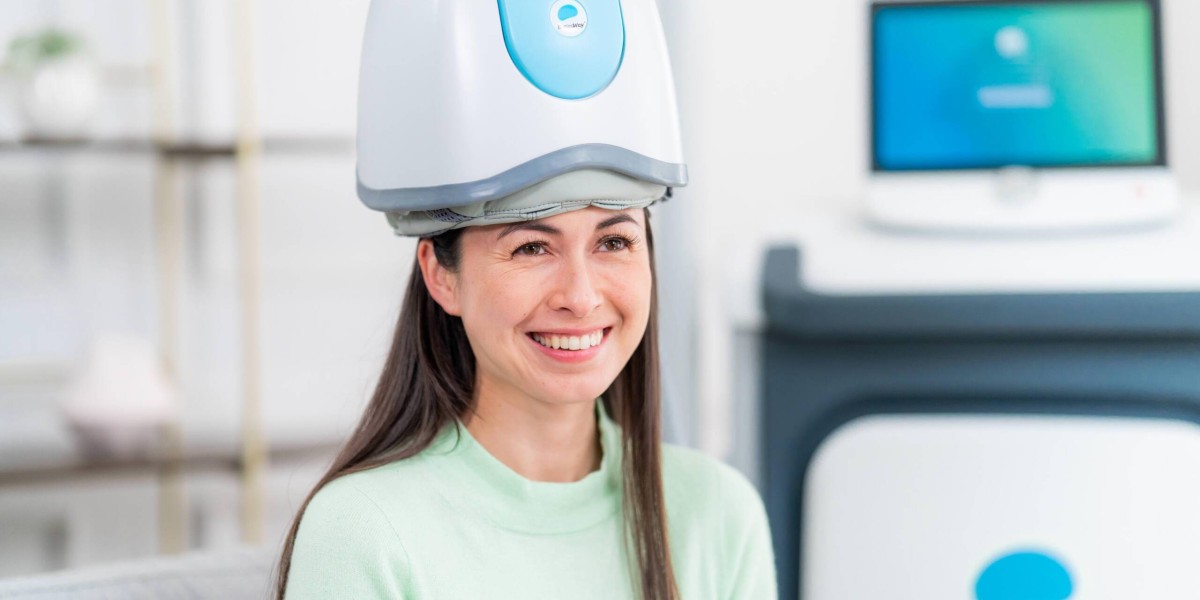
- Neurostimulation: Neurostimulation, covering transcranial magnetic stimulation (TMS) and transcranial direct current stimulation (TDCS), is gaining attention as an alternative to medication for conditions such as depression and anxiety.
- Cranial Surface Measurement: Electroencephalography (EEG) and magnetoencephalography (MEG) record brain activity to support the assessment of epilepsy and other neurological conditions, forming a core part of the neurodiagnostics market.
- Neurological Implants: Neurological implants enable direct neural recording and modulation for patients with severe neurological conditions, supported by growing research and development (R&D) activity.
End User Insights:
- Hospitals: Hospitals accounted for the largest market share, investing in neurotechnologies that aid early diagnosis, monitoring, and treatment as ageing populations drive more cases of stroke, dementia, and other neurodegenerative diseases.
- Clinics: Clinics are adopting neurostimulation and EEG systems to deliver outpatient neurological and mental health care closer to patients.
- Diagnostic Centres: Diagnostic centres rely on neuroimaging and brain-activity measurement to support timely detection and monitoring of neurological disorders.
- Ambulatory Surgical Centres: Ambulatory surgical centres are expanding their role in minimally invasive neurological procedures and device-based therapies as care shifts toward outpatient settings.
Regional Insights:
- North America: North America was the largest market for neurotechnology, supported by a large ageing population, rising CNS disorders, and supportive government policies. The Population Reference Bureau projects the number of Americans aged 65 and older to rise from 58 million in 2022 to 82 million by 2050.
- Europe: Europe, including Germany, France, the United Kingdom, Italy, and Spain, benefits from established healthcare systems and active neuroscience research, sustaining demand for advanced neurodiagnostic and treatment technologies.
- Asia Pacific: Asia Pacific, spanning China, Japan, India, South Korea, Australia, and Indonesia, is expanding access to neurological care as healthcare infrastructure and awareness of brain health improve.
- Latin America: Latin America, led by Brazil and Mexico, is gradually adopting neuroimaging and neuromodulation technologies as access to specialist care widens.
- Middle East and Africa: The Middle East and Africa region is building out diagnostic and treatment capacity as investment in healthcare infrastructure grows.
Neurotechnology Market: Recent News and Developments
- June 2025: Neuralink announced that it closed a USD 650 million Series E funding round, with participation from investors including ARK Invest, Founders Fund, Sequoia Capital, and Thrive Capital, to advance its implantable brain-computer interface technology.
- April 2026: Epia Neuro formally launched with a minimally invasive brain-computer interface designed to restore hand function after stroke, combining a surgically implanted neural interface, AI-driven signal processing software, and an external assistive device.
Challenges Impacting the Neurotechnology Market
The high cost of developing and implementing neurotechnology remains a key barrier, particularly for smaller clinics and providers in cost-sensitive regions. Advanced imaging systems, neurostimulation devices, and implants require significant capital investment, which can slow adoption across the neurotech device market.
Complex regulatory pathways for implantable devices, the need for specialized clinical expertise, and growing concerns around the privacy of neural data can also lengthen commercialization timelines for neurotechnology products.
Investment Opportunities in the Neurotechnology Market
The neurotechnology market presents compelling investment opportunities supported by its projected growth from USD 13.9 Billion in 2025 to USD 32.5 Billion by 2034. As mental health awareness grows, interest is rising in TMS and neurofeedback for depression, post-traumatic stress disorder (PTSD), and anxiety, especially as alternatives to medication.
AI-enabled neuroimaging and quantitative analysis represent a high-value opportunity within the neurodiagnostics market, while wearable BCIs and non-invasive neurostimulators extend neurotechnology products to consumers. Companies that combine clinical validation with scalable, affordable platforms can build strong competitive positions.
Outlook of the Neurotechnology Market (2026-2034)
The outlook for the neurotechnology market is positive, supported by the rising burden of CNS disorders, supportive government policies, and continuous technological innovation. The market is projected to grow from USD 13.9 Billion in 2025 to USD 32.5 Billion by 2034 at a CAGR of 9.61%.
Continued adoption of AI-powered neuroimaging, the spread of wearable and non-invasive devices, and rising demand from ageing populations will be the defining trends shaping the neurotechnology market and the wider neurotech device market through 2034.
Key Players in the Neurotechnology Market
The neurotechnology market is served by a mix of global medical technology and imaging companies competing on the basis of product innovation, AI-enabled analytics, and clinical reach.
- Koninklijke Philips N.V.: A global health technology leader, Philips extended its partnership with Cortechs.ai in November 2025 to integrate AI-powered quantitative neuroimaging analytics for Alzheimer's disease, multiple sclerosis, and brain tumors directly into its MR systems, strengthening its position in neurodiagnostics.
- GE HealthCare Technologies Inc.: A global leader in medical imaging, GE HealthCare announced an agreement in September 2025 to acquire icometrix, an AI-powered brain MRI analysis company, to strengthen a neurology portfolio that includes MR and PET scanners, the Vizamyl PET imaging agent, and MIMneuro software.
Frequently Asked Questions (FAQs): Neurotechnology Market
- What is the current neurotechnology market size?
The neurotechnology market size reached USD 13.9 Billion in 2025 and is projected to reach USD 32.5 Billion by 2034, growing at a CAGR of 9.61% during 2026-2034.
- What is neurotechnology?
Neurotechnology refers to the tools and devices used to image, monitor, stimulate, and interface with the brain and nervous system, including imaging modalities, neurostimulation, cranial surface measurement, and neurological implants.
- What are the key drivers of the neurotechnology market?
Key drivers include the rising prevalence of CNS disorders, supportive government policies, the introduction of wearable neurotechnologies, and AI-driven advances that are expanding the neurodiagnostics market.
- Which product type leads the neurotechnology market?
Imaging modalities, including MRI, CT, and PET, lead the neurotechnology market, as they support early detection, monitoring, and treatment planning across neurological disorders.
- Who are the key players in the neurotechnology market?
Key players in the neurotechnology market include Koninklijke Philips N.V., GE HealthCare Technologies Inc., Canon Medical Systems Corporation, Elekta Solutions AB, Siemens Healthcare GmbH, Natus Medical Incorporated, and Shimadzu Corporation, among others.
Author IMARC Group
IMARC Group is a global management consulting firm that helps the world's most ambitious changemakers to create a lasting impact. The company provide a comprehensive suite of market entry and expansion services. IMARC offerings include thorough market assessment, feasibility studies, company incorporation assistance, factory setup support, regulatory approvals and licensing navigation, branding, marketing and sales strategies, competitive landscape and benchmarking analyses, pricing and cost research, and procurement research.
Contact Us
IMARC Group,
134 N 4th St. Brooklyn, NY 11249, USA,
Email: sales@imarcgroup.com,
United States: +1-201971-6302