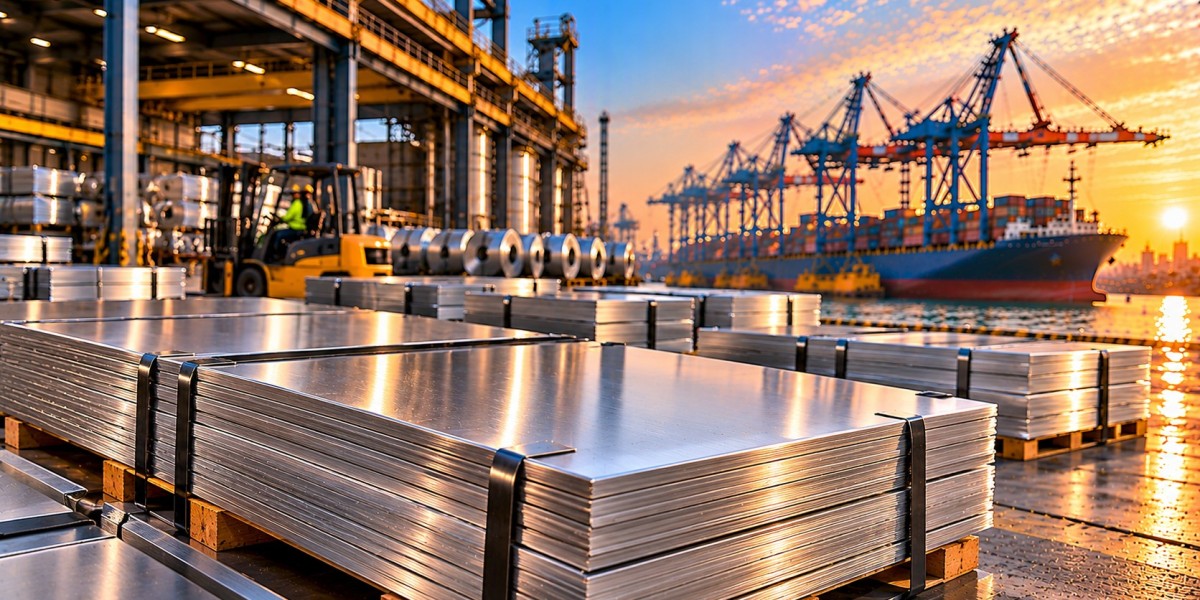

Steel buyers watching the stainless steel plate price trend going into Q3 2026 are looking at a fairly clear split between China and India right now. China’s FOB price for August 2026 sits at USD 1,970.20 per metric ton. India’s CIF price comes in higher, at USD 2,060.99 per metric ton. Not a shocking gap. But enough to matter once you’re buying at scale.
Stainless steel plate shows up everywhere once you start looking. Industrial equipment, construction, shipbuilding, food processing lines. A shift in its price doesn’t stay isolated. It works its way into project budgets and procurement plans within a quarter, sometimes faster.
Current Stainless Steel Plate Prices: China vs India
| Product | Region | Incoterm Basis | Price | Last Updated |
|---|---|---|---|---|
| Stainless Steel Plate | China | FOB | USD 1,970.20/MT | August 2026 |
| Stainless Steel Plate | India | CIF | USD 2,060.99/MT | August 2026 |
That’s a USD 90.79 spread per metric ton. For a single shipment, maybe not a big deal. Multiply that across a large procurement order and suddenly it’s a figure worth explaining in a budget meeting.
A few points before anyone reads these numbers the wrong way:
- China’s figure is FOB, meaning it covers the goods loaded onto the vessel at the port of origin. Freight and insurance aren’t included.
- India’s figure is CIF, so freight and insurance are already baked in, which naturally lifts the number.
- Both prices reflect August 2026. Stainless steel markets can move within a month, so treat this as a current reading, not a locked-in rate.
FOB and CIF aren’t directly comparable in a strict sense. Part of that USD 90.79 gap is just the shipping terms doing what shipping terms do. Still worth tracking, just read it with that context in mind.
What’s Behind the Price Gap?
Nothing about this price difference happens in isolation.
Raw material costs. Nickel, chromium, and iron ore prices drive most of what a stainless steel plate costs before it even leaves the mill. Nickel especially swings hard, and producers pass those swings along to buyers almost immediately. There’s not much margin to absorb a spike quietly.
Production and export capacity. China runs enormous steel production volume, which keeps its FOB pricing competitive on the export side. India’s stainless steel sector has been expanding too, but it still leans on imports for part of its specialty-grade plate supply, and that shows up in the CIF number.
Shipping and logistics. Vessel availability, bunker fuel costs, port delays. Any of these can shift the delivered price without a single change on the production side.
Currency movement. Global steel trades in dollars. When the rupee weakens against the dollar, Indian importers pay more for the same contracted price, purely because of the exchange rate.
A Quick Q&A on What Buyers Are Asking
So which market is actually cheaper to buy from right now?
China, on a pure FOB basis. But that number doesn’t include freight to your port, insurance, or the usual customs overhead. Run the full landed cost before assuming China is automatically the better deal.
Does the India CIF price mean Indian producers are overcharging?
Not really. CIF already bundles freight and insurance into the quote, so it’s going to read higher than an FOB number by design. The comparison isn’t apples to apples unless you adjust for that.
Is this gap likely to close anytime soon?
Probably not in the next quarter. The underlying structure, production capacity on one side, import dependency on the other, doesn’t shift overnight.
What This Means for Buyers and Investors
Procurement teams sourcing from China get a lower headline FOB rate, but freight, insurance, and lead times still need to be added before comparing it fairly against India’s landed cost.
Investors looking at India’s steel sector might read the CIF premium differently. It points toward room for domestic capacity growth, particularly in specialty and high-grade plate production where imports still fill gaps.
Project managers and advisers working with clients in construction or industrial fabrication should treat this price trend as a signal, not just a data point. Stainless steel plate costs tend to show up in downstream project quotes within weeks of a market shift. Tracking it now means fewer surprises later.
Looking Ahead: Q3 2026 Outlook
Where this goes from here depends mostly on nickel prices and how fast China’s export volumes hold up. Neither is easy to predict with confidence.
What seems reasonably steady is the structural gap between China’s export-driven pricing and India’s import reliance for certain grades. That difference isn’t going anywhere fast. Whether the spread grows or shrinks depends on raw material costs, shipping rates, and how demand in construction and manufacturing holds up through the quarter.
Buyers locking contracts off August figures should double check current rates before signing. Steel markets move fast enough that a six week old number can already be stale.
Conclusion
The stainless steel plate price trend for Q3 2026 shows a real divide: China at USD 1,970.20/MT FOB, India at USD 2,060.99/MT CIF, both from August 2026. That gap reflects shipping terms, raw material exposure, and each country’s production versus import balance. Anyone buying, investing, or advising in this space should keep an eye on these numbers. The market doesn’t sit still long enough to ignore them.
FAQ Section
What is the current stainless steel plate price trend in China and India?
As of August 2026, China’s stainless steel plate is priced at USD 1,970.20/MT FOB, while India’s sits at USD 2,060.99/MT CIF. The difference partly comes from the incoterm basis itself, along with freight, insurance, and each country’s import dependency.
Why is stainless steel plate more expensive in India than China?
India’s price already includes freight and insurance since it’s quoted CIF. China’s export volume also keeps its FOB pricing more competitive. Add in India’s reliance on imports for certain specialty grades, and the higher landed cost makes sense.
What factors drive stainless steel plate prices the most?
Nickel and chromium costs matter most, since they’re core inputs. Production capacity, export volume, shipping rates, and currency swings all play a part too. Because margins in steel are thin, raw material cost changes reach buyers quickly, often within weeks.
How often do stainless steel plate prices change?
Fairly often. Nickel volatility alone can shift prices within a month. The August 2026 figures here are a solid reference point, but anyone finalizing a contract should pull current pricing first rather than relying on numbers from several weeks back.
What’s the outlook for stainless steel plate prices in Q3 2026?
The China-India gap should hold through Q3 2026, given the structural differences in export capacity and import reliance. Nickel price trends and shipping costs will likely decide whether the spread widens or narrows as the quarter plays out.