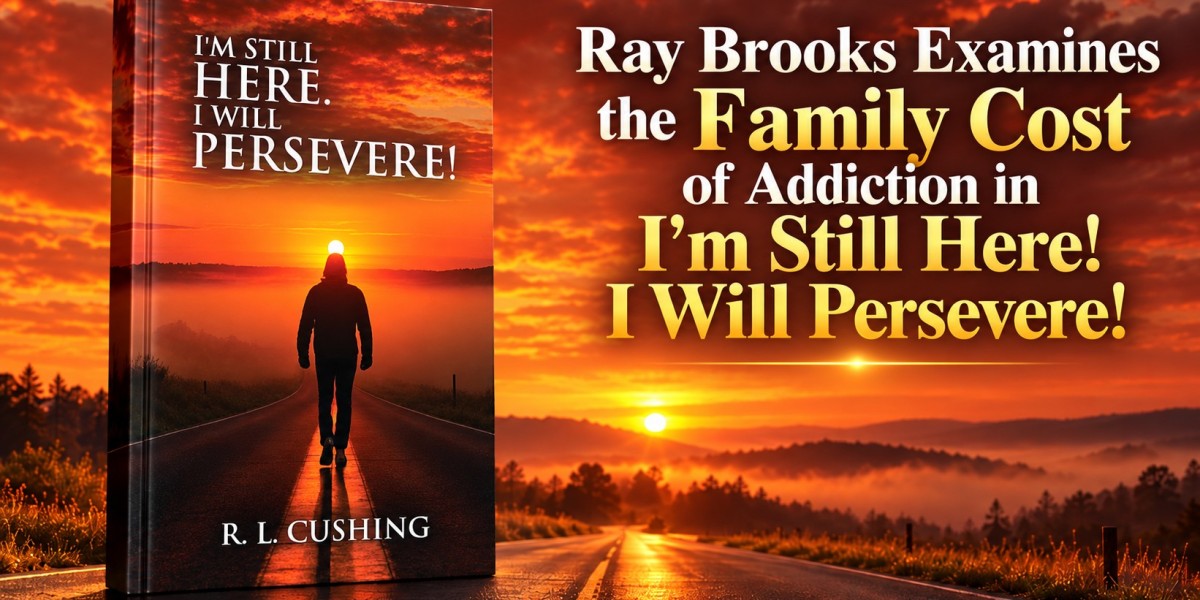

Ray Brooks places family relationships at the emotional center of I’m Still Here! I Will Persevere! Addiction to Redemption, an autobiographical account that follows his life through decades of substance use, relapse, legal trouble, disability, sobriety, and personal change. While the memoir contains dramatic events, Brooks repeatedly returns to a quieter question: what happens to the people who keep loving someone whose choices repeatedly hurt them?
Brooks writes warmly about the woman who became his wife. Their early years include parties, cooking, travel, boating, concerts, shared friends, a proposal, and a 1986 wedding. The relationship is presented as genuinely loving, which makes the later damage more difficult to dismiss. Cocaine and crack increasingly become part of Brooks’s life even as he tries to maintain marriage, work, and ordinary responsibilities.
One of the memoir’s most painful career episodes illustrates how addiction affects more than the person using. Brooks receives an opportunity to interview with a respected power company through a supervisor who knows his wife and believes Brooks may be a strong candidate. Brooks fails the drug test. The loss is not only professional. His wife works around people connected to the company, and Brooks realizes that his hidden drug use has created public embarrassment for her.
The incident becomes one of many moments when promises to change are followed by another relapse. Brooks attends Cocaine Anonymous, experiences periods of sobriety, and understands the consequences of using. Still, crack repeatedly returns to the center of his decisions. The pattern places increasing pressure on the marriage until the relationship ultimately cannot carry it.
Fatherhood deepens the memoir’s exploration of lost trust. Brooks is proud of his sons and remembers their sports, academic success, Scouting, graduations, relationships, and later careers. At the same time, he recognizes that addiction, divorce, court restrictions, and incarceration remove him from important parts of their childhood.
During his time in county jail, Brooks arranges a visit with his sons after months without seeing them. The setting forces him to confront the distance between the father he wanted to be and the reality his children were experiencing. Later, after a rollover accident leaves him with a spinal cord injury, his sons visit him in the hospital. Brooks asks them to tell him what he has missed.
The later chapters focus on that rebuilding. Brooks attends sporting events, graduations, holidays, and family occasions when he is able. His relationship with his sons becomes more active. He follows their careers and takes pride in their adult lives. The memoir does not claim that later presence erases earlier absence, but it shows the value of becoming reliable while time remains.
The same idea appears in Brooks’s relationships with caregivers. After two healthcare companies stop serving him because of behavior tied to drinking and crack use, a new team agrees to take him on. Nurse Heather establishes firm boundaries and makes clear that continued drug use could threaten his care and stability. Brooks eventually recognizes that accountability can be a form of concern rather than rejection.
By the later years, Brooks calls nurses, aides, therapists, and other professionals extended family. They care for him during medical crises, celebrate milestones, and help create the structure supporting his sobriety and stability.
About the Book
I’m Still Here! I Will Persevere! Addiction to Redemption is a candid autobiography about addiction and the relationships affected by it. Brooks writes about marriage, fatherhood, employment, incarceration, spinal cord injury, rehabilitation, caregiving, sobriety, and the long process of rebuilding trust through repeated presence and accountability.
About the Author
Ray Brooks tells his story with humor, blunt self-reflection, regret, and gratitude. His later life centers on family contact, therapy, work, sobriety, sports, and the caregivers he considers extended family. His memoir emphasizes that redemption does not erase the past; it changes how a person chooses to live with it.
Media Contact
Author: R L Cushing
Amazon: I'm Still Here! I Will Persevere
https://www.facebook.com/profile.php?id=61593348035092