
Market Overview
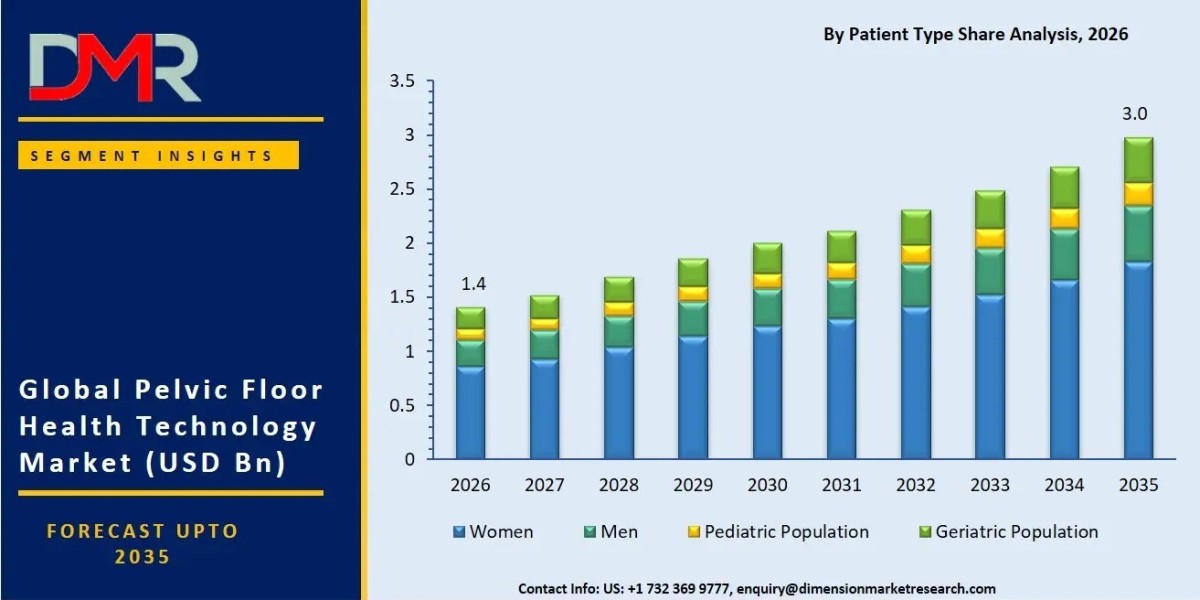
According to Dimension Market Research, the Pelvic Floor Health Technology Market size is expected to be USD 1.4 billion in 2026 and increase at a compound annual growth rate of 8.6% to USD 3.0 billion in 2035 due to increase in the occurrence of urinary incontinence, pelvic organ prolapse, chronic pelvic pain, and post-surgery disorders.
The Pelvic Floor Health Technology market includes innovative and cutting-edge diagnostic, therapeutic, and rehabilitation products that can help diagnose, manage, and even treat pelvic disorders. The devices include biofeedback devices, neuromodulation devices, wearables and digital devices for monitoring and tracking symptoms, and even technology-driven therapies like artificial intelligence solutions. With growing awareness about women's pelvic health, aging populations, and greater need for postpartum care, there is an increased focus on these devices within the wider healthcare technology industry.
Innovation in AI-powered rehabilitative technologies, remote monitoring, personalized treatment programs, and homecare-connected devices is driving adoption across the market. The market is also shaped by the growing integration of AI within healthcare connectivity ecosystems, the rise of home-based rehabilitation technologies, and increasing adoption of telemedicine and digital therapeutics for pelvic health management.
The increasing prevalence of pelvic health disorders, coupled with rising awareness about women's health issues and the growing elderly population, is expected to drive sustained demand for pelvic floor health technologies across clinical and home-based care settings globally.
Definition and Market Significance
Pelvic Floor Health Technology pertains to the various medical devices and digital solutions that enhance the pelvic floor muscle's functionality and address any underlying problems in the pelvic region. This involves biofeedback devices, electric stimulation systems, wearable sensors, rehabilitation apps powered by artificial intelligence, tele-pelvic therapy applications, and remote monitoring systems.
The importance of pelvic floor health technology lies in its ability to diagnose, manage, and treat pelvic disorders such as urinary incontinence, pelvic organ prolapse, chronic pelvic pain, and post-surgical complications. These technologies support clinical treatment, at-home therapies, rehabilitation after childbirth, and long-term treatment of pelvic floor disorders among men and women.
Pelvic floor health technology also supports broader healthcare objectives by improving patient outcomes, reducing healthcare costs through early intervention and home-based care, and enhancing quality of life for individuals suffering from pelvic floor dysfunction.
Request a Complimentary PDF Sample
https://dimensionmarketresearch.com/request-sample/pelvic-floor-health-technology-market/
Market Drivers
A major factor driving the Pelvic Floor Health Technology Market is the increasing prevalence of pelvic health disorders. There has been an increase in the occurrence of urinary incontinence, pelvic organ prolapse, chronic pelvic pain, and post-surgery disorders, which are majorly influencing the demand for pelvic floor technologies. Factors like aging, increased physical inactivity, obesity, and more complications during childbearing have led to an increase in patients worldwide. Healthcare experts are recommending the adoption of minimally invasive methods such as biofeedback tools and rehabilitation software on account of their efficacy and safety.
The growing awareness about women's health issues and prevention strategies is another key driver supporting market expansion. Besides, increasing awareness about female health and prevention strategies has further increased the use of pelvic floor health technologies in both clinical and home settings.
Rising healthcare expenditure, favorable reimbursement rates, and increased investments in AI-powered rehabilitation systems are also contributing to market growth, particularly in developed regions such as North America and Europe.
Market Trends
The implementation of AI within healthcare connectivity ecosystems is emerging as an important trend in the market. Another significant change within the industry involves the implementation of AI-based treatment devices within healthcare connectivity ecosystems. Firms are developing sophisticated treatment devices that incorporate sensors, cloud computing platforms, and mobile applications in order to provide individualized treatment recommendations. AI-enabled pelvic health care treatment devices can detect muscle movement, identify recovery patterns, and generate automated workout recommendations.
Another significant trend is the development of rehabilitation technologies for home use. The rising need for home health care services provides huge opportunities for the producers of pelvic floor medical technology. Consumers are now looking for convenient rehabilitation technologies that can reduce the number of trips to hospitals but offer customized rehabilitation programs.
The growth of intelligent Kegel exercise machines, wearable devices, and app-based rehabilitation technologies is also transforming the market, driven by their convenience and telemedicine capabilities.
Market Restraints
Despite its strong growth potential, the Pelvic Floor Health Technology Market faces certain limitations. The expensive nature of cutting-edge rehabilitation devices poses significant challenges. The expense involved in cutting edge pelvic rehabilitation systems and AI powered treatment devices is one major limitation preventing extensive market penetration. High investments are needed by hospitals and clinics when acquiring diagnostic and neuromodulation devices that work efficiently in their respective areas.
Further, some of the intelligent home-based pelvic rehabilitation devices are expensive to purchase, thereby making them inaccessible to people with moderate levels of income, especially in third world countries.
In addition, regulatory concerns, product efficacy requirements, and the need for technical expertise create barriers to entry and can slow market growth.
Market Opportunities
The development of rehabilitation technologies at home presents significant growth opportunities. The rising need for home health care services provides huge opportunities for the producers of pelvic floor medical technology. Consumers are now looking for convenient rehabilitation technologies that can reduce the number of trips to hospitals but offer customized rehabilitation programs.
The expansion of telemedicine frameworks and smartphone usage in emerging markets is another promising opportunity. The rise of intelligent Kegel exercise machines, wearable devices, and app-based rehabilitation technologies is anticipated due to their convenience and telemedicine capabilities.
Furthermore, the growth of AI-powered pelvic wellness platforms and digital therapeutics is expected to open new opportunities for market participants, enabling personalized, scalable, and accessible pelvic floor care.
Segmentation
The Pelvic Floor Health Technology Market is categorized based on technology type, clinical application, patient type, care setting, and end user.
By technology type, therapeutic devices are predicted to lead with a market share of 38.7% in 2026 because of growing usage of biofeedback systems, electrical stimulation devices, and neuromodulation systems for the treatment of urinary incontinence and post-operative therapy. Digital and connected platforms are predicted to register the fastest growth because of increasing adoption of telemedicine services, use of artificial intelligence in pelvic floor rehabilitation, and growing need for remote patient monitoring systems.
By clinical application, urinary disorders will continue to hold the leading position with a market share of around 34.2% in 2026, driven by the high prevalence rate of stress urinary incontinence and overactive bladder problems. Postpartum recovery will register the highest CAGR due to the higher incidence rate of childbirths in many developing nations.
By patient type, women will hold the dominant position with a projected market share of 61.4% in 2026 based on the prevalence of pelvic pain after childbirth, muscle weaknesses associated with menopause, and urinary incontinence disorders. The geriatric population segment is poised for rapid growth.
By care setting, clinical care is projected to dominate with a 2026 market share estimate of 57.1%, owing to the continued role of hospitals, physiotherapy clinics, and specialized pelvic clinics. Home-based care is expected to grow the fastest, driven by growing consumer interest in convenient and affordable rehab programs.
By end user, the hospitals segment will enjoy a dominant market share of about 35.8% in 2026 because of the high level of utilization of advanced rehabilitation technology, neuromodulation systems, and pelvic diagnosis instruments. The home users segment will enjoy the fastest growth rate.
Regional Analysis
North America is expected to maintain its dominant position in the regional market with its anticipated market share of 39.8% by 2026 due to the advanced healthcare system in place, high adoption of digital health, and increase in cases of UI and PFDs. The region enjoys huge investments into the healthcare system, favorable reimbursement rates, and increased investments into AI-powered rehabilitation systems. Increasing awareness about women's health issues, advancements in telemedicine, and adoption of home-based rehabilitation systems add to the strength of the regional market leader. The US market is estimated to be USD 500 million in 2026 at a CAGR of 8.1%.
Europe is a sophisticated and innovative market that benefits from excellent healthcare infrastructure, an aging population, and increased interest in women's healthcare programs. The implementation of regional digital health strategies and rehabilitation devices is fueling market growth. The market is estimated to be USD 378 million in 2026 at a CAGR of 7.9%.
Asia Pacific is expected to witness significant growth due to the increasing aging population, digitization of the healthcare industry, and awareness regarding pelvic rehabilitation practices. The utilization of wearable devices for pelvic rehabilitation and artificial intelligence-based treatment options has been witnessed in countries such as China, India, Japan, and South Korea. Japan's market is projected to reach USD 70 million in 2026 at a CAGR of 8.4%.
Latin America and the Middle East & Africa are gradually adopting pelvic floor health technologies as healthcare infrastructure improves and awareness of pelvic disorders grows, with Brazil, Mexico, the UAE, and Saudi Arabia emerging as key markets.
Competitive Landscape
The Pelvic Floor Health Technology market is characterized by increasing levels of technological innovation, collaboration, and continuous investment in digital rehabilitation technology. The organizations in this market have been focusing on making use of AI-powered therapy platforms, wearable technology, and home therapy devices in order to increase their competitiveness. Diversification of products is being done through the process of research and development activities along with the integration of their products with telemedicine solutions.
Prominent players include Laborie Medical Technologies, Atlantic Therapeutics (INNOVO), Elvie (Willow/Chiaro Technology), Perifit, Renovia, Medtronic, Axonics, Boston Scientific, InControl Medical, TensCare, Kegel8, INTIMINA, PeriCoach, Pelvital USA, Novuqare, Verity Medical, Neen Healthcare, Zynex Medical, Msys Medical Systems, and Iskra Medical. Recent developments include Carrot's collaboration with Origin to expand pelvic floor therapy access (April 2026), Bedrock Bioscience's launch of the Gazelle Chair (April 2026), and FEMSelect's strategic alliance with Elidah (September 2025).
Technological Advancements
Rapid advancements in AI, wearable sensors, digital therapeutics, and remote monitoring platforms are transforming the pelvic floor health technology market. The integration of artificial intelligence into pelvic floor rehabilitation will revolutionize this process by providing personalized therapy plans, monitoring, and forecasting results of treatment. The AI rehabilitation system analyzes patients' performance metrics and designs custom workouts for therapy.
Artificial intelligence solutions have been playing an important role in improving patient management and telemedicine services in the field, with patient progress tracking, remote rehabilitation analysis, and virtual therapists increasing patients' involvement in treatment and improving the efficiency of healthcare specialists.
Consumer Adoption Patterns
Women, particularly postpartum and perimenopausal women, are the largest adopters of pelvic floor health technologies, followed by men recovering from prostate surgery and the geriatric population. The growing availability of home-based devices, mobile apps, and telemedicine platforms is making these technologies more accessible to a broader consumer base.
Regulatory Environment
Regulatory frameworks across different regions, including FDA clearances for pelvic rehabilitation devices, CE marking in Europe, and various national healthcare regulations, significantly influence the pelvic floor health technology market. Compliance with these regulations is essential for market participants and shapes product development and commercialization strategies.
Market Challenges
The pelvic floor health technology market faces challenges related to high device costs, limited reimbursement in some regions, regulatory complexity, and the need for specialized technical expertise. Additionally, awareness gaps in some regions and cultural sensitivities around pelvic health can slow adoption.
Future Outlook
The future of the Pelvic Floor Health Technology Market remains highly promising as awareness of pelvic health issues grows and technological innovation continues. Increasing adoption of AI-powered rehabilitation platforms, growth of home-based care, expansion of telemedicine, and rising investment in women's health technologies are expected to drive strong market growth during the forecast period, with the market projected to reach USD 3.0 billion by 2035 at a CAGR of 8.6%.
FAQs
What is the expected size of the Pelvic Floor Health Technology Market in 2026?
The market is expected to reach USD 1.4 billion in 2026.
What is the projected market value by 2035?
The market is forecast to reach USD 3.0 billion by 2035.
What is the CAGR of the Pelvic Floor Health Technology Market?
The market is expected to grow at a CAGR of 8.6% during 2026–2035.
Which care setting segment dominates the market?
Clinical care is anticipated to dominate with 57.1% share in 2026.
Which region leads the global pelvic floor health technology market?
North America is set to lead with an estimated 39.8% share in 2026.
Summary of Key Insights
The Global Pelvic Floor Health Technology Market is expected to grow from USD 1.4 billion in 2026 to USD 3.0 billion by 2035, recording a CAGR of 8.6% during the forecast period. Therapeutic devices lead the technology type segment with 38.7% share, while urinary disorders lead clinical applications with 34.2% share. Women represent 61.4% of patient type share, clinical care leads care settings with 57.1% share, and hospitals lead end-user demand with 35.8% share. North America holds the largest regional share with 39.8% of global revenue in 2026, while Asia Pacific is projected as the fastest-growing region. The US market is projected to reach USD 500 million in 2026 at a CAGR of 8.1%.
Purchase the Full Report
https://dimensionmarketresearch.com/checkout/pelvic-floor-health-technology-market/