
Feeling tired after a busy day is common, but your diet plays an important role in how your body produces energy and supports everyday functions. Among the many nutrients your body needs, vitamin B12 has an important role in maintaining normal blood cells, supporting the nervous system, and helping the body use nutrients properly.
Although the body needs vitamin B12 in relatively small amounts, getting enough of it regularly is an important part of a balanced diet.
What Makes Vitamin B12 Important?
Vitamin B12, also known as cobalamin, is a water-soluble vitamin that the body needs for several essential processes. It is involved in the production of red blood cells and helps maintain normal nerve function.
It also works alongside other vitamins and nutrients to support normal cellular processes. Since the body cannot produce vitamin B12 on its own, it needs to come from food or, when recommended, supplements.
What Does Vitamin B12 Do in the Body?
Think of vitamin B12 as a nutrient that supports several basic systems at the same time. Its functions include:
Supporting the formation of healthy red blood cells
Helping maintain normal nerve cells
Playing a role in DNA production
Supporting normal energy metabolism
Working with folate in important cellular processes
Getting adequate B12 does not mean that taking extra B12 automatically provides more energy. Rather, maintaining adequate levels helps the body carry out these normal functions.
Foods That Naturally Provide Vitamin B12
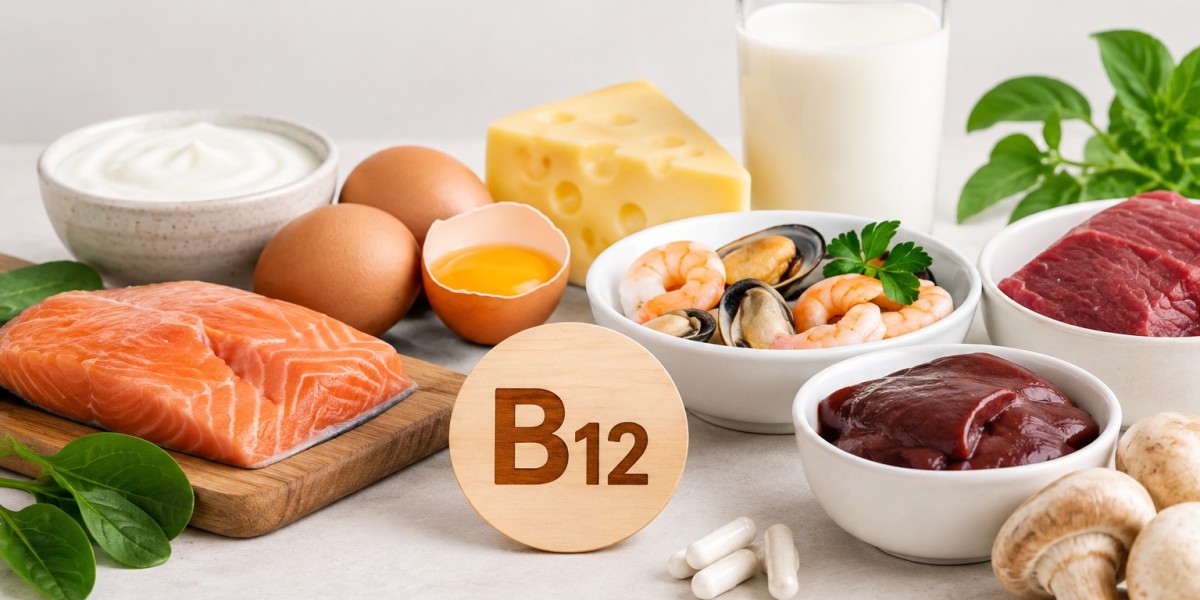
Vitamin B12 is naturally found mainly in animal-based foods. Including a variety of these foods in your diet can help you meet your daily nutritional needs.
Common sources include:
Milk and dairy products: Milk, yoghurt, cheese, and other dairy foods can provide B12.
Eggs: Eggs can be a convenient source of vitamin B12 and can easily be included in everyday meals.
Fish and seafood: Several types of fish and seafood contain vitamin B12 along with other nutrients.
Meat and poultry: Meat and poultry are among the naturally rich sources of B12.
For people following vegetarian or vegan diets, fortified foods may provide vitamin B12. Checking the nutrition label can help identify whether a product has been fortified with B12.
How Much Vitamin B12 Do You Need?
The amount of vitamin B12 needed varies according to age and life stage. For most healthy adults, the recommended dietary allowance is 2.4 micrograms per day.
Pregnancy and breastfeeding increase the daily requirement slightly. Children and teenagers also have different requirements depending on their age.
Rather than focusing only on one nutrient, it is useful to maintain a varied diet containing different food groups. This makes it easier to obtain a broad range of essential nutrients.
Who May Need to Pay More Attention to B12?
Some people may have a higher risk of inadequate vitamin B12 intake or absorption. This can include people who:
Follow vegetarian or vegan diets without reliable B12 sources
Have certain digestive or absorption problems
Have undergone some gastrointestinal surgeries
Take certain medications that can affect B12 absorption
Are older adults with reduced stomach acid
This does not mean everyone in these groups will have a deficiency. However, discussing individual dietary needs with a healthcare professional can be useful when there are concerns.
Signs That Should Not Be Ignored
Low vitamin B12 levels can develop gradually, and symptoms can vary from person to person. Possible signs include tiredness, weakness, pale skin, changes in sensation such as tingling or numbness, and certain problems affecting balance or concentration.
These symptoms can have many different causes, so they should not automatically be attributed to a B12 deficiency. If symptoms persist, a healthcare professional can recommend appropriate evaluation and testing.
Food First, Supplements When Needed
For many people, a balanced diet can provide sufficient vitamin B12. However, supplements may be recommended in certain situations, particularly when dietary intake or absorption is a concern.
It is better to avoid taking high-dose supplements simply because you feel tired or want more energy. If you think you may not be getting enough B12, speak with a healthcare professional about whether testing or supplementation is appropriate for you.
A Simple Way to Include B12 in Your Diet
Building B12-rich foods into regular meals does not have to be complicated. You could include eggs at breakfast, dairy products with meals or snacks, or fish, meat, or poultry as part of a balanced lunch or dinner.
If you follow a plant-based diet, look for reliable fortified food sources and discuss supplementation with a healthcare professional if needed.
Make Vitamin B12 Part of a Balanced Diet
Vitamin B12 is only one part of good nutrition, but it supports several functions that the body relies on every day. From healthy red blood cell formation to normal nerve function and DNA production, adequate B12 intake contributes to overall nutritional health.
The key is not to focus on one nutrient alone. A varied, balanced diet that includes appropriate sources of essential vitamins and minerals can help support your nutritional needs. If you have dietary restrictions or concerns about B12 intake, professional guidance can help you choose the right approach.