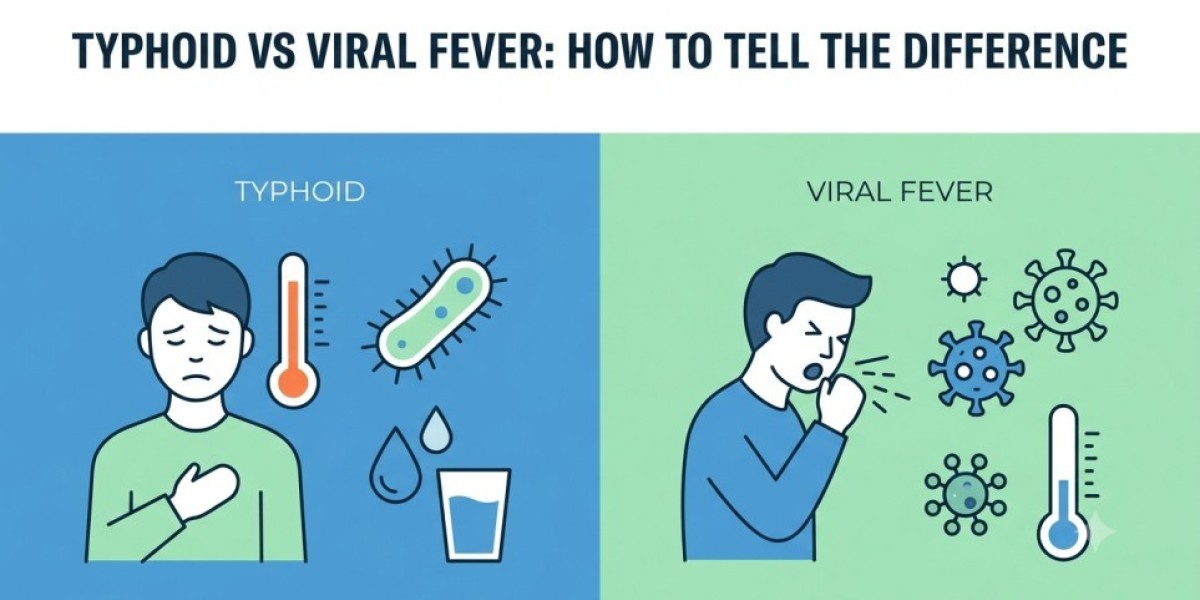

Fever is one of the most common signs of an infection, but not every fever has the same cause. Viral infections can cause fever, body aches, tiredness, and headaches, while typhoid fever may produce some similar symptoms along with digestive problems and a more persistent illness. Because of this overlap, it can be difficult to tell the difference based on symptoms alone.
Understanding the typical pattern of typhoid symptoms, knowing when testing may be useful, and recognizing warning signs can help people seek appropriate medical care instead of relying only on home treatment.
What Causes Typhoid and Viral Fever?
Typhoid fever is a bacterial infection caused mainly by Salmonella Typhi. It commonly spreads through contaminated food or water and can affect the digestive system as well as other parts of the body.
Viral fever, on the other hand, is a general term used for fever caused by a viral infection. Several viruses can cause fever, including those responsible for seasonal respiratory infections and other viral illnesses. The symptoms and severity can vary depending on the virus involved.
The two conditions can initially look similar, which is why the duration, accompanying symptoms, medical history, and appropriate laboratory tests may all be important.
Typhoid Symptoms vs Viral Fever Symptoms
The early symptoms of typhoid can resemble those of many viral infections. Fever, weakness, headache, and body aches may occur in both.
Some commonly reported typhoid symptoms include:
- Persistent or gradually increasing fever
- Headache
- Weakness and unusual tiredness
- Abdominal discomfort or pain
- Loss of appetite
- Nausea
- Constipation or diarrhoea
- Body aches
Viral fever may also cause fever, fatigue, headache, muscle aches, reduced appetite, and sometimes cough, sore throat, runny nose, vomiting, or diarrhoea, depending on the virus.
One important difference is that typhoid fever can persist and may become more serious if left untreated. However, symptoms alone cannot reliably confirm typhoid because several other infections can produce similar symptoms.
Does the Pattern of Fever Matter?
The pattern of fever can provide useful information to a doctor, but it should not be used as a diagnostic test by itself.
Typhoid fever may develop gradually in some people, with the temperature increasing over several days. Other symptoms may become more noticeable as the infection progresses.
Viral infections can also cause fever that lasts several days, and some viruses produce sudden high fever. Therefore, the way the fever begins and changes over time can offer clues, but it does not establish the cause.
If a fever continues, becomes high, or is accompanied by worsening symptoms, medical evaluation is more appropriate than trying to identify the infection based solely on the fever pattern.
What Is the Widal Test?
The Widal test is a blood test that has traditionally been used as an aid in the evaluation of suspected enteric fever. It looks for antibodies associated with Salmonella infection.
However, interpreting a Widal test can be complicated. A positive result does not always mean that a person currently has typhoid, because previous infection, vaccination, or exposure in areas where typhoid is common can affect antibody levels. False-positive and false-negative results can also occur.
For this reason, doctors may consider the patient's symptoms, examination, medical history, local disease patterns, and other laboratory findings rather than relying on one test result alone. Blood culture is generally considered an important laboratory method for confirming enteric fever when available and appropriate.
Can Platelet Count Help Distinguish Typhoid From Viral Fever?
A blood count may be included when investigating unexplained fever, but platelet levels by themselves cannot reliably distinguish typhoid from viral fever.
People often search for the platelet count normal range when they have a fever because platelet levels can change during certain infections. In general, a normal platelet count for healthy adults is approximately 150,000 to 450,000 platelets per microlitre of blood, although reference ranges can vary slightly between laboratories.
A low platelet count can occur with some viral infections, including dengue, but it is not specific to one disease. Similarly, platelet levels can vary for many other reasons.
This is particularly important in areas where dengue, malaria, typhoid, and other infections may circulate at the same time. A platelet result should therefore be interpreted alongside symptoms and other investigations rather than used to self-diagnose an illness.
Typhoid Treatment: Why Medical Advice Matters
Appropriate typhoid treatment generally involves antibiotics selected by a healthcare professional. The choice of antibiotic may depend on factors such as local antibiotic resistance patterns, the patient's age, medical history, illness severity, and laboratory findings.
Taking antibiotics without medical advice can be problematic because inappropriate treatment may not work and can contribute to antibiotic resistance. Patients who are prescribed antibiotics should follow the healthcare professional's instructions and complete the recommended course unless advised otherwise.
Adequate fluids and nutrition are also important during recovery. Severe cases may require hospital care, particularly when complications develop.
What About Typhoid Home Remedies?
There is considerable interest in typhoid home remedies, especially because fever can leave a person feeling weak and dehydrated. Supportive measures such as drinking sufficient fluids, eating easily tolerated nutritious foods, getting adequate rest, and maintaining good hygiene can support recovery.
However, home remedies should not replace medical treatment for confirmed or suspected typhoid. Typhoid is a bacterial infection, and untreated infection can lead to complications.
It is also important to avoid taking leftover antibiotics or using unproven remedies as substitutes for professional care. If symptoms are persistent or worsening, medical evaluation should be prioritized.
When Should You Get Tested for Fever?
Testing may be worth discussing with a healthcare professional when fever is persistent, recurrent, unusually high, or accompanied by significant weakness, abdominal symptoms, dehydration, confusion, breathing difficulties, persistent vomiting, bleeding, or other concerning signs.
Testing decisions can vary depending on the symptoms and the infections common in a particular area. A doctor may recommend a complete blood count or specific tests for conditions such as typhoid, dengue, malaria, or other infections based on the clinical situation.
The key point is that fever is a symptom rather than a diagnosis. Identifying the underlying cause is important because different infections require different approaches to treatment.
Preventing Typhoid and Other Infections
Good hygiene can reduce the risk of typhoid and several other infections. Drinking safe water, washing hands before eating and after using the toilet, eating properly prepared food, and avoiding food or water from questionable sources can help reduce exposure.
Vaccination can also provide protection against typhoid and may be recommended for certain people depending on their circumstances and exposure risk.
For viral infections, prevention measures depend on the specific virus. General practices such as hand hygiene, adequate ventilation, avoiding close contact with people who are sick, and following recommended vaccinations can help reduce the spread of several viral illnesses.
The Bottom Line
Typhoid and viral fever can share many symptoms, making them difficult to distinguish without proper evaluation. Persistent fever, digestive symptoms, and increasing weakness may raise suspicion of typhoid, but these signs are not enough to confirm the infection.
Tests such as the Widal test may be used in certain situations, while other investigations can provide additional information. Similarly, platelet counts can be useful when evaluating some febrile illnesses but should not be used alone to diagnose typhoid or viral fever.
Rather than relying solely on symptoms or home remedies, persistent or worsening fever should be evaluated by a healthcare professional. Early identification of the underlying infection can help ensure that appropriate treatment and supportive care are started at the right time.