
Pretend play is one of the most natural ways children explore the world around them. A simple doll can become a baby, a patient, a teacher, a traveler, a shopkeeper, or even a character in an entirely imaginary adventure. When children create these situations, they are not simply passing time—they are practicing imagination, storytelling, decision-making, communication, and problem-solving.
Doll-based pretend play gives children the freedom to create situations without one fixed “correct” way to play. Research and educational resources commonly associate pretend play with creativity, communication, social development, and imaginative thinking. For example, doll and stroller play can encourage children to create conversations and imaginary scenarios, while role-play allows them to explore different perspectives.
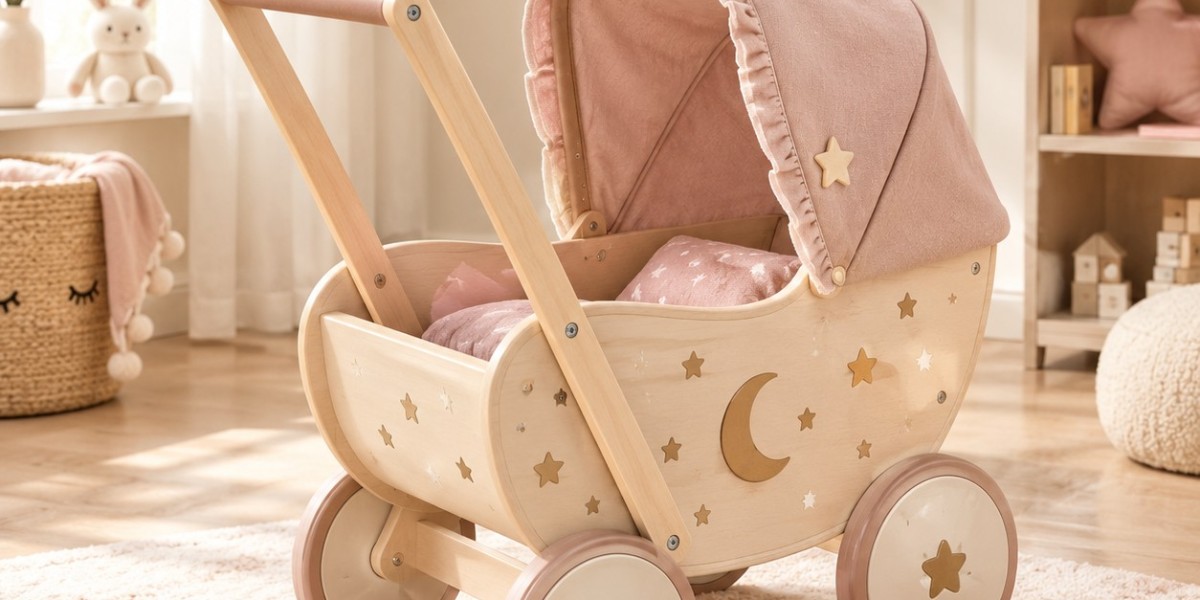
A doll toy trolley can add another dimension to this experience. Instead of simply holding or carrying a doll, children can take their doll on trips, organize pretend activities, and create stories around everyday experiences. This type of open-ended play can provide countless opportunities for creative thinking.
What Is Pretend Play?
Pretend play happens when children use imagination to transform ordinary objects, toys, or situations into something different. A child might pretend a doll is a real baby, a toy room is a hospital, or a trolley is transportation for an exciting family journey.
Unlike structured games, pretend play does not always have predetermined rules. Children decide what happens next. They can change characters, introduce new problems, create solutions, and develop stories as they go.
This freedom is important for creative thinking because creativity requires children to imagine possibilities beyond what is immediately visible.
A doll may simply be a toy sitting in a child's room, but during pretend play, it can become the center of an entire imaginary world.
Dolls Give Children the Freedom to Create Stories
One of the strongest ways dolls encourage creativity is through storytelling.
Children naturally create narratives when they play with dolls. A child might say that the doll is going shopping, visiting a friend, going to school, feeling sick, or preparing for a holiday. The story can change from one minute to the next.
For example, a child playing with a doll toy trolley might create a story such as:
“My doll needs to buy food for her family.”
The child may then decide where the doll is going, what she needs to buy, who she will meet, and what happens when she returns home.
There is no requirement for the story to follow real-world logic. The child is free to invent characters, locations, events, and solutions. This freedom gives imagination room to develop.
Pretend Play Encourages Flexible Thinking
Creative thinkers need to be flexible. They should be able to consider different possibilities rather than becoming dependent on one answer.
Doll play naturally encourages this flexibility.
A child may begin by pretending that a doll is going shopping. Suddenly, the child may decide that the doll has become a doctor. Later, the doll could be traveling to another city or preparing for a birthday party.
There is no need to restart the game. The child simply changes the story.
This ability to adapt is valuable because children learn that one object can have multiple purposes and that a situation can have multiple outcomes.
Children Learn to Solve Problems Through Role-Play
Creative thinking and problem-solving are closely connected.
During pretend play, children frequently create small problems and then attempt to solve them. Perhaps the doll is lost, needs food, has to visit a doctor, or needs to prepare for a special event.
The child decides what should happen next.
For example, if a child's doll “gets sick,” the child might create a pretend doctor's office. The child may use another toy as medical equipment, make a bed for the doll, and decide what treatment the doll needs.
These activities encourage children to think through situations and make decisions.
A doll trolley can also become part of these imaginary problem-solving situations. The child might decide that the doll needs to travel somewhere, carry belongings, or go on an adventure.
The important part is not whether the imaginary solution is realistic. The important part is that the child is practicing the process of identifying a problem and inventing a solution.
Dolls Help Children Explore Different Perspectives
Pretend play allows children to become different characters.
A child may play the role of a parent caring for a baby doll. At another moment, the child may become a teacher, doctor, shopkeeper, or traveler.
This role switching encourages children to think about what different people might say, want, or feel.
When a child pretends to care for a doll, for example, they may ask:
- Is the doll hungry?
- Is the doll tired?
- Where should the doll go?
- What does the doll need?
- How can I help?
These questions encourage perspective-taking.
Children can also create conversations between multiple dolls. One doll might ask a question while another provides an answer. Even though the child controls both characters, the interaction requires the child to imagine different viewpoints.
Pretend Play Builds Communication Skills
Creative thinking often involves expressing ideas clearly. Doll play gives children a safe environment to practice communication.
Children may talk to their dolls, give instructions, create conversations, or explain what is happening in their imaginary world.
When two or more children play together, the communication becomes even more complex. They may need to decide who plays which character, where the story takes place, and what happens next.
They learn to explain ideas, listen to others, negotiate roles, and continue a shared story.
Pretend-play toys can therefore become more than entertainment. They can provide opportunities for children to practice language while developing their own imaginary scenarios.
Everyday Experiences Become Creative Adventures
Children often copy things they see adults doing, but they rarely reproduce them exactly. Instead, they add imagination.
A visit to a supermarket might inspire a child to create a pretend shopping trip. A family outing might become an imaginary journey. Going to the doctor might become a hospital adventure for a doll.
This process transforms everyday experiences into creative stories.
A doll toy trolley can be particularly useful because it resembles objects children may see in everyday life. A child can use it to take a doll around the house or create an imaginary trip.
The familiar design provides a starting point, while the child's imagination determines what the trolley represents and where the story goes.
Open-Ended Toys Support Independent Creativity
Some toys are designed around one specific activity. Once the activity is complete, children may have fewer ways to continue playing.
Dolls are different because they can be used in many scenarios.
A child can dress a doll, feed it, take it for a walk, put it to sleep, take it shopping, or create an entire imaginary family around it.
Accessories such as a trolley can expand those possibilities.
This is one reason open-ended pretend play can be valuable. Children are not simply following instructions. They are deciding what to do.
The more control children have over the story, the more opportunities they have to experiment with ideas.
Dolls Can Encourage Emotional Expression
Pretend play can also give children a way to express thoughts and emotions through imaginary characters.
A child may make a doll happy, worried, excited, angry, tired, or surprised. By controlling the story, children can explore different emotional situations.
For example, a child might pretend that a doll is nervous about going somewhere new. The child can then decide how another character helps the doll feel better.
This type of role-play gives children an opportunity to explore emotional situations in a playful environment.
It can also encourage empathy because children are asked to consider what their imaginary characters might need or feel.
Playing With Others Adds Another Creative Dimension
While independent doll play can be highly imaginative, playing with siblings or friends introduces new ideas.
Two children may have completely different ideas about what should happen in the story. One might want the doll to go shopping, while the other wants the doll to travel.
Instead of ending the game, children can negotiate and combine their ideas.
Perhaps the doll goes shopping before beginning the journey.
This simple process teaches children that creativity does not always happen alone. Ideas can be shared, changed, combined, and improved through collaboration.
Pretend shopping and trolley play can be particularly suitable for shared role-play because children can take different roles, such as customer, parent, shopkeeper, or doll caregiver. Similar pretend-play toys are commonly designed around social interaction, storytelling, and imaginative activities.
How Parents Can Encourage Creative Doll Play
Parents do not need to create complicated activities. Sometimes the best approach is simply to provide the toys and allow children to lead.
Instead of telling a child exactly what to do, parents can ask open-ended questions such as:
- “Where is your doll going today?”
- “What does your doll need?”
- “Who will she meet?”
- “What happened on the journey?”
- “How can we help the doll?”
- “What should happen next?”
These questions encourage children to develop their own ideas.
Parents can also provide safe household items that inspire additional stories. A small blanket can become a doll's bed, a box can become a house, and a toy trolley can become transportation.
The goal is not to create a perfect play setup. The goal is to give children enough freedom to imagine.
Why the Doll Toy Trolley Can Expand Pretend Play
A doll trolley can provide children with an additional way to interact with their dolls. Instead of keeping the doll in one location, children can move it around and turn movement into part of the story.
The trolley could represent a stroller, travel vehicle, shopping trolley, or another imaginary form of transportation depending on the child's story.
This flexibility is important because creative play benefits from objects that can take on different meanings.
The Astravyx Doll Toy Trolley can therefore be presented as an accessory that supports imaginative doll-based adventures rather than simply as a toy for moving a doll. The concept fits naturally with the broader benefits associated with doll and trolley pretend play, including storytelling, communication, role-playing, and creative thinking.
Creating a Creative Play Routine
Children do not need hours of complicated activities to benefit from pretend play. Even short, regular play sessions can give them opportunities to create stories.
A simple routine could include:
Choose a character: Let the child select a doll.
Choose a destination: The doll might visit a store, park, school, or imaginary location.
Create a problem: Something unexpected happens during the journey.
Find a solution: The child decides how the character responds.
Continue the story: Add another character or event.
Finish with a new idea: Ask the child what adventure the doll should have next.
This structure provides a starting point without controlling the entire game.
The Long-Term Value of Creative Pretend Play
Creative thinking is useful far beyond childhood play. The ability to imagine possibilities, approach problems from different directions, communicate ideas, and adapt to changing circumstances can support learning throughout life.
Pretend play provides children with a low-pressure environment where mistakes do not have serious consequences. They can change the story whenever they want.
If one idea does not work, they can try another.
If a character disappears, they can create a new one.
If a story becomes boring, they can invent an adventure.
That freedom is what makes pretend play so powerful.
5 Frequently Asked Questions
1. How does playing with dolls encourage creativity?
Playing with dolls allows children to invent characters, stories, conversations, and imaginary situations. Because there is usually no single correct way to play, children can experiment with different ideas and develop their own narratives.
2. Can a doll trolley improve pretend play?
Yes. A doll trolley can expand the possibilities of pretend play by allowing children to move their dolls between different locations and create travel, shopping, family, or adventure-based stories.
3. What skills can children practice through doll role-play?
Doll role-play can provide opportunities to practice storytelling, communication, decision-making, problem-solving, emotional expression, perspective-taking, and social interaction.
4. Should parents direct children's pretend play?
Parents can provide ideas and ask open-ended questions, but children should generally have freedom to control their own stories. Allowing children to decide what happens encourages independence and creative thinking.
5. Is pretend play useful when children play alone?
Absolutely. Independent pretend play gives children an opportunity to create their own characters, stories, and solutions without depending on another person to direct the activity. Shared play can add social benefits, while solo play can provide valuable space for imagination.
Conclusion
Pretend play with dolls is much more than a simple childhood pastime. It gives children an open-ended environment where they can invent stories, explore different perspectives, solve imaginary problems, communicate ideas, and experiment with countless possibilities.
A doll toy trolley can make these experiences even more engaging by adding movement and new destinations to children's imaginary worlds. Whether a doll is going shopping, visiting friends, traveling on an adventure, or simply taking a walk, the child gets to decide what happens next.
That freedom is at the heart of creative thinking. When children are given the opportunity to imagine, experiment, change their stories, and create their own solutions, ordinary toys can become powerful tools for imaginative learning.
For parents looking to encourage creativity through play, dolls and accessories such as a trolley offer a simple starting point: give children the characters, give them the freedom, and let their imagination write the story.