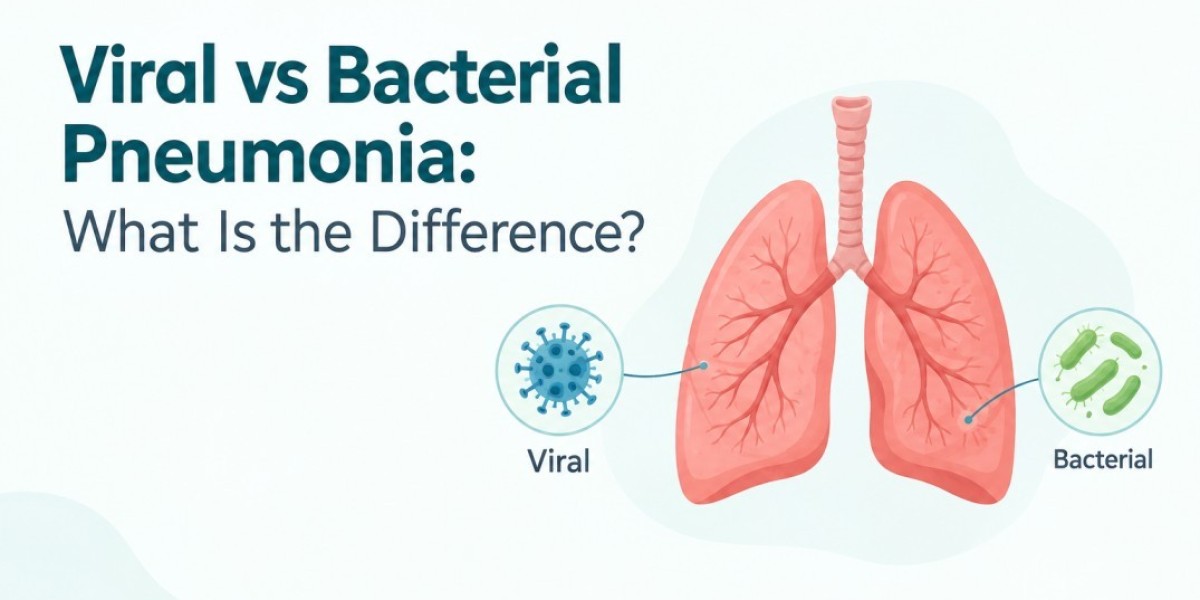

Pneumonia is a lung infection that can make breathing difficult and leave a person feeling unusually weak and unwell. Although pneumonia is often discussed as one condition, it can have different causes. Viruses and bacteria are among the most common causes, and the distinction matters because the appropriate treatment can be different.
The challenge is that viral and bacterial pneumonia can cause many of the same symptoms, including cough, fever, tiredness and shortness of breath. This means that simply looking at symptoms is not always enough to determine what type of infection a person has. Understanding some of the general differences can help people recognize when a persistent respiratory illness may need medical attention.
What Is Viral Pneumonia?
Viral pneumonia occurs when a virus infects the lungs and causes inflammation in the respiratory system. Several respiratory viruses can lead to pneumonia, including influenza, respiratory syncytial virus (RSV), COVID-19 and human metapneumovirus (HMPV).
Viral pneumonia may begin after what seems like a typical viral respiratory infection. A person might initially experience symptoms such as a runny or blocked nose, sore throat, cough, fever, body aches or fatigue. In some cases, the infection can move deeper into the respiratory tract and affect the lungs.
The severity can vary considerably. A healthy person may recover with supportive care, while older adults, young children and people with certain underlying health conditions may be more vulnerable to serious respiratory illness.
Some viral infections also have specific treatments. For example, antiviral medicines may be appropriate for certain cases of influenza or COVID-19, particularly for people at increased risk of severe disease. Early medical advice can be important because some antiviral treatments work best when started soon after symptoms begin.
What Is Bacterial Pneumonia?
Bacterial pneumonia develops when bacteria infect the lungs. Streptococcus pneumoniae is one of the important bacterial causes, while other bacteria, including Mycoplasma pneumoniae and Haemophilus influenzae, can also cause respiratory infections and pneumonia.
Bacterial pneumonia may sometimes develop as a primary infection, but bacterial infections can also occur after a viral respiratory illness. This is one reason why a person may initially seem to be recovering from an infection and then become unwell again.
Symptoms can include fever, chills, cough, chest discomfort, tiredness and difficulty breathing. Pneumococcal pneumonia, for example, may have a relatively sudden onset, with fever and chills accompanied by cough and shortness of breath.
Treatment depends on the specific infection and the individual's health. When pneumonia is caused by bacteria that respond to antibiotics, a healthcare professional may prescribe an appropriate antibiotic. Antibiotics do not treat viral infections, so taking them without medical advice is not recommended.
Book Now - Pneumonia Panel in Agra
Viral vs Bacterial Pneumonia: Key Differences
The symptoms of viral and bacterial pneumonia can overlap, which makes it difficult to identify the cause based on symptoms alone. However, there are some general patterns.
Cause: Viral pneumonia is caused by viruses such as influenza, RSV or COVID-19, while bacterial pneumonia is caused by bacteria such as Streptococcus pneumoniae or Mycoplasma pneumoniae.
Onset: Some bacterial pneumonias can develop relatively suddenly, with fever, chills and respiratory symptoms appearing over a short period. Viral pneumonia may develop alongside or after symptoms of a viral respiratory infection. However, these patterns are not reliable enough to diagnose the cause on their own.
Cough: Both types can cause coughing. Bacterial pneumonia may sometimes produce mucus or phlegm, but the appearance of sputum alone cannot reliably establish whether an infection is bacterial.
Fever: Fever can occur with both viral and bacterial pneumonia. A high fever or chills may occur with some bacterial infections, but fever patterns vary widely.
Treatment: Certain bacterial pneumonias may require antibiotics. Viral pneumonia generally does not improve with antibiotics, although antiviral treatment may be considered for some viral infections.
The important point is that these differences are general tendencies rather than a self-diagnosis checklist. Healthcare professionals may need a physical examination, medical history, imaging or laboratory testing to determine what is happening.
Can a Viral Infection Turn Into Bacterial Pneumonia?
Yes, a viral respiratory infection can sometimes be followed by a bacterial infection. This is commonly referred to as a secondary bacterial infection.
For example, someone may develop a viral illness, begin to feel better and then experience a return or worsening of fever, cough, breathing problems or general weakness. Such a change does not automatically mean that bacterial pneumonia has developed, but it can be a reason to seek medical evaluation.
This is particularly important for people who are at higher risk of complications from respiratory infections.
How Is the Cause of Pneumonia Determined?
There is no single symptom that can reliably distinguish viral pneumonia from bacterial pneumonia. Healthcare professionals consider several factors, including the person's symptoms, medical history, physical examination and severity of illness.
Depending on the situation, doctors may recommend chest imaging or laboratory tests. Some tests can identify particular viruses or bacteria, while other investigations can help assess how severely the lungs are affected.
Even with medical evaluation, the exact organism is not always identified. The Centers for Disease Control and Prevention notes that healthcare providers are not always able to determine which germ caused a person's pneumonia.
This is why it is better to avoid assuming that every cough with fever is bacterial or that every respiratory infection is viral.
Why You Shouldn't Take Antibiotics Without Advice
One of the most common misconceptions about pneumonia is that antibiotics are always needed. Antibiotics work against bacteria, not viruses. Taking them when they are unnecessary will not treat a viral infection and can expose a person to potential side effects and contribute to antibiotic resistance.
If a healthcare professional determines that a bacterial infection requires antibiotics, the medication should be taken exactly as prescribed. People should not use leftover antibiotics, share medicines or stop a prescribed course without discussing it with their healthcare provider.
When Should You Seek Medical Attention?
A persistent or worsening cough accompanied by fever deserves attention, particularly when breathing becomes difficult or symptoms interfere with normal activities.
Medical advice is especially important for older adults, young children and people with chronic lung disease, heart conditions or other factors that may increase the risk of severe respiratory illness.
Emergency medical attention is needed when someone is struggling significantly to breathe, develops blue or pale lips or skin, coughs up blood, or suddenly becomes confused.
The Takeaway
Viral and bacterial pneumonia are different infections, but they can look remarkably similar at first. Both can cause fever, cough, fatigue, chest discomfort and breathing difficulties, so symptoms alone may not reveal the underlying cause.
The distinction matters because treatment can differ. Some bacterial infections may require antibiotics, while certain viral illnesses may be treated with antiviral medicines or supportive care. A healthcare professional can determine what evaluation and treatment are appropriate.
Rather than trying to identify the type of pneumonia based solely on the colour of mucus, severity of fever or a particular cough, pay attention to how symptoms develop and whether they are improving. Persistent or worsening respiratory symptoms should not be ignored, especially when breathing difficulties or other warning signs appear.