
For most of its history, security worked one way: something bad happens, a camera records it, someone reviews the footage afterward. That model isn't disappearing overnight, but it's quickly becoming the backup plan rather than the main strategy. The real shift happening right now is toward systems that see trouble coming before it actually arrives.
This is where AI and intelligent surveillance are heading together — not just watching more accurately, but predicting risk before it turns into an actual incident. That shift from reactive to predictive is arguably the biggest change security technology has seen in decades.
Let's look at where this is heading, what's actually driving it, and what it means for how properties and businesses get protected going forward.
The Shift From Reacting to Predicting
For years, the security industry measured success by how quickly a team could respond after something went wrong. That's changing. The most significant development shaping modern security is predictive analytics — systems that study behavior patterns, historical data, and environmental context to flag risk before an incident happens, not after.
This shows up in a few concrete ways:
- Identifying behavior patterns that typically precede an incident
- Flagging anomalies like unusual after-hours activity or unfamiliar vehicles
- Correlating security events with external factors like time patterns or local conditions
- Predicting when and where security resources are actually needed most
Instead of asking "what happened," these systems are increasingly built to ask "what's about to happen" — which is a fundamentally different question, and one traditional systems were never designed to answer.
Why Edge AI Is Becoming the Backbone of Modern Systems
Processing Happens Right at the Camera, Not Somewhere Far Away
A big part of what's making predictive security possible is edge AI — running artificial intelligence calculations directly on the device itself, rather than sending everything to a distant server first. This matters because it cuts response latency down dramatically, often to well under a tenth of a second, while also keeping sensitive data processed locally instead of traveling across a network.
It Makes Real-Time Decisions Actually Realistic
Sending every frame of video to the cloud for analysis introduces delay, and delay is exactly what predictive security can't afford. Edge processing lets systems classify what they're seeing almost instantly — telling apart a delivery driver, a stray animal, and someone genuinely lingering somewhere they shouldn't be — without waiting on a round trip to a remote server.
What Truly Intelligent Surveillance Looks Like Today
Systems That Understand Context, Not Just Motion
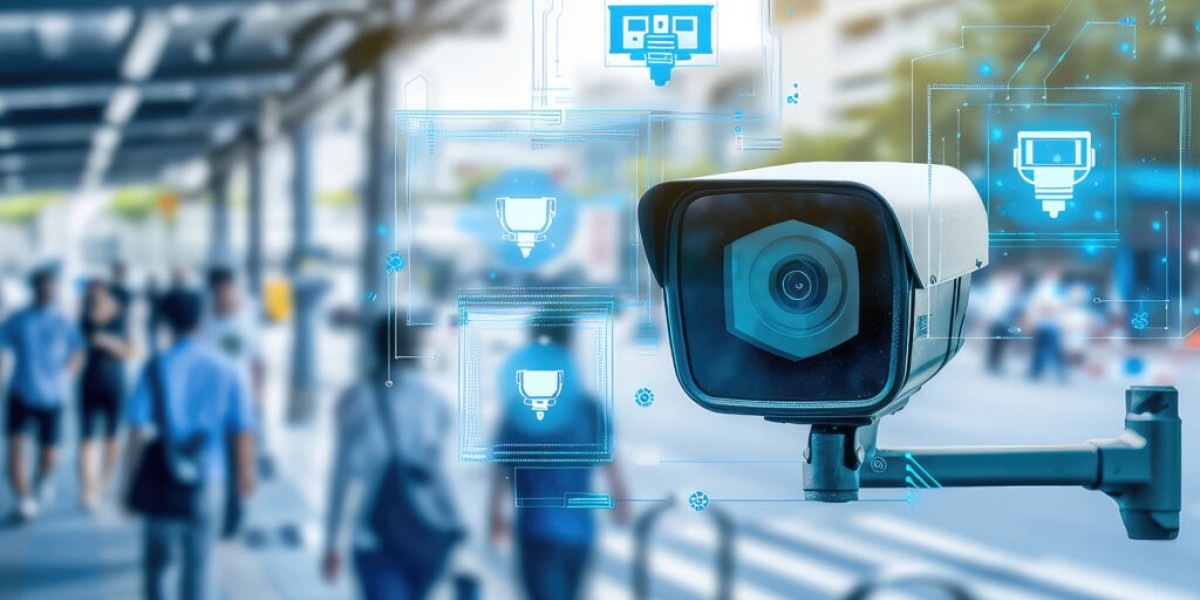
Older motion-based systems triggered on anything that moved, which is exactly why false alarms became such a persistent problem. Modern AI analytics classify behavior instead, recognizing the difference between routine activity and something that actually warrants attention. That shift alone dramatically reduces the noise security teams have to sift through daily.
Everything Connected on One Platform
Standalone alarms, isolated cameras, and separate access control systems are giving way to fully integrated platforms — sensors, cameras, lighting, locks, and alarms all working together through one connected system. This kind of integration means a single flagged event can trigger a coordinated response automatically, rather than depending on someone manually connecting the dots across several disconnected tools.
Sensors That Detect What Cameras Physically Can't
Some of the most interesting developments aren't visual at all. Smart sensors can now detect chemical changes, unusual sounds, or air quality shifts, extending security coverage into areas where cameras alone fall short, or where privacy regulations limit video monitoring entirely.
Security Systems That Actively Participate, Not Just Alert
A newer development gaining real traction is agentic AI — systems that don't just flag an issue and wait for a human to act, but participate directly in the response itself. This represents a genuine shift from a tool that verifies incidents after the fact toward a system that actively works to prevent them in the first place.
What This Means for Businesses and Property Owners
Put simply, these advances are translating into a few consistent, practical benefits:
- Threats identified before they fully develop, not after
- Dramatically fewer false alarms, thanks to smarter contextual analysis
- Faster, often automated response to genuine incidents
- Broader coverage through integrated sensors and connected systems
- Security operations that scale without requiring proportionally more staff
For businesses across the region investing in next-generation protection, reliable AI camera Saudi Arabia wide deployments are increasingly built around exactly this predictive, integrated approach, rather than the older record-and-review model many facilities still rely on.
This shift is showing up at the solutions level too. Organizations upgrading their infrastructure are turning to comprehensive AI surveillance solutions KSA businesses trust specifically because these systems combine predictive analytics, edge processing, and full integration into one coherent security strategy, rather than a patchwork of disconnected tools.
Final Thoughts
Security has spent decades measuring success by how well it documented what already went wrong. That era isn't over completely, but it's clearly no longer where the real innovation is happening. The future belongs to systems that see risk building before it becomes an actual incident, and respond in the moments that matter most.
As predictive analytics, edge AI, and full system integration continue to mature, the gap between traditional surveillance and genuinely intelligent security keeps growing wider. For any organization serious about staying ahead of risk rather than just recording it, this shift isn't a distant possibility anymore. It's already well underway.