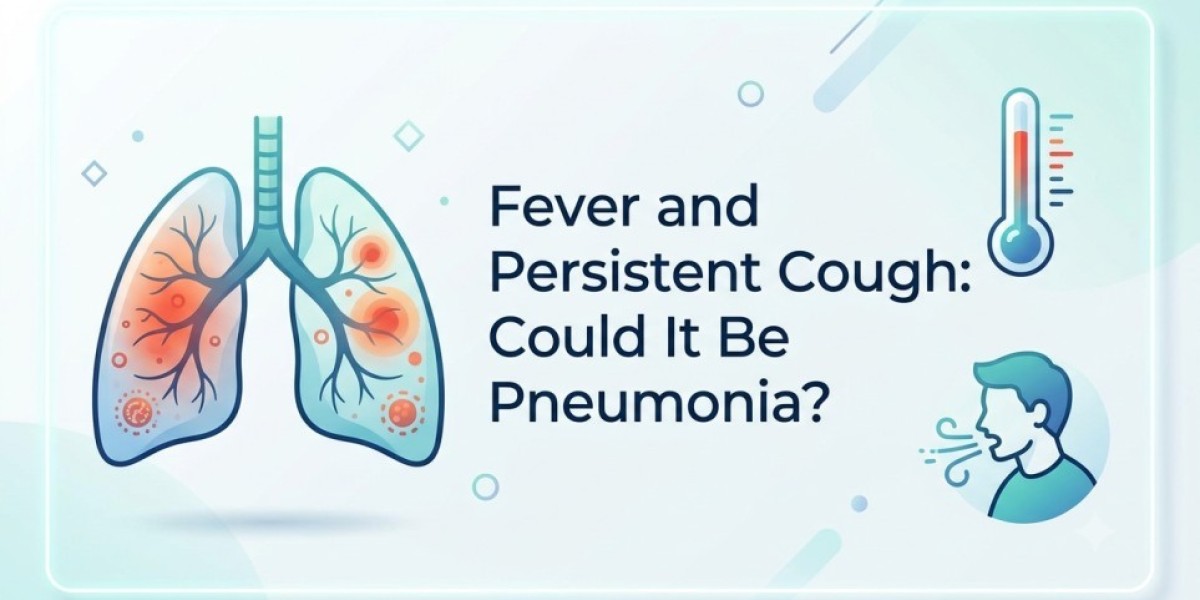

A fever accompanied by a cough is common, especially during seasons when respiratory infections are spreading. In many cases, these symptoms are caused by a cold, flu, or another mild respiratory infection and improve with rest and supportive care. But when fever continues or a cough becomes persistent, severe, or is accompanied by breathing difficulties, it may be a sign of something more serious, including pneumonia.
Pneumonia is an infection of the lungs that can be caused by bacteria, viruses, fungi, and, less commonly, other organisms. Because its early symptoms can overlap with those of common respiratory illnesses, it is not always easy to identify based on symptoms alone.
Understanding the warning signs can help people recognize when medical evaluation may be necessary.
What Is Pneumonia?
Pneumonia occurs when an infection affects the lungs and causes inflammation. The infection can affect one or both lungs and may interfere with normal breathing and oxygen exchange.
Bacterial and viral infections are among the most common causes. Influenza, COVID-19, respiratory syncytial virus (RSV), and certain bacterial infections can all lead to pneumonia in some people.
The illness can range from mild to severe. While some otherwise healthy people recover without major complications, older adults, young children, people with chronic medical conditions, and those with weakened immune systems may have a greater risk of serious illness.
Read Also - Nimoniya Ke Lakshan in Hindi
Is a Persistent Cough Always a Sign of Pneumonia?
Not necessarily.
A cough can continue for several days or even weeks after certain respiratory infections. Conditions such as viral bronchitis, influenza, allergies, asthma, and other respiratory problems can also cause prolonged coughing.
However, a persistent cough becomes more concerning when it occurs alongside other symptoms such as fever, shortness of breath, chest discomfort, significant fatigue, or worsening illness.
The presence of mucus also does not automatically mean that someone has a bacterial infection. Symptoms need to be considered together, rather than relying on one sign alone.
Symptoms That May Point Toward Pneumonia
Pneumonia symptoms can develop suddenly or gradually. Common symptoms include:
- Persistent or worsening cough
- Fever or chills
- Shortness of breath
- Chest pain, particularly while breathing or coughing
- Fatigue or unusual weakness
- Loss of appetite
- Body aches
- Nausea, vomiting, or diarrhoea in some cases
Older adults may sometimes experience confusion or changes in mental status rather than the typical symptoms associated with pneumonia.
The combination of symptoms matters. For example, a cough by itself may not be particularly concerning, but a cough accompanied by persistent fever and increasing breathlessness deserves medical attention.
When Should You See a Doctor?
There is no single number of days that can determine whether a cough has become pneumonia. Instead, pay attention to how symptoms are progressing.
Medical advice is particularly important if:
- Fever remains high or continues for several days.
- A cough is getting worse rather than improving.
- You develop shortness of breath.
- You experience chest pain while coughing or breathing.
- You cough up blood or blood-stained mucus.
- You feel unusually weak or severely unwell.
- Symptoms improve temporarily and then become worse again.
People over 65, young children, pregnant individuals, and people with chronic heart, lung, kidney, or other long-term conditions may need earlier medical assessment when respiratory symptoms develop.
How Is Pneumonia Diagnosed?
Symptoms alone cannot always confirm pneumonia because several respiratory conditions can look similar.
A healthcare professional may begin by asking about the symptoms, their duration, medical history, and any existing health conditions. A physical examination may include listening to the lungs and checking vital signs.
Depending on the situation, additional tests may be recommended. These can include a chest X-ray, blood tests, or testing of respiratory samples. The exact tests depend on the person's symptoms and the suspected cause of the infection.
It is important not to assume that every fever and cough requires antibiotics. Antibiotics work against bacterial infections, not viral illnesses. The appropriate treatment depends on what is causing the illness and how severe it is.
Book now Pneumonia Panel - Pneumonia Test in Agra
Who Has a Higher Risk of Pneumonia?
Although pneumonia can affect anyone, certain groups have a greater risk of developing serious illness.
These include older adults, particularly those aged 65 and above, young children, people with chronic heart or lung disease, people with diabetes, and individuals with weakened immune systems. Smoking and excessive alcohol consumption can also increase the risk.
For these groups, it is especially important not to ignore worsening respiratory symptoms.
When Is a Cough and Fever an Emergency?
Some symptoms require urgent medical attention rather than waiting for a routine appointment.
Seek emergency help if someone is struggling to breathe, cannot speak normally because of breathlessness, develops blue or pale lips or skin, coughs up blood, or suddenly becomes confused. These can indicate a serious illness requiring immediate assessment.
In children, unusual sleepiness, difficulty waking, significant breathing difficulty, or a child becoming floppy can also be emergency warning signs.
Can Pneumonia Be Prevented?
Not every case of pneumonia can be prevented, but several measures can reduce the risk.
Keeping vaccinations up to date can help protect against some infections that can cause pneumonia. Depending on age, health conditions, and local recommendations, vaccines for illnesses such as influenza, COVID-19, pneumococcal disease, and RSV may be appropriate.
Simple habits also matter. Regular handwashing, covering coughs and sneezes, avoiding close contact with people who are sick, and staying away from others when experiencing a significant respiratory infection can help reduce the spread of respiratory illnesses. Smoking cessation is another important step because smoking can increase the risk of pneumonia.
The Bottom Line
A fever and persistent cough do not automatically mean pneumonia. Many respiratory infections can produce similar symptoms and eventually improve on their own. However, symptoms such as persistent fever, worsening cough, shortness of breath, chest pain, severe fatigue, or confusion should not be ignored.
The most important thing is to look at the overall pattern of illness rather than trying to diagnose pneumonia from one symptom. If symptoms are severe, worsening, or affecting breathing, seeking medical advice promptly can help determine the cause and the appropriate treatment.
Early attention is particularly important for people who are more vulnerable to serious respiratory infections. When in doubt, it is safer to discuss persistent or worsening symptoms with a qualified healthcare professional rather than relying solely on home remedies or self-diagnosis.