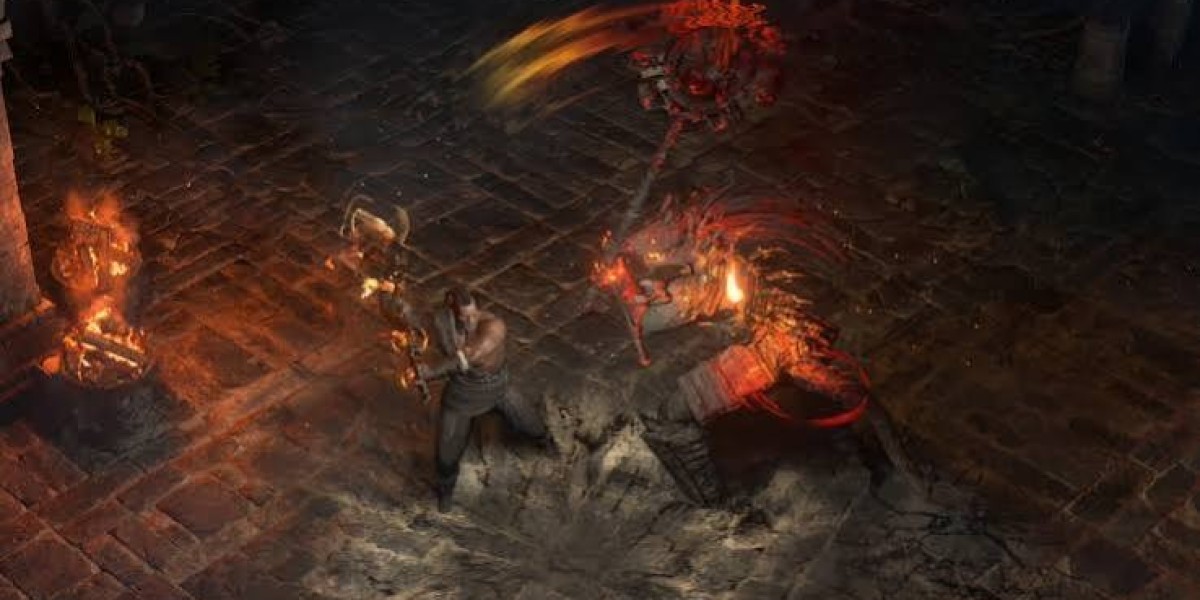

The campaign in Path of Exile 2 does a good job of exposing weaknesses that regular enemies may never reveal. A build can feel excellent while moving through a zone, then suddenly struggle when a boss demands sustained single-target damage and careful movement. Poor POE 2 Items can certainly contribute to the problem, but many failed attempts are caused by preparation rather than a lack of expensive equipment. Checking defenses, flasks, resources, and skill choices can often solve the problem without rebuilding the character.
This is especially relevant when your POE 2 Items were selected mainly for fast clearing. Clearing speed and boss performance are related, but they are not the same thing. A setup designed to eliminate groups quickly may have weak single-target scaling, limited recovery, or insufficient resistance against a particular boss. Because death restores the boss to full health, repeated attempts without changing anything can become an exhausting cycle.
Build Around the Encounter
The first step is to stop treating every boss as if it were another group of campaign monsters.
Look at the encounter and identify the damage type that causes the most trouble. If fire attacks are responsible for most of your deaths, prioritize fire resistance. If poison is the issue, adjust your defensive equipment before trying to increase damage.
Temporary gear swaps are completely reasonable during the campaign. You do not need to maintain one equipment set for every situation.
Runes can also be useful when a resistance gap appears at an inconvenient time. A resistance Rune may allow you to keep otherwise useful equipment while covering a defensive weakness until a better item drops.
Level When Necessary
Being underleveled can make every other problem worse. You take more damage, deal less effective damage, and have fewer passive points available to strengthen the character.
Before attempting a difficult boss repeatedly, compare your current level with the surrounding zone. If there is a significant gap, return to an efficient farming area and gain another level or two.
This is not wasted time. The extra experience can provide passive points, while the additional monster kills may produce equipment upgrades. Sometimes the difference between an impossible fight and a manageable one is simply having a slightly stronger character.
Keep Flasks Current
Do not wait until the boss is killing you to inspect your flasks.
Campaign vendors regularly provide better flask bases as you progress. Buying an upgrade before an important encounter is usually a much easier solution than trying to compensate for poor recovery with movement alone.
Think about flask charges as a limited resource. Early in the fight, avoid using recovery simply because your Life is not completely full. Save some charges for moments when a dangerous mechanic forces you to recover quickly.
Bleed and freeze removal are also valuable. Losing movement because of freeze or continuing to lose Life from bleed while a boss attack is approaching can create a chain of problems that is difficult to escape.
Separate Clear Skills From Boss Skills
Your clearing setup should not always be your boss setup.
For normal campaign packs, wide area coverage and fast monster removal are extremely useful. Against a single boss, however, those advantages may provide little value.
Before entering the arena, consider swapping some support gems toward single-target multipliers. The ideal setup depends on your build, but the principle remains the same: use the tools that perform best against the enemy in front of you.
This can also be a good time to use skills that take advantage of a boss's vulnerabilities. Frost abilities may provide useful freeze opportunities in certain encounters, while fire-based skills can perform well against specific bosses. Stun, armor break, and other control mechanics can also create valuable openings.
Plan Around Stagger
Do not treat stagger as something that happens accidentally.
If your build can build stun or armor-break pressure, use those skills deliberately. Watch the boss's stagger progress and prepare your strongest attacks for the resulting opening.
A stagger window can turn a dangerous section of the fight into a controlled damage phase. Instead of trying to attack continuously while dodging every mechanic, you can spend part of the encounter preparing the opening and then commit your burst when it is safest.
This approach is particularly helpful for characters that do not have enough damage to end the fight immediately.
Manage the Final Phase
The end of a boss fight often causes more deaths than the beginning. Players see the low health bar and become impatient.
That is when defensive discipline matters most.
If the arena becomes more dangerous, continue respecting mechanics even when the boss is close to death. Keep enough flask charges available for emergencies and avoid standing in a damaging area simply to squeeze in another attack.
Remember that surviving another ten seconds is always better than dying with the boss at 5% health.
Final Preparation Before the Arena
A reliable boss routine does not have to take long. Check your resistances, confirm your level, inspect flask bases and modifiers, prepare single-target skills, and think about how you will create stagger opportunities.
If you still struggle after making those changes, then it is time to investigate deeper issues with the build itself. But many campaign deaths come from small weaknesses that can be fixed before the fight begins.
For players looking to improve their character further, the POE 2 Jeweller's Orb can become relevant when adjusting equipment and preparing gear upgrades as the campaign progresses.