
Introduction
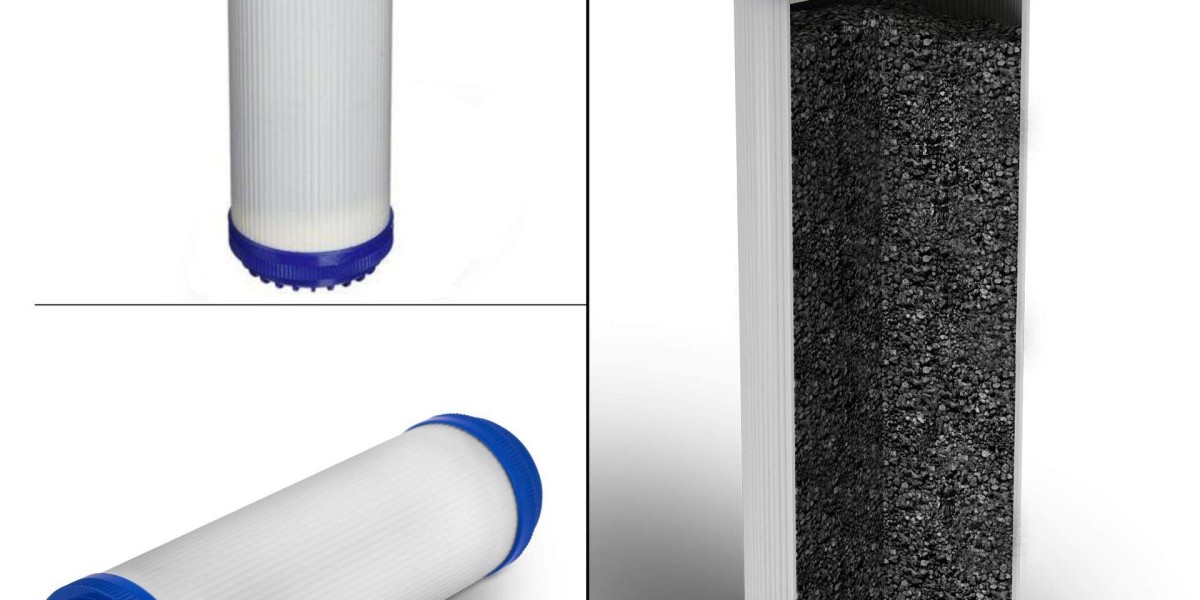
The Activated Carbon Filter market is evolving rapidly as industries, municipalities, and consumers place greater emphasis on cleaner water, healthier indoor air, industrial emission control, and sustainable filtration. Activated carbon has long been valued for its ability to adsorb chlorine, odors, volatile organic compounds, pesticides, pharmaceutical residues, and numerous other contaminants. However, changing environmental requirements and increasingly complex pollution profiles are encouraging manufacturers to develop more specialized and efficient filtration solutions.
Emerging trends are shifting the industry beyond conventional carbon filters toward engineered media, hybrid treatment systems, smart monitoring, sustainable raw materials, and regeneration technologies. These developments are creating new opportunities across residential, commercial, municipal, industrial, and specialized applications.
Growing Focus on Emerging Water Contaminants
One of the strongest trends influencing the Activated Carbon Filter market is the increasing focus on contaminants that conventional treatment systems may not adequately address. Water treatment operators are paying greater attention to substances such as PFAS, pharmaceutical residues, personal-care chemicals, pesticides, industrial chemicals, and other trace organic pollutants.
This shift is encouraging the development of activated carbon grades with carefully controlled pore structures and surface characteristics. Manufacturers are increasingly designing carbon media for specific contaminant profiles instead of offering generalized filtration products.
The trend toward contaminant-specific filtration is particularly important for municipal water systems and industrial wastewater treatment. It is also creating demand for filters that can maintain adsorption performance over longer operating cycles while reducing replacement frequency.
Expansion of Hybrid Filtration Systems
Activated carbon is increasingly being combined with other treatment technologies rather than being used as a standalone filtration medium. Hybrid systems can integrate activated carbon with membranes, ultraviolet treatment, ion exchange, catalytic materials, or biological treatment.
These combinations can address multiple classes of contaminants within a single treatment process. For example, a system may use membrane technology for physical separation while activated carbon handles dissolved organic compounds, taste, odor, and residual chemicals.
Hybrid filtration is gaining attention because industrial and municipal customers increasingly want compact systems capable of handling complex treatment requirements. This trend is likely to encourage partnerships between carbon manufacturers, filtration equipment producers, and water-treatment technology providers.
Rise of Sustainable Activated Carbon Production
Sustainability is becoming a central consideration in the development of filtration media. Traditional activated carbon production can require substantial energy, while raw-material sourcing can influence the environmental profile of the finished product.
Consequently, manufacturers are exploring renewable and waste-derived feedstocks, including coconut shells, wood residues, agricultural waste, and other biomass resources. Converting waste materials into activated carbon can provide a dual benefit by creating useful filtration media while supporting resource utilization.
The growing interest in circular production is also encouraging manufacturers to evaluate the complete lifecycle of activated carbon, from feedstock sourcing and manufacturing through transportation, usage, regeneration, and disposal.
Development of High-Performance Engineered Carbon
Another emerging trend is the engineering of activated carbon surfaces for improved adsorption selectivity. Traditional activated carbon relies heavily on its high surface area and porous structure, but newer approaches focus on modifying the surface chemistry to improve interaction with specific pollutants.
Surface modification, heteroatom incorporation, catalytic enhancement, and other material-engineering techniques are being explored to improve adsorption performance.
These advanced materials could become particularly valuable in applications where conventional carbon struggles because of competing contaminants, high humidity, complex chemical mixtures, or low pollutant concentrations.
Greater Adoption of Carbon Regeneration
Carbon regeneration is becoming increasingly important as end users seek to lower operating costs and reduce waste. Instead of disposing of spent activated carbon after a single use, regeneration processes can restore a significant portion of the material's adsorption capacity for subsequent applications.
The growing emphasis on regeneration is supporting a transition from a simple media-replacement model toward longer-term filtration service models. Suppliers that provide carbon collection, regeneration, testing, and replacement services can offer customers a more comprehensive solution.
Improved regeneration technologies are also contributing to sustainability objectives by reducing the volume of spent carbon requiring disposal and lowering the demand for continuously producing new filtration media.
Smart Monitoring and Digital Filtration
Digitalization is beginning to influence activated carbon filtration systems. Modern treatment operators increasingly want real-time information about filter performance, pressure drop, contaminant loading, flow rates, and remaining service life.
Sensors and digital monitoring systems can help operators determine when carbon needs replacement or regeneration. Instead of relying solely on fixed replacement schedules, facilities can increasingly make maintenance decisions based on operating conditions.
This trend could reduce unnecessary media replacement and help prevent premature filter breakthrough. In large industrial and municipal systems, data-driven monitoring can also improve maintenance planning and operational efficiency.
Rising Demand for Indoor Air Purification
Air purification represents another important area of opportunity. Activated carbon filters are increasingly incorporated into residential air purifiers, HVAC systems, commercial buildings, transportation systems, and industrial air-cleaning equipment.
Growing awareness of indoor air quality is encouraging demand for filters capable of removing odors and gaseous pollutants such as VOCs and formaldehyde. Urbanization, tighter building envelopes, and increased attention to indoor environmental quality are supporting this trend.
Manufacturers are also exploring improved carbon formulations for applications where conventional carbon may have limited capacity or where humidity can reduce adsorption performance.
Growth of Specialized Industrial Applications
The Activated Carbon Filter market is also expanding into specialized industrial environments. Chemical processing, pharmaceuticals, food and beverage production, electronics manufacturing, automotive applications, and energy-related industries require increasingly precise purification solutions.
In pharmaceutical and food-processing applications, activated carbon can support purification and decolorization processes. In industrial air treatment, specialized carbon filters can help control odors, solvents, and hazardous gases.
The growth of highly controlled manufacturing environments is encouraging suppliers to develop application-specific filtration media with consistent performance and tighter quality specifications.
Bio-Based and Waste-Derived Carbon Materials
The search for alternative raw materials is expected to remain an important trend. Bio-based activated carbon produced from agricultural residues and other renewable materials can help reduce dependence on conventional feedstocks.
Researchers and manufacturers are investigating materials such as coconut shells, fruit pits, wood waste, and other biomass resources because their availability and physical characteristics can make them suitable carbon precursors.
The future opportunity lies not simply in replacing one feedstock with another, but in creating reliable supply chains that combine environmental benefits with consistent adsorption performance, cost efficiency, and scalable production.
Advanced Carbon Composites
Activated carbon is increasingly being incorporated into composite materials designed to provide multiple treatment functions. Carbon can be combined with catalytic substances, minerals, nanoparticles, magnetic materials, or other functional components.
Such composites may improve pollutant capture while supporting additional degradation or separation mechanisms. Magnetic carbon materials, for example, can offer advantages in certain recovery and separation applications.
Although many advanced composites remain at development or demonstration stages, continued innovation could expand the role of activated carbon beyond conventional adsorption.
Increasing Demand for Compact Filtration Solutions
Space efficiency is becoming more important across residential, commercial, and industrial applications. Users increasingly prefer filtration systems that deliver strong performance without requiring large installation footprints.
This is encouraging manufacturers to develop higher-capacity carbon media, optimized filter geometries, compact cartridges, and modular filtration units.
Point-of-use and point-of-entry systems are also benefiting from this trend. Consumers and smaller businesses can adopt compact treatment solutions without installing large centralized systems.
Regional Expansion of Water and Air Treatment
Emerging economies are expected to contribute significantly to long-term demand as investments in water infrastructure, industrialization, and pollution-control systems increase.
Growing urban populations are creating pressure on water utilities and wastewater-treatment facilities, while expanding manufacturing bases are increasing requirements for industrial air and water purification.
At the same time, developed markets are moving toward more advanced applications involving emerging contaminants, stricter quality requirements, and sustainable filtration practices. This creates a diverse growth landscape in which different regions contribute demand for different types of activated carbon filtration technologies.
Conclusion
The Activated Carbon Filter market is moving toward a more advanced, specialized, and sustainability-oriented future. Emerging contaminants, stricter environmental expectations, indoor air-quality concerns, and industrial purification requirements are expanding the range of applications for activated carbon.
At the same time, technological progress is changing how filters are designed, monitored, regenerated, and manufactured. Hybrid treatment systems, engineered carbon surfaces, smart monitoring, bio-based feedstocks, advanced composites, and regeneration services are among the trends likely to shape the industry's next phase.
For manufacturers and market participants, the greatest opportunities will increasingly come from developing application-specific solutions rather than competing solely on conventional filter capacity or price. Companies that combine adsorption performance with sustainability, digital monitoring, lifecycle efficiency, and specialized contaminant removal capabilities can position themselves strongly as filtration requirements become more sophisticated.