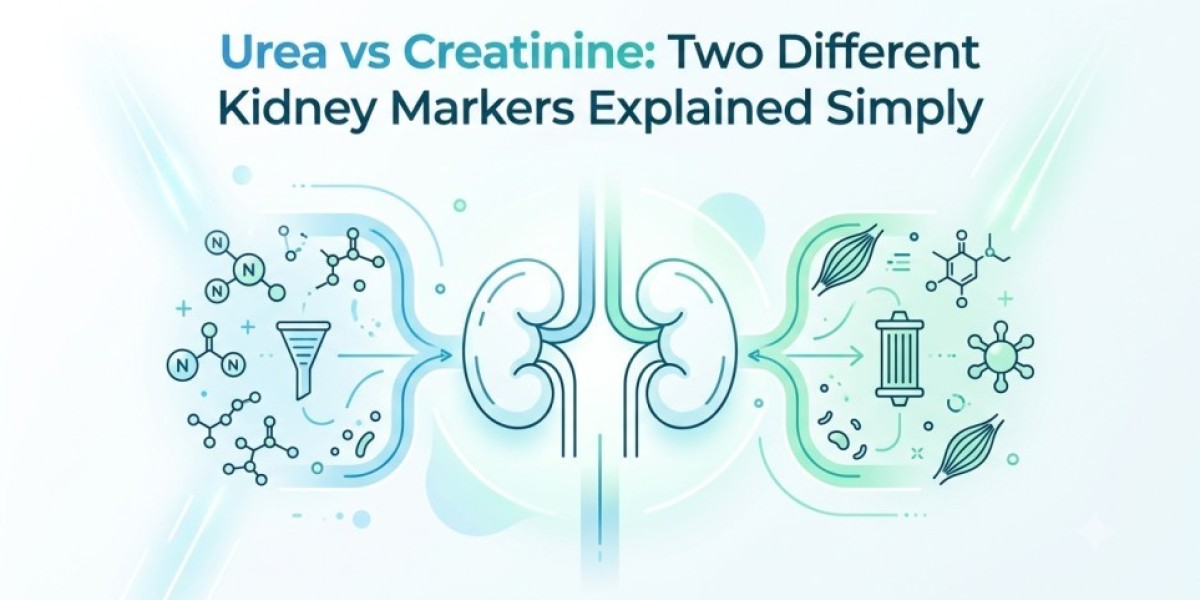

When people receive a kidney function test report, two names often stand out: urea and creatinine. Since both are commonly associated with kidney health, it is easy to assume that they measure exactly the same thing.
They do not.
Both urea and creatinine are waste products that are measured in the blood, and both can provide useful information about how well the kidneys are functioning. However, they come from different processes in the body and can be influenced by different factors.
Understanding the difference can make a blood test report a little less confusing. Here is a simple explanation of what urea and creatinine are, why they are tested, and why healthcare professionals often look at them together.
What Is Urea?
Urea is a waste product formed when the body breaks down protein.
When you eat protein-rich foods, the body uses the protein it needs for different functions. During this process, waste substances are produced. The liver converts one of these waste products into urea, which then travels through the bloodstream to the kidneys.
Healthy kidneys filter urea from the blood and remove it from the body through urine.
Because of this process, the amount of urea in the blood can provide useful information about kidney function. However, kidney health is not the only thing that can affect urea levels.
For example, a person who is dehydrated may have a higher urea level because there is less fluid circulating in the body. A high-protein diet, certain medications, bleeding in the digestive tract, and some other medical conditions may also influence the result.
Similarly, low urea levels can sometimes be linked to factors such as low protein intake or certain liver-related conditions.
This is why an abnormal urea result does not automatically mean that a person has kidney disease.
What Is Creatinine?
Creatinine is also a waste product, but it comes from a different source.
It is produced as part of normal muscle activity. The body uses a compound called creatine to help supply energy to muscles, and creatinine is formed as a by-product of this process.
Creatinine enters the bloodstream and is mainly filtered out by the kidneys. Under normal circumstances, the kidneys remove it from the blood and pass it out of the body through urine.
Because creatinine production is generally more consistent than urea production, it is commonly used as an important marker when assessing kidney function.
However, creatinine levels can also vary between individuals.
A person with greater muscle mass may naturally have a higher creatinine level than someone with less muscle mass. Age, sex, diet, hydration, certain medications, and intense physical activity can also affect the result.
For this reason, a creatinine value should always be interpreted in context rather than viewed as a standalone answer to whether the kidneys are healthy.
Urea vs Creatinine: What Is the Main Difference?
The simplest difference is where they come from.
Urea is mainly related to the breakdown of protein, while creatinine is produced during normal muscle metabolism.
Both substances are removed from the bloodstream by the kidneys, which is why they can be useful markers when evaluating kidney function.
However, urea tends to be affected by a wider range of factors, including hydration and protein intake. Creatinine is often considered more stable, although it is still influenced by factors such as muscle mass and certain medications.
A simple way to understand them is this:
- Urea: A waste product linked mainly to protein breakdown.
- Creatinine: A waste product linked mainly to normal muscle metabolism.
- Both: Removed from the blood by the kidneys and used as part of kidney health assessment.
Always take care of your kidneys; check your kidney health now.
Urea Test in Hisar
Why Are Urea and Creatinine Often Tested Together?
Looking at more than one marker can provide a broader picture.
If only one value is considered, it may be difficult to know whether a change is related to kidney function or another temporary factor. For example, dehydration may affect blood urea levels, while muscle mass may influence creatinine levels.
By reviewing urea and creatinine together, along with a person's symptoms, medical history, medications, and other test results, a healthcare professional can better understand what may be happening.
In many cases, creatinine is also used to estimate the glomerular filtration rate, often called eGFR. This calculation helps estimate how effectively the kidneys are filtering waste from the blood.
Additional tests may also be recommended depending on the situation. These can include urine tests, electrolyte measurements, imaging studies, or other blood tests.
The important point is that kidney health is usually assessed using a combination of information rather than one number alone.
What Can Cause High Urea Levels?
A high urea level may occur when the kidneys are not removing waste efficiently, but there can be several other possible reasons.
Dehydration is one common factor. When the body does not have enough fluid, blood urea levels may rise.
Other factors that may influence urea include:
- A high-protein diet
- Certain medications
- Reduced blood flow to the kidneys
- Bleeding in the digestive system
- Severe illness or physical stress
- Some kidney-related conditions
Because several factors can influence the result, an elevated level should be interpreted by a qualified healthcare professional.
What Can Cause High Creatinine Levels?
Creatinine levels may increase when the kidneys are not filtering creatinine effectively. However, this is not the only possible explanation.
Creatinine can also be influenced by:
- Higher muscle mass
- Intense exercise
- Dehydration
- Eating large amounts of meat before testing
- Certain medications
- Muscle injury or breakdown
A single elevated creatinine result does not always provide the full picture. Changes over time can sometimes be just as important as the number itself.
For example, a person's usual creatinine level may be different from another person's because of natural differences in body composition. This is one reason why healthcare professionals may compare current results with previous reports when they are available.
Can Urea Be Normal While Creatinine Is High?
Yes, different patterns can occur.
Since urea and creatinine are affected by different factors, one value may change while the other remains within the laboratory's reference range.
For example, factors affecting muscle metabolism or kidney filtration may influence creatinine differently from urea. Similarly, hydration and protein intake can affect urea without causing the same change in creatinine.
This is another reason why it is important not to interpret either result in isolation.
The pattern of results, symptoms, medical history, and additional tests all matter.
Can Urea Be High While Creatinine Is Normal?
This can also happen.
A person who is dehydrated or consuming a high-protein diet may experience an increase in urea without a similar rise in creatinine. Other factors may also contribute.
In such situations, the cause cannot be determined simply by looking at one blood test result. A healthcare professional may consider whether the result is temporary, whether repeat testing is needed, and whether other kidney markers should be checked.
When Should You Pay Attention to Kidney Test Results?
Abnormal results do not always mean there is a serious health problem, but they should not be ignored either.
It is especially important to discuss the results with a healthcare professional if abnormal kidney markers are accompanied by symptoms such as:
- Swelling in the feet, ankles, or around the eyes
- Changes in urination
- Persistent fatigue
- Unexplained nausea or vomiting
- Shortness of breath
- Blood in the urine
- Persistent high blood pressure
Some people with early kidney problems may not experience obvious symptoms. This is why regular health checkups can be helpful, particularly for people with risk factors such as diabetes, high blood pressure, or a family history of kidney disease.
The Bottom Line
Urea and creatinine are both important markers that can provide information about kidney function, but they are not interchangeable.
Urea is mainly produced during the breakdown of protein, while creatinine is produced through normal muscle metabolism. Both are removed from the blood by the kidneys, but their levels can also be influenced by factors such as hydration, diet, muscle mass, medications, and overall health.
Instead of focusing on a single number, it is better to look at the complete picture. Healthcare professionals may consider urea, creatinine, eGFR, urine test results, symptoms, medical history, and changes in values over time.
Understanding these two markers can help make a kidney function report easier to read, but only a qualified healthcare professional can interpret the results in the context of an individual's overall health.