
Introduction
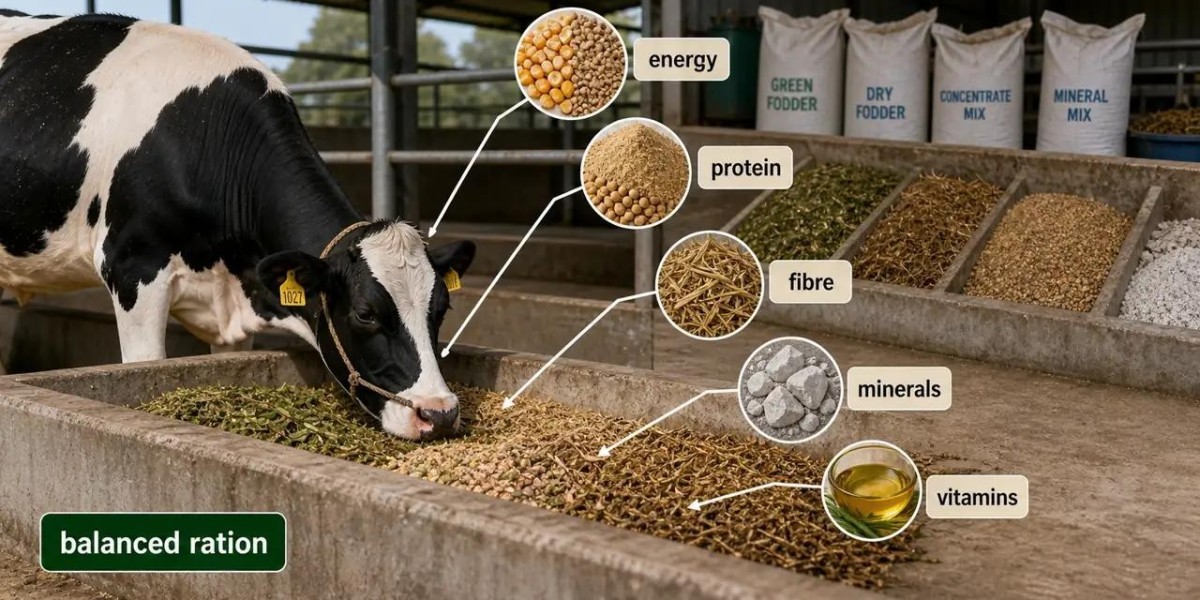
The Animal Nutrition Market is undergoing significant disruption as producers, feed manufacturers, livestock companies, and technology providers respond to changing economic, environmental, regulatory, and consumer expectations. Animal nutrition has traditionally focused on delivering balanced diets that support growth, reproduction, health, and productivity. Today, the sector is evolving toward precision nutrition, functional ingredients, sustainability, alternative feed resources, and data-driven formulation.
Market disruptions are emerging from multiple directions rather than from a single technological or commercial development. Volatile commodity prices, climate-related supply risks, stricter environmental expectations, changing livestock production systems, and innovations in feed additives are reshaping established business models. At the same time, advances in biotechnology and digital technologies are creating opportunities to improve feed efficiency while reducing production costs and environmental impact.
Understanding these disruptions is increasingly important for companies seeking resilient supply chains, differentiated products, and long-term growth.
Raw Material Price Volatility
One of the most persistent disruptions affecting animal nutrition is instability in feed ingredient prices. Corn, wheat, soybean meal, fishmeal, oils, and other major ingredients are influenced by weather conditions, agricultural yields, energy prices, transportation costs, trade policies, and geopolitical developments.
Sudden increases in raw material costs can significantly affect feed manufacturing margins. Producers may respond by reformulating diets, replacing expensive ingredients, reducing inclusion rates, or searching for alternative suppliers.
This environment is encouraging greater investment in flexible formulation systems. Feed manufacturers increasingly need the ability to evaluate multiple ingredients while maintaining nutritional quality and animal performance. Companies that depend heavily on a narrow group of commodities may face greater exposure to future supply disruptions.
Climate Change and Feed Supply Disruptions
Climate variability is creating another major source of uncertainty. Droughts, floods, heatwaves, and changing rainfall patterns can reduce agricultural productivity and disrupt the availability of essential feed ingredients.
Livestock themselves are also affected by rising temperatures. Heat stress can reduce feed intake, impair growth, affect reproduction, and increase susceptibility to disease. Consequently, nutrition strategies are increasingly being designed to help animals cope with environmental stress.
This is creating demand for diets containing functional additives, electrolytes, antioxidants, minerals, and other nutritional solutions intended to support animal resilience. Feed companies are therefore moving beyond conventional nutrient delivery toward broader approaches that address productivity and animal well-being under challenging conditions.
Shift Toward Alternative Feed Ingredients
The search for alternative feed resources is disrupting conventional ingredient markets. Producers and nutritionists are exploring insect protein, algae, microbial proteins, fermentation-derived ingredients, agricultural by-products, and other unconventional nutritional sources.
Alternative ingredients can potentially reduce dependence on conventional crops and animal-derived proteins. They may also provide opportunities to develop localized supply chains and reduce resource consumption.
However, adoption is influenced by factors such as production costs, nutritional consistency, regulatory acceptance, animal performance, consumer perception, and scalability. The challenge for suppliers is to demonstrate that emerging ingredients can deliver reliable nutritional and economic value rather than simply presenting an alternative to traditional materials.
Precision Nutrition and Digital Transformation
Digital technologies are changing how animal nutrition decisions are made. Sensors, connected livestock systems, automated feeding equipment, artificial intelligence, and data analytics are enabling producers to collect information on animal behavior, feed intake, growth, health, and environmental conditions.
This information can support more precise feeding strategies. Instead of providing standardized diets across an entire production group, producers can increasingly adjust nutritional programs according to animal characteristics and production conditions.
Precision nutrition can reduce feed waste and improve feed conversion efficiency. It can also help identify performance changes earlier, allowing producers to make adjustments before losses become substantial.
The growing integration of software and nutrition services is therefore disrupting traditional feed-selling models. Companies may increasingly compete through data capabilities, decision-support systems, and integrated services rather than ingredients alone.
Sustainability Pressures
Environmental sustainability is becoming an important factor in animal nutrition strategies. Feed production can contribute significantly to the environmental footprint of livestock systems through land use, crop cultivation, transportation, and ingredient processing.
As sustainability expectations increase, nutrition companies are exploring ways to improve nutrient utilization and reduce resource consumption. Enzyme technologies, optimized amino acid formulations, feed additives, and improved ingredient sourcing can help reduce nutrient losses.
Interest is also growing in nutritional strategies that may contribute to lower methane emissions in ruminant production. This is creating a new competitive space for feed additive developers and biotechnology companies.
Sustainability is consequently shifting from being primarily a corporate responsibility issue to becoming an important product-development and commercial consideration.
Regulatory and Market Access Disruptions
Regulatory changes can rapidly alter the competitive landscape. Feed additives, novel ingredients, animal health products, labeling requirements, contaminants, and production claims are subject to regulatory requirements that vary between countries.
A product approved in one market may require additional evaluation before entering another. This can increase development costs and extend commercialization timelines.
Regulatory uncertainty can particularly affect emerging ingredients and biotechnology-based solutions. Companies entering these areas must therefore invest in safety evaluation, quality control, documentation, and compliance capabilities.
At the same time, clear regulatory frameworks can accelerate innovation by establishing defined pathways for commercialization and improving confidence among feed manufacturers and livestock producers.
Growing Demand for Functional Nutrition
Another disruption is the movement from basic nutrition toward functional and health-oriented feeding strategies. Producers are increasingly interested in nutritional solutions that support gut health, immunity, digestion, stress management, and overall animal performance.
Probiotics, prebiotics, postbiotics, enzymes, phytogenic compounds, organic acids, specialty minerals, and other functional ingredients are gaining attention as producers seek alternatives to conventional approaches to maintaining animal health.
This trend is changing product development priorities. Instead of competing solely on nutrient content or price, suppliers can differentiate products through demonstrated functional benefits, formulation expertise, and performance outcomes.
Changing Consumer Expectations
Consumer expectations are influencing livestock production and, indirectly, animal nutrition. Greater attention to animal welfare, responsible sourcing, antibiotic stewardship, sustainability, and production transparency is encouraging producers to reconsider feeding practices.
Food companies and retailers may increasingly demand information about the origin and characteristics of animal-derived products. This can place pressure on livestock producers to adopt feeding systems that support broader sustainability and quality objectives.
Animal Nutrition companies that can demonstrate traceability, responsible sourcing, and measurable production benefits may gain an advantage as supply chains become more transparent.
Supply Chain Localization and Resilience
Globalized feed ingredient supply chains have historically provided access to large and diverse sources of raw materials. However, transportation disruptions, trade restrictions, geopolitical tensions, and regional shortages have highlighted the vulnerability of highly interconnected systems.
As a result, companies are examining local and regional sourcing strategies. Greater diversification of suppliers can reduce dependence on individual countries or commodities.
This shift could accelerate development of locally available feed ingredients and processing technologies. It may also encourage feed manufacturers to maintain broader ingredient portfolios so they can respond quickly when specific materials become unavailable.
Strategic Implications for Industry Players
Disruptions in the Animal Nutrition Market create both risks and opportunities. Feed manufacturers can strengthen resilience by diversifying suppliers, investing in flexible formulation capabilities, and developing alternative ingredient networks.
Ingredient companies can focus on functional products with measurable benefits, while technology providers can integrate nutrition with farm management and animal monitoring systems.
Research and development will remain critical. Companies that can validate nutritional performance, improve cost efficiency, address sustainability objectives, and meet regulatory requirements are likely to be better positioned in an increasingly competitive environment.
Partnerships may also become more important. Collaboration among feed manufacturers, ingredient producers, biotechnology firms, livestock companies, technology providers, and research institutions can accelerate commercialization of new solutions.
Future Outlook
The future of the Animal Nutrition Market will be shaped by the convergence of nutrition science, biotechnology, digital agriculture, sustainability, and supply chain innovation. Traditional feed formulations will continue to play an essential role, but their development and application are likely to become increasingly sophisticated.
Disruptions will encourage companies to move toward adaptable formulations, diversified ingredient portfolios, precision feeding, and functional nutrition. Alternative proteins and novel feed materials may gradually expand their role as production technologies mature and economic barriers decline.
The strongest market participants will likely be those capable of balancing animal performance, cost efficiency, environmental responsibility, regulatory compliance, and supply security. Rather than treating disruption solely as a threat, industry stakeholders can use these changes to redesign products, strengthen operational resilience, and create new sources of value.
Conclusion
Market disruptions are fundamentally changing the competitive structure of the Animal Nutrition Market. Commodity volatility, climate risks, alternative ingredients, digital technologies, sustainability requirements, regulatory developments, and evolving consumer expectations are simultaneously influencing how feed is produced and consumed.
These forces are creating challenges for established business models but are also opening opportunities for innovation. Companies that combine nutritional expertise with technology, supply chain flexibility, sustainability strategies, and evidence-based product development can better adapt to changing market conditions.
As livestock production becomes more data-driven and resource-conscious, animal nutrition will increasingly serve as a strategic tool for improving productivity, resilience, animal health, and sustainability across the modern food production system.