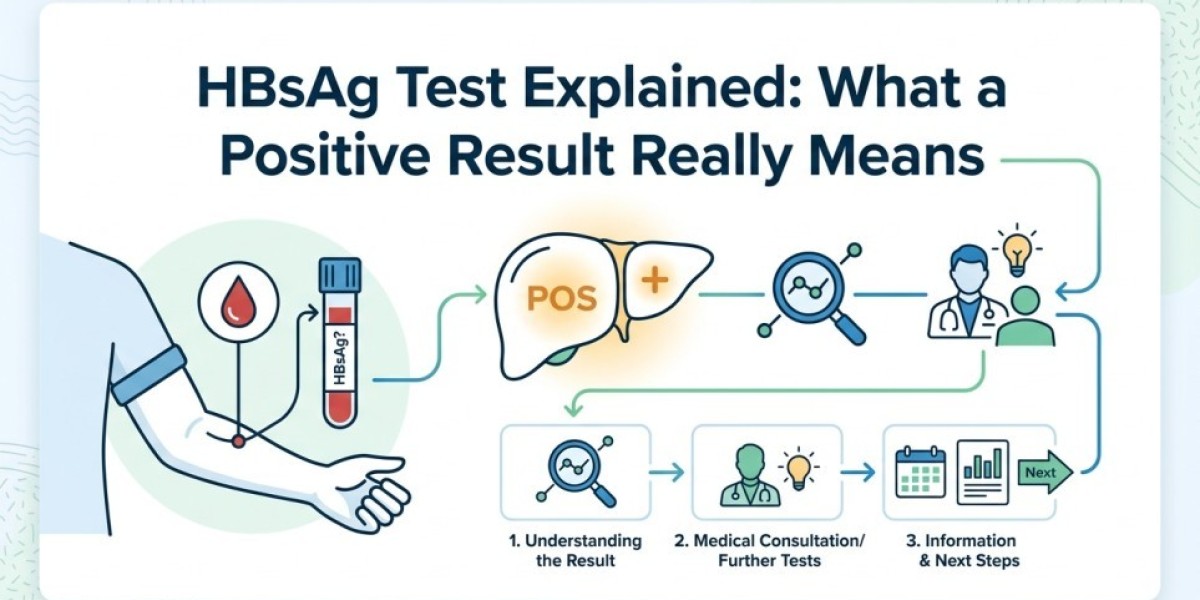

A blood test can sometimes bring an unexpected result, especially when the report contains medical terms that are difficult to understand. One such term is HBsAg, which stands for Hepatitis B Surface Antigen. If an HBsAg test comes back positive, it is natural to feel concerned. But a positive result does not tell the whole story on its own.
HBsAg testing is commonly used to detect hepatitis B virus (HBV) infection. Understanding what the test measures, what a positive result means, and what happens next can make the report much less confusing.
What Is an HBsAg Test?
The HBsAg test is a blood test that looks for the surface antigen of the hepatitis B virus. HBsAg can be detected in the blood during both acute and chronic hepatitis B infection. Therefore, a positive result generally indicates that HBV is currently present in the body.
Hepatitis B is a viral infection that affects the liver. It can be short-term, known as acute hepatitis B, or it can persist for a longer period and become chronic. Some people have few or no noticeable symptoms, which is one reason testing can be important even when a person feels healthy.
The test may be recommended as part of screening, during pregnancy, before certain medical procedures, or when a healthcare professional suspects hepatitis B based on symptoms or possible exposure.
Book Now — Hbsag Rapid Method Test in Agra
What Does a Positive HBsAg Result Mean?
A positive HBsAg result generally means that hepatitis B virus infection is present. It can occur during either an acute or chronic infection. It also means that the person may be able to transmit the virus to others.
However, this is where an important distinction needs to be made: a positive HBsAg result does not automatically mean that a person has chronic hepatitis B.
An individual may have recently acquired the infection and have an acute infection that could eventually clear. In other cases, the virus may remain in the body and develop into chronic hepatitis B.
The duration of infection and results from other blood tests help doctors determine which situation applies.
Acute vs. Chronic Hepatitis B: What Is the Difference?
Hepatitis B infection can behave differently from one person to another.
Acute hepatitis B refers to a recent or short-term infection. Many adults who develop acute hepatitis B are able to clear the virus naturally. During this period, HBsAg may be present in the blood.
Chronic hepatitis B occurs when the infection persists over a longer period. CDC guidance defines chronic hepatitis B infection as HBV infection lasting more than six months.
A person with chronic hepatitis B may have no obvious symptoms for years. However, ongoing infection can increase the risk of liver problems, including cirrhosis and liver cancer, making appropriate medical follow-up important.
This is why a single positive HBsAg report should not be interpreted in isolation.
Does a Positive Result Always Mean You Have Symptoms?
No. Hepatitis B can occur without obvious symptoms.
Some people with HBV infection may experience symptoms such as tiredness, loss of appetite, nausea, abdominal discomfort, dark urine, or yellowing of the skin and eyes. Others may feel completely well.
This means that feeling healthy does not necessarily rule out hepatitis B. Conversely, having symptoms does not by itself confirm hepatitis B. Laboratory testing and medical evaluation are needed to understand the cause.
What Other Tests May Be Needed After a Positive HBsAg Result?
An HBsAg test is only one part of hepatitis B testing. If the result is positive, a healthcare professional may recommend additional tests to understand the infection more clearly.
These may include:
- Anti-HBc, particularly IgM anti-HBc: This can help indicate whether an infection is recent.
- Anti-HBs: This antibody is associated with immunity to hepatitis B.
- HBeAg and anti-HBe: These markers can provide additional information about viral activity and infection status.
- HBV DNA testing: This molecular test measures the amount of hepatitis B virus in the blood and can help assess viral replication.
- Liver function tests: Tests such as ALT and AST can help assess whether the liver is being affected.
The exact tests required depend on the person's age, medical history, pregnancy status, previous test results, and clinical situation.
WHO also recommends linking people who test positive for HBsAg with appropriate evaluation and care.
Can an HBsAg Positive Result Be Temporary?
In most circumstances, HBsAg positivity indicates current HBV infection. However, there is an important exception: HBsAg can sometimes be temporarily positive shortly after receiving a hepatitis B vaccine. CDC notes that this transient positivity can occur within about 30 days after vaccination.
For this reason, recent vaccination is useful information to share with a healthcare professional when interpreting an unexpected result.
A healthcare professional may decide whether repeat testing or additional testing is appropriate based on the circumstances.
What Should You Do After a Positive HBsAg Test?
The first step is not to panic. A positive result deserves medical attention, but it does not by itself tell you whether the infection is acute or chronic or how much the liver may be affected.
A sensible next step is to consult a doctor and take the report along with any previous hepatitis B test results. The doctor may recommend additional blood tests, assess liver health, and determine whether monitoring or treatment is required.
Until the infection status is fully evaluated, it is also important to take precautions to reduce the possibility of transmission. Hepatitis B can spread through infected blood and certain body fluids, including through sexual contact and from an infected mother to her baby during childbirth.
People living with hepatitis B should discuss vaccination and testing for household and sexual contacts with their healthcare provider.
What a Positive HBsAg Result Does Not Tell You
It is easy to read a laboratory report and assume that one positive marker answers every question. It does not.
An HBsAg result alone cannot tell you:
- How long you have had hepatitis B
- Whether the infection is acute or chronic
- How much virus is present in the blood
- Whether the liver has been damaged
- Whether treatment is necessary
- Whether the infection will eventually clear
These questions require a combination of medical history, additional laboratory tests, and sometimes imaging or other liver assessments.
When Should You Take an HBsAg Test?
Testing may be appropriate when there has been a possible exposure to HBV, when hepatitis B is suspected, during pregnancy, or as part of recommended health screening.
Testing can also be particularly important because hepatitis B may remain unnoticed for a long time. Early identification gives people an opportunity to receive appropriate medical evaluation and, when needed, treatment and monitoring.
For pregnant women, identifying hepatitis B infection is especially important because medical interventions can substantially reduce the risk of transmission from mother to baby. WHO recommends specific measures for preventing mother-to-child transmission among women who test positive for HBV.
The Bottom Line
An HBsAg positive result means that hepatitis B virus infection is likely present, but it is not the same as saying that the infection is definitely chronic or that serious liver damage has already occurred.
The result should be followed by appropriate medical evaluation and, when recommended, additional hepatitis B tests. Understanding the complete pattern of results is much more useful than focusing on a single positive marker.
If you receive a positive HBsAg report, discuss it with a qualified healthcare professional rather than trying to interpret the result alone. With proper testing, monitoring, and medical care, hepatitis B can be managed appropriately, and steps can be taken to protect others from infection.