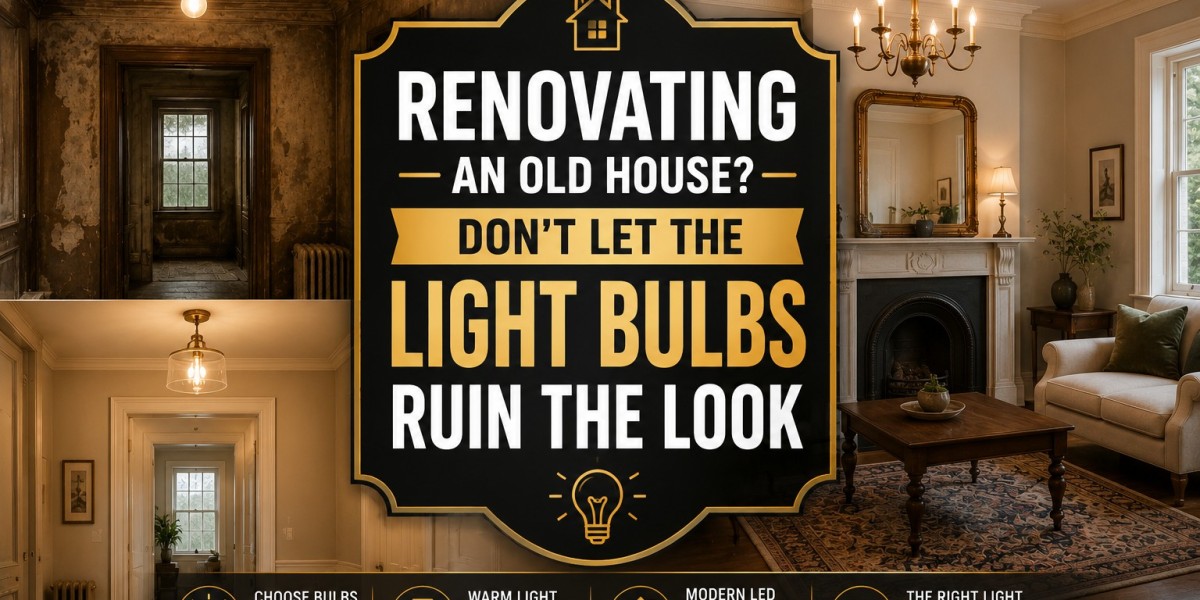

If you've ever restored an older home or leaned into a vintage-industrial design style, you know the frustration: you finally get the exposed brick, the reclaimed wood, the black iron pendant fixtures just right and then the light bulb inside ruins the whole effect. A bright white LED with a boxy plastic housing sitting inside a beautifully aged brass fixture looks jarring, almost like a mistake.
This is a more common problem than people expect, and it usually comes down to one overlooked detail: most people don't realize the bulb itself needs to match the era of the design, not just the wattage requirement of the fixture.
The Look People Are Chasing (and Why It's Hard to Get Right)
The current wave of interior design, modern farmhouse kitchens, industrial loft conversions, and boutique cafés with exposed Edison-style pendants all lean on one visual cue: a warm, glowing filament bulb visible inside an open fixture. It's become shorthand for "authentic" and "handcrafted" in a way that hidden, diffused lighting just doesn't communicate.
The problem is that a lot of people chasing this look reach for whatever bulb is cheapest or most available, and end up with something that's either:
A genuine old-style incandescent bulb which nails the aesthetic but burns through electricity and needs frequent replacing, or
A standard LED bulb is efficient and long-lasting, but often too cool in color temperature and visually wrong for an exposed fixture, since the LED components themselves aren't meant to be seen.
Neither option is quite right, which is why so many "vintage-style" renovations end up with lighting that feels slightly off even when everything else in the room is dialed in.
The Middle Ground Most People Don't Know Exists
What's changed in the last several years is the rise of filament-style LED bulbs, clear glass bulbs with visible LED filament strands designed specifically to mimic the look of an old incandescent, while running on a fraction of the power.
This matters more than it sounds like on paper. A few things make the difference in a finished room:
Color temperature that actually matches vintage lighting. A warm 2700K tone gives off that soft, amber glow people associate with old filament bulbs, not the flatter white light typical of standard LEDs.
A clear glass shape that looks intentional, not accidental. The classic rounded A19 silhouette reads as "bulb" the way people expect, rather than looking like a retrofit part bolted into a fixture that wasn't designed for it.
High color rendering. In a kitchen or dining space especially, a strong CRI rating keeps wood tones, food, and skin tones looking natural instead of washed out.
Compliance where it matters. In states with strict energy codes California's Title 24 being the most common example fixtures often need JA8-compliant bulbs, which rules out plain incandescents for a lot of new installs and renovations.
Where This Actually Solves a Real Problem
This kind of bulb tends to matter most in a handful of specific spots:
Kitchen island pendants. The most visible lighting fixture in most homes, and the one people notice first if the bulb looks wrong.
Bare-bulb chandeliers and multi-socket fixtures. Popular in dining rooms and entryways, where six or eight visible bulbs multiply any mismatch in tone or shape.
Sconces and wall fixtures with smoke or amber glass. These fixtures are specifically designed to let the bulb's glow show through the glass, so the color and warmth of the bulb directly shape the mood of the room.
Table and floor lamps with open or minimal shades, where the bulb is close to eye level and easy to notice if it clashes with the fixture's style.
A Practical Fix for This Exact Problem
If you're renovating a space with this kind of exposed or semi-exposed lighting and want the vintage warmth without the downsides of a true incandescent, something like the A19 E26 filament LED bulb 8.5W is built for exactly this situation a clear glass, visible-filament design with 2700K warm white light, dimmable performance, and roughly 25,000 hours of lifespan, all while pulling a fraction of the power a real incandescent would use.
The Takeaway
A well-designed room can be undone by the smallest detail, and light bulbs are one of the most overlooked culprits. If your renovation or design project leans on exposed fixtures, it's worth treating the bulb itself as a design decision not an afterthought picked up on a last-minute hardware store run. Getting the color, shape, and glow right is often the difference between a space that feels genuinely vintage and one that just looks like it's trying to.