
Initial Coin Offerings (ICOs) continue to be an effective fundraising model for Web3 startups, particularly for projects building decentralized applications, blockchain infrastructure, AI-powered platforms, gaming ecosystems, and real-world asset (RWA) solutions. While the cryptocurrency industry has evolved significantly since the first wave of ICOs, the fundamental objective remains the same: raising capital while building a community that supports the long-term growth of a blockchain ecosystem.
What has changed is the level of preparation required to launch successfully. Investors have become more selective, regulators have increased their oversight in many jurisdictions, and competition among blockchain projects has intensified. A well-designed token alone is no longer enough to attract attention or secure funding. Successful ICOs now require careful planning across multiple disciplines, including tokenomics, legal strategy, smart contract security, marketing, community building, exchange readiness, and post-sale ecosystem development.
Many projects that struggled during previous market cycles did not fail because of weak technology. They failed because they lacked a structured launch strategy. Inadequate community engagement, unrealistic fundraising goals, poor token distribution models, or weak post-sale execution often prevented promising ideas from gaining traction.
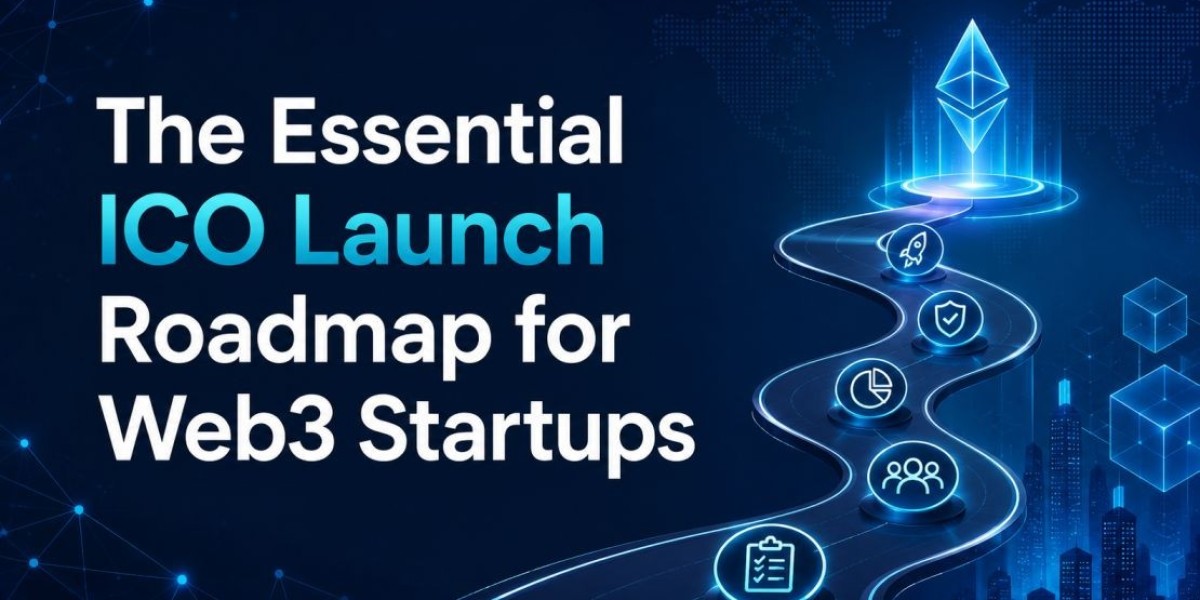
This article outlines an essential ICO launch roadmap for Web3 startups, explaining the critical milestones before, during, and after a token sale. By understanding each stage, founders can reduce risk, improve investor confidence, and build a stronger foundation for long-term project success.
Phase One: Validate the Business Idea Before Building the Token
The first step in any successful ICO begins long before smart contract development. Founders must determine whether blockchain technology genuinely enhances their business model.
A token should solve a specific problem within an ecosystem rather than exist solely as a fundraising mechanism. Investors increasingly look for projects with clear utility, measurable market demand, and sustainable business models.
At this stage, startups should define:
The problem the platform solves
The target users
The role of the token within the ecosystem
The competitive landscape
Revenue and growth strategy
For example, a decentralized AI marketplace may use its token to pay for inference services, while a blockchain gaming platform may integrate the token into rewards, governance, and digital asset trading. Clearly defining these use cases helps establish long-term value beyond the ICO itself.
Build Sustainable Tokenomics
Tokenomics is one of the most important factors influencing an ICO's credibility and long-term viability. A well-designed token economy aligns the interests of founders, investors, developers, and users.
Poor tokenomics often leads to excessive inflation, concentrated ownership, or large token unlocks that create selling pressure shortly after launch.
Key considerations include:
Total token supply
Initial circulating supply
Token allocation for the team, investors, and community
Vesting schedules
Treasury reserves
Ecosystem incentives
Staking rewards
Governance mechanisms
Many successful Web3 startups use tokenomics simulations to model different adoption and market scenarios before launch. These simulations help identify potential weaknesses and refine economic incentives.
Rather than maximizing short-term fundraising, tokenomics should encourage sustainable ecosystem growth over several years.
Select the Right Blockchain Infrastructure
The blockchain chosen for the ICO influences transaction costs, scalability, interoperability, and user experience.
Ethereum remains the most established platform for token launches because of its mature ecosystem, extensive developer community, and strong institutional support. Solana offers high throughput and low transaction costs, making it attractive for consumer applications. BNB Chain provides EVM compatibility with lower fees, while Layer-2 networks such as Arbitrum, Base, and Optimism offer scalability while maintaining compatibility with Ethereum.
Founders should evaluate blockchain infrastructure based on:
Smart contract functionality
Transaction costs
Wallet compatibility
Developer tools
Exchange support
Ecosystem maturity
Long-term scalability
Some projects also prepare for multi-chain expansion from the outset, allowing broader adoption after launch.
Develop Secure Smart Contracts
Smart contracts govern every aspect of an ICO, including token creation, distribution, vesting, and fundraising.
Security must be prioritized throughout development because blockchain transactions are immutable. Coding errors can result in irreversible financial losses.
Professional development practices include:
Standardized token contract implementation
Vesting contracts
Treasury management contracts
Administrative controls
Automated testing
Manual code review
Testnet deployment
Using audited smart contract libraries where appropriate reduces development risk while improving interoperability.
Conduct Independent Security Audits
A third-party security audit has become an industry expectation rather than an optional step.
Professional auditors review smart contracts for vulnerabilities such as:
Reentrancy attacks
Access control weaknesses
Arithmetic errors
Logic flaws
Ownership misconfigurations
Publishing audit reports before the ICO demonstrates transparency and builds confidence among investors and exchanges.
In addition to audits, many projects implement bug bounty programs that encourage independent security researchers to identify vulnerabilities before launch.
Build a Community Before the ICO Begins
Community building should begin months before the token sale.
Successful ICOs rarely depend solely on paid advertising. Instead, they build trust through consistent engagement and transparent communication.
Key community-building activities include:
Publishing educational content
Hosting Ask Me Anything (AMA) sessions
Sharing product development updates
Maintaining active Discord and Telegram communities
Engaging with developers on GitHub
Participating in industry conferences and online events
A strong community not only supports fundraising but also contributes to governance, product adoption, and ecosystem growth after launch.
Prepare a Strategic Marketing Campaign
Marketing plays a vital role in generating awareness and attracting qualified participants to an ICO.
An effective campaign combines multiple channels rather than relying on a single platform.
Marketing activities often include:
Search engine optimization (SEO)
Content marketing
Public relations
Influencer collaborations
Email campaigns
Social media engagement
Community management
Educational webinars
The emphasis should be on explaining the project's value proposition rather than creating unrealistic expectations.
Transparent communication strengthens credibility and attracts long-term supporters instead of short-term speculators.
Execute the ICO With Transparency
When the token sale begins, operational execution becomes critical.
Founders should ensure that all technical systems function reliably and that participants receive clear guidance throughout the fundraising process.
Key operational priorities include:
Secure token sale infrastructure
KYC and AML verification where required
Real-time fundraising updates
Transparent communication
Customer support
Wallet compatibility
Smart contract monitoring
Providing accurate information during the ICO strengthens investor confidence and minimizes confusion.
Plan Exchange Readiness and Liquidity
An ICO does not end when fundraising concludes.
Projects must prepare for secondary market trading by ensuring sufficient liquidity and technical readiness.
Preparation typically includes:
Decentralized exchange liquidity pools
Centralized exchange applications
Token verification
Market-making strategies
Wallet integrations
Blockchain explorer verification
Healthy liquidity improves trading conditions while supporting broader market participation.
Focus on Post-ICO Ecosystem Development
Many projects lose momentum after completing their token sale because they fail to deliver meaningful ecosystem progress.
Long-term success depends on executing the roadmap promised during fundraising.
Post-ICO priorities include:
Product development
Platform launches
Partnership expansion
Governance implementation
Staking programs
Developer ecosystem growth
Community engagement
Continuous security improvements
Regular progress updates demonstrate accountability while strengthening investor trust.
The most successful blockchain ecosystems treat fundraising as the beginning of development rather than the final objective.
Lessons From Successful ICO Projects
Several well-known blockchain projects illustrate the importance of disciplined execution beyond fundraising.
Ethereum's ICO succeeded because it introduced a programmable blockchain platform supported by a compelling technical vision and an active developer community.
Chainlink focused on solving a fundamental infrastructure challenge by providing decentralized oracle services that continue expanding across blockchain ecosystems.
Filecoin combined token fundraising with a clear utility model that incentivizes decentralized storage providers and users.
Although each project followed a different path, they shared several characteristics:
Strong technical foundations
Clearly defined token utility
Sustainable tokenomics
Active developer communities
Continuous product delivery
Transparent communication
These examples highlight that long-term execution matters far more than initial fundraising success.
Common Mistakes That Delay ICO Success
Web3 startups frequently encounter avoidable challenges during the ICO process.
Some of the most common include:
Launching before achieving product readiness
Weak token utility
Poor tokenomics
Insufficient community engagement
Inadequate security testing
Unrealistic fundraising targets
Limited post-sale planning
Avoiding these mistakes requires careful preparation, experienced advisors, and realistic expectations.
A structured roadmap significantly improves the likelihood of long-term project success.
Why Experienced ICO Development Partners Add Value
Launching an ICO requires expertise across multiple disciplines, including blockchain engineering, cybersecurity, tokenomics, fundraising strategy, infrastructure deployment, marketing, and post-launch operations.
Few startups possess all these capabilities internally.
Working with an experienced ICO development company enables founders to access specialized knowledge while reducing technical and operational complexity.
Professional partners help coordinate development milestones, security reviews, blockchain deployment, fundraising infrastructure, and ecosystem planning within a structured framework.
How Blockchain App Factory Supports Successful ICO Launches
Executing a successful ICO requires much more than launching a token sale. Blockchain App Factory provides end-to-end ICO development services that guide startups through every stage of the fundraising journey.
Its expertise includes ICO consulting, tokenomics design, smart contract development, security-focused engineering, multi-chain deployment, fundraising platform development, marketing support, exchange readiness, and post-launch ecosystem services. By combining blockchain expertise with strategic planning, Blockchain App Factory helps businesses build secure, scalable, and investor-ready ICO projects designed for long-term growth.
Conclusion
Launching an ICO is a complex process that extends far beyond fundraising. From validating the business idea and designing sustainable tokenomics to developing secure smart contracts, building an engaged community, executing the token sale, and delivering continuous product development, every stage influences long-term project success.
Web3 startups that follow a structured roadmap are better positioned to earn investor confidence, attract active communities, and build resilient blockchain ecosystems. Rather than treating the ICO as a one-time event, successful projects view it as the starting point for sustained innovation and ecosystem expansion.
As the blockchain industry continues to mature, partnering with experienced providers such as Blockchain App Factory can help startups navigate technical challenges, reduce risk, and execute ICO launches that support lasting value creation in the evolving Web3 economy.