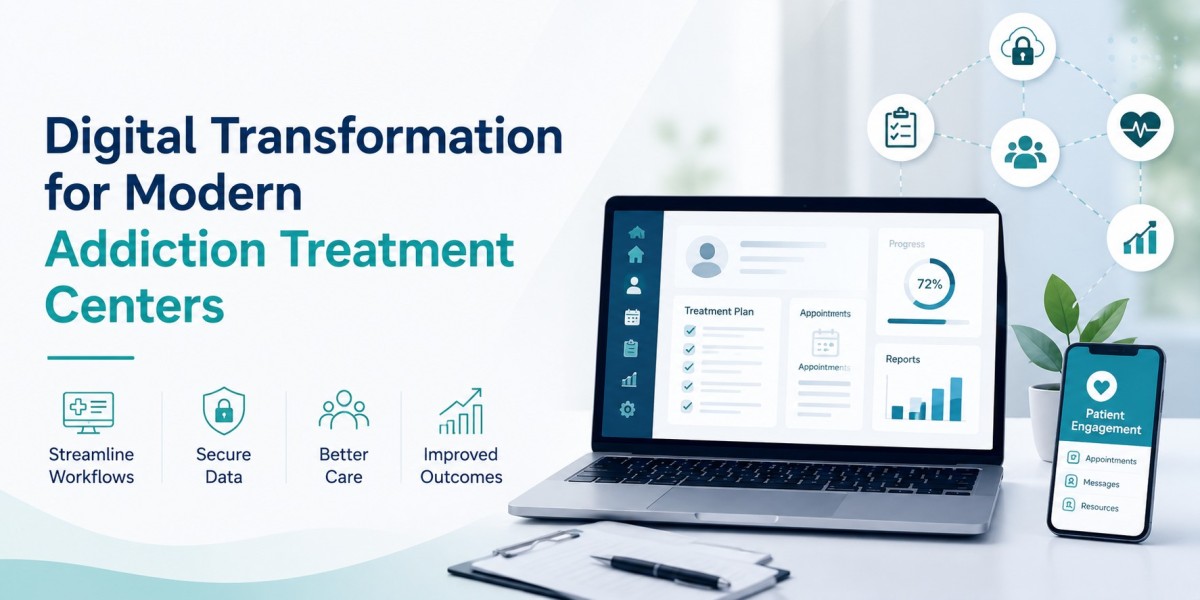

Addiction treatment centers operate in an environment where patient care, documentation, compliance, billing, and long-term recovery support must work together. Yet many facilities still depend on fragmented systems, paper forms, spreadsheets, phone calls, and manual follow-ups.
These disconnected processes make it difficult to manage patient information, coordinate teams, track treatment progress, and maintain operational visibility.
Digital transformation gives treatment centers an opportunity to redesign how care and administrative workflows are managed. It is not simply about replacing paper with software. It is about creating a connected operating model that improves efficiency, supports staff, and strengthens the patient experience.
For modern addiction treatment centers, successful digital transformation requires a clear strategy, practical implementation, and strong alignment between technology and real-world workflows.
Start With Workflow Mapping
The first step in digital transformation is understanding how work currently moves through the organization.
Treatment centers should map each stage of the patient journey, including:
- Initial inquiry
- Patient intake
- Clinical assessment
- Insurance verification
- Admission approval
- Treatment planning
- Individual therapy
- Group therapy
- Medication management
- Billing
- Compliance
- Discharge
- Aftercare
This exercise helps identify duplicated tasks, manual handoffs, communication gaps, and delays.
For example, staff may discover that the same patient information is entered into several systems or that billing teams regularly wait for missing documentation.
A clear workflow map creates a foundation for selecting the right technology and prioritizing improvements.
Build a Centralized Data Environment
Fragmented information is one of the biggest barriers to operational efficiency.
When admissions data, clinical notes, billing records, and discharge plans are stored separately, teams may work with incomplete or outdated information.
A centralized data environment allows authorized users to access the information they need from a shared system.
This may include:
- Patient demographics
- Referral details
- Medical history
- Substance use assessments
- Treatment plans
- Therapy notes
- Medication records
- Appointment history
- Insurance information
- Billing documentation
- Discharge plans
- Aftercare activities
Centralization reduces repetitive data entry and improves continuity across the patient journey.
It also gives leadership a more reliable source for reporting and decision-making.
Digitize Patient Intake and Admissions
Patient intake is one of the most administrative-heavy workflows in a treatment center.
Admissions teams may need to collect demographic information, medical history, substance use details, insurance data, consent forms, referral information, and risk assessments.
Digital intake forms can simplify this process.
Required fields can reduce incomplete submissions, while secure online forms allow patients or families to provide information before arrival.
The data can then flow directly into assessments, scheduling, treatment planning, and billing.
This reduces delays and creates a smoother transition from inquiry to admission.
Connect Assessments With Treatment Planning
Digital transformation should create continuity between patient assessment and treatment planning.
Clinical teams need a structured way to capture medical, behavioral, and substance use information.
Once the assessment is complete, the findings should support the development of individualized treatment goals, interventions, responsibilities, and review schedules.
A connected digital workflow can help teams:
- Build personalized treatment plans
- Assign responsibilities
- Track review dates
- Monitor progress
- Record approvals
- Share updates across care teams
This helps ensure that every provider works from the same recovery plan.
Modernize Clinical Documentation
Clinical documentation is essential for care coordination, compliance, billing, and outcome tracking.
Treatment centers should replace unstructured and disconnected documentation processes with practical digital templates.
These templates may support:
- Individual therapy notes
- Group session records
- Progress notes
- Case management notes
- Medication documentation
- Treatment plan reviews
- Discharge summaries
- Aftercare records
Structured fields improve consistency, while free-text sections preserve clinical flexibility.
The most effective templates are designed around real staff workflows. Overly complex systems can create more work and reduce adoption.
Improve Group Therapy Workflows
Group therapy is a core part of many addiction treatment programs, but it can create repetitive administrative work.
Counselors may need to document the same session details for several patients.
A digital group therapy workflow can allow the shared session topic, date, provider, and interventions to be recorded once. Staff can then add individual observations for each participant.
This improves efficiency and helps maintain patient-specific documentation.
Digital attendance tracking can also support billing, compliance, and program reporting.
Integrate Medication Management
Medication-assisted treatment and other medication workflows should be connected with the broader patient record.
Providers may need to track:
- Medication history
- Dosage
- Adherence
- Side effects
- Refills
- Follow-up appointments
- Clinical observations
When medication information is stored separately, counselors and case managers may lack important context.
An integrated workflow improves visibility while maintaining role-based access.
It also helps teams respond to missed appointments, medication changes, or follow-up requirements more quickly.
Automate Routine Administrative Tasks
Automation is a major part of digital transformation.
Treatment centers can automate repetitive activities such as:
- Appointment reminders
- Documentation alerts
- Treatment plan review notifications
- Consent renewal reminders
- Insurance follow-ups
- Billing readiness checks
- Discharge tasks
- Aftercare outreach
Automation reduces reliance on spreadsheets and manual calendars.
However, it should be used carefully. The goal is to support staff, not remove human judgment from clinical or sensitive interactions.
Connect Clinical and Billing Workflows
Clinical documentation and billing are closely linked.
Claims may be delayed when notes are incomplete, signatures are missing, or authorizations are outdated.
A connected digital workflow can help identify these issues before claims are submitted.
For example, a completed appointment can trigger a documentation task. Once the note is signed, billing staff can verify whether the service is ready for submission.
This reduces manual follow-ups and supports cleaner claims.
It also gives management better visibility into revenue cycle performance.
Strengthen Data Security and Compliance
Digital transformation must include a strong security strategy.
Addiction treatment centers handle highly sensitive patient information and require strict controls around access, consent, and information sharing.
Important security capabilities include:
- Role-based access
- Multi-factor authentication
- Encryption
- Audit trails
- Consent tracking
- Secure record exchange
- Access monitoring
- Backup and recovery
Role-based access ensures that staff only view information relevant to their responsibilities.
Audit trails provide accountability by showing who accessed or changed a record.
Security should be built into the platform and the implementation process from the beginning.
Improve Patient Engagement
Digital transformation should also improve the patient experience.
Patient portals, secure messaging, telehealth, and mobile-friendly forms can make it easier for patients to stay connected with their care teams.
Digital tools may support:
- Appointment reminders
- Intake forms
- Treatment schedules
- Secure communication
- Educational resources
- Telehealth sessions
- Discharge instructions
- Aftercare follow-ups
These capabilities can reduce missed appointments and support ongoing engagement.
Technology should complement personal care rather than replace it.
Use Data for Operational Decision-Making
Modern addiction treatment centers need better visibility into how their programs are performing.
Digital dashboards can provide insights into:
- Admission volume
- Program occupancy
- Appointment attendance
- Documentation completion
- Staff workload
- Treatment plan reviews
- Billing status
- Discharge activity
- Patient engagement
- Program outcomes
This information helps leadership identify bottlenecks and allocate resources more effectively.
For example, managers may discover that insurance verification is slowing admissions or that certain documentation tasks are consistently overdue.
Data-driven decisions can improve both operational and clinical performance.
Prioritize System Integration
Digital transformation often fails when organizations add new tools without connecting them.
A treatment center may use separate systems for scheduling, billing, telehealth, documentation, and patient communication.
If these platforms do not exchange information, staff may still face duplicate entry and fragmented workflows.
Integration should be a core selection criterion.
Treatment centers should evaluate whether a platform can connect with existing systems and support future growth.
A connected technology ecosystem is more valuable than a collection of isolated tools.
Focus on User Adoption
Technology only delivers value when staff use it correctly.
Counselors, clinicians, administrators, and billing teams should be involved in the transformation process.
Their feedback can help identify practical workflow requirements and usability concerns.
A successful adoption strategy should include:
- Staff involvement
- Role-based training
- Clear documentation standards
- Practical onboarding
- Ongoing support
- Feedback channels
- Performance monitoring
Leadership should communicate how the technology will reduce workload and improve care.
Users are more likely to adopt systems that solve real problems and fit naturally into daily work.
Implement Change in Phases
Attempting to transform every workflow at once can create confusion and resistance.
A phased approach allows treatment centers to focus on high-impact areas first.
For example, an organization may begin with intake and clinical documentation, then expand to billing, reporting, and aftercare.
Each phase should include:
- Defined goals
- Workflow design
- User testing
- Training
- Performance measurement
- Feedback
- Process refinement
This creates a more manageable implementation and allows teams to build confidence over time.
Measure Transformation Results
Digital transformation should be evaluated against clear operational and clinical goals.
Useful metrics may include:
- Admission processing time
- Documentation completion rate
- Staff time spent on administrative tasks
- Appointment no-show rate
- Claim denial rate
- Billing turnaround time
- Treatment plan review completion
- Patient engagement
- Staff satisfaction
- Program outcomes
These measures help leadership understand whether the transformation is delivering value.
They also reveal where additional improvement is needed.
Select Technology That Supports Long-Term Growth
The right technology should support both current operations and future expansion.
Treatment centers should evaluate whether a platform is scalable, secure, configurable, and easy to integrate.
It should also support the complete care journey rather than a single isolated task.
Organizations seeking deeper insight into specialized workflows can explore this guide on substance abuse treatment software.
The goal is to create a digital foundation that can evolve with changing patient needs, program models, and regulatory requirements.
Final Thoughts
Digital transformation can help addiction treatment centers improve efficiency, coordination, compliance, and patient engagement.
The most successful strategies begin with workflow mapping, centralized data, practical automation, and strong system integration.
Technology should be introduced in a way that supports staff and strengthens the care experience.
When implemented thoughtfully, digital transformation allows treatment centers to reduce administrative burden, improve operational visibility, and build a more connected recovery ecosystem.