
A procurement officer in a 200-bed district hospital once told us his biggest fear wasn't a broken ventilator. It was running out of cylinders on a Sunday night with no supplier on call. That fear is exactly why a PSA Oxygen Plant has moved from "nice to have" to non-negotiable infrastructure across Indian hospitals. Cylinder logistics fail. Trucks get delayed. Refill contracts lapse without warning. An on-site plant removes that dependency entirely, generating medical-grade oxygen from ambient air, on your premises, on demand. This isn't a pandemic-era trend that faded. It's become standard planning for anyone building or upgrading a hospital in India today.
What a PSA Oxygen Plant Actually Delivers — Specification
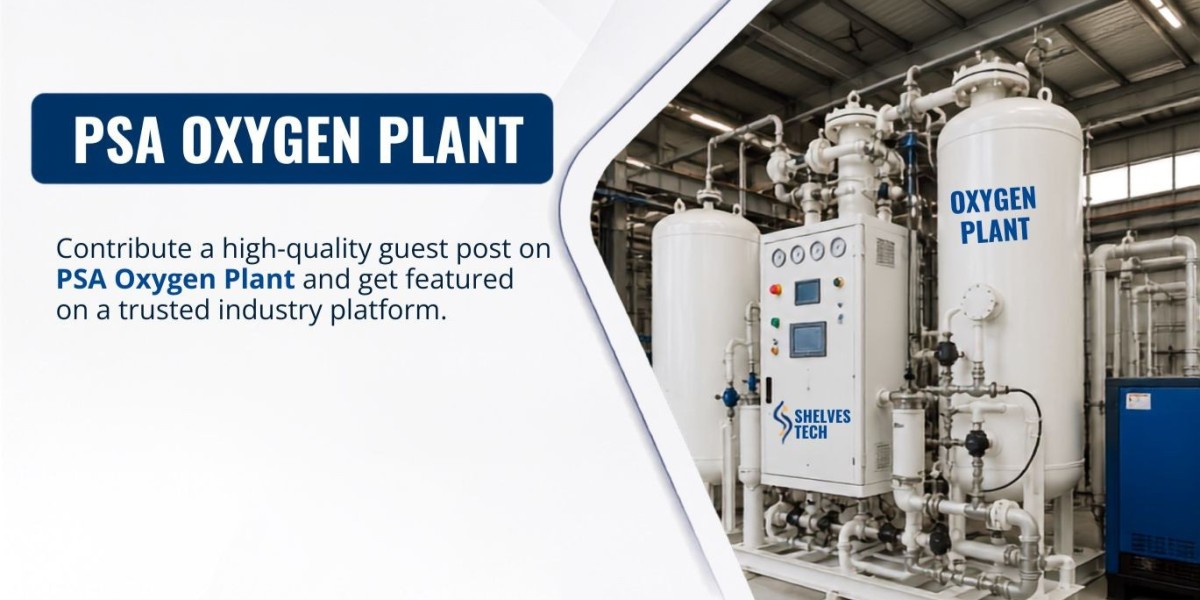
Pressure Swing Adsorption works by passing compressed air through zeolite molecular sieves that adsorb nitrogen and release oxygen. Simple in concept. Less simple to execute at consistent purity, hour after hour, for years.
Purity and Output Range
Indian Pharmacopeia standards require medical oxygen at 93% ±3% purity, and PSA systems are built to hold that band continuously, with alarms that trigger the moment output drifts outside it. Plants typically come in capacities from 100 LPM for smaller nursing homes up to 3,000+ LPM for large multi-specialty hospitals.
The Detail Buyers Skip
Most buyers size a plant around current bed count and stop there. They don't ask what happens when the hospital adds an ICU wing in three years. A plant with no expansion headroom in its air compressor and tank sizing means a full re-engineering job later — not a simple add-on. Ask about modularity before you ask about price.
Industrial-Grade Variants
For non-medical buyers — glass manufacturing, fish farming, ozone generation, metal cutting — purity requirements differ, and so does the sieve configuration. A supplier who quotes one spec for both markets hasn't actually engineered for either.
How to Evaluate Any Supplier — The Objective Test
Here's what separates a real manufacturer from a trading company with a nice brochure:
Purity guarantee in writing. A bad answer: "We generally maintain good purity." A real supplier states 93±3% with the monitoring method named.
After-sales response time. A bad answer: "We'll get back to you soon." Ask for a number — 24 hours, 48 hours — and get it in the contract.
Manufacturing vs. trading status. A bad answer dodges the question or talks about "partnerships" instead of confirming their own factory. Ask to see the manufacturing facility, virtually if not in person.
Installation and commissioning support. A bad answer assumes the buyer's electrician will figure it out. Onsite commissioning should be standard, not an add-on line item.
Spare parts availability. A bad answer promises parts "on order" from abroad. Zeolite, sieves, and valves should be stocked domestically, not shipped in six weeks after your compressor fails.
Why It Matters — Benefits Beyond the Obvious
Buyers usually hear "cost savings" and stop listening. That's a mistake, because the real risk reduction runs deeper.
Continuous, uninterrupted oxygen supply removes the single point of failure that cylinder logistics create — no truck delays, no refill negotiations during a shortage, no rationing during a surge. Lower per-unit cost over the plant's lifetime, since you're compressing ambient air rather than paying for transport, storage, and cylinder rental month after month. Purity control sits entirely in-house, which matters during audits and accreditation reviews when a hospital needs to show documentation, not just claim compliance. Reduced contamination risk, because there's no cylinder handling, no valve swapping between deliveries, no chance of a mislabeled tank reaching a ward. Smaller carbon footprint, since you've cut out the diesel-heavy transport chain that liquid oxygen and cylinder delivery both depend on. And for procurement teams specifically, one long-term capital decision replaces a recurring vendor negotiation — which means fewer emergency purchase orders landing on someone's desk at 11 PM.
That last point is where most hospitals underestimate the win. Procurement isn't just buying equipment. It's buying back time nobody currently has.
Availability Across India — A Supply Chain Insight
We manufacture and supply from our facility with pan-India delivery and installation, reaching government hospitals, private multi-specialty chains, and district health missions alike. Distance from the manufacturer isn't a formality on a shipping label — it's a real variable in how fast a breakdown gets fixed. A plant installed 200 kilometres from the nearest service technician runs a fundamentally different risk profile than one installed 20 kilometres away, no matter how good the equipment is on day one. We also export beyond India, which means our documentation, testing protocols, and quality certifications are built to standards that hold up under international scrutiny — not just what's required to pass a local inspection.
About Us
We started as a hospital infrastructure supplier before oxygen systems became a headline topic, and that background shapes how we build. We don't just manufacture PSA plants — we've fitted out entire ICU wings, so we understand how oxygen piping, bed capacity, and equipment layout actually interact on a hospital floor, not just on a spec sheet. One thing we changed early: we stopped accepting third-party zeolite batches without independent lab verification after a 2019 batch tested inconsistent under load. Every sieve batch now gets tested in-house before it goes into a plant. That's not a policy we publish for marketing. It's just what we do now.
Get a Quote From Shelves Tech
Send us your bed count, current oxygen consumption (or an estimate), and your target commissioning date. We respond within 24 hours with a capacity recommendation and pricing. Minimum order quantity starts at a single 100 LPM unit for smaller facilities — there's no requirement to over-buy capacity you don't need yet. Reach out through shelvestech.com and mention your facility type so we can route the enquiry to the right engineer directly.
Conclusion
An on-site PSA Oxygen Plant isn't a luxury upgrade anymore — it's the difference between controlling your own oxygen supply and hoping a vendor's truck arrives on time. Hospitals that treat this as infrastructure, not procurement paperwork, are the ones that stop worrying about Sunday nights. The next few years of hospital planning in India will make this decision standard, not optional.
FAQs
What purity does a PSA Oxygen Plant produce?
Indian Pharmacopeia standards call for 93% ±3%, and that's the band any credible PSA Oxygen Plant should be built to maintain, with automated alarms if it drifts.
How is a PSA plant different from liquid oxygen (LOX) storage?
PSA generates oxygen on-site from ambient air continuously. LOX requires periodic tanker deliveries and cryogenic storage, which reintroduces the exact logistics risk hospitals are trying to remove.
How long does installation take?
Depends on capacity and site readiness — smaller units can be commissioned in a few weeks, larger multi-specialty installations take longer. Any PSA Oxygen Plant supplier promising a blanket timeline without seeing your site plan is guessing.
Can one plant serve both medical and industrial needs in the same facility?
Rarely without separate sieve configurations. Medical and industrial oxygen have different purity and monitoring requirements, and treating them as interchangeable is a corner some suppliers cut.
What maintenance does a PSA plant actually need?
Routine filter changes, compressor servicing, and periodic sieve inspection. It's not zero-maintenance — any PSA Oxygen Plant manufacturer claiming otherwise is oversimplifying to close the sale.