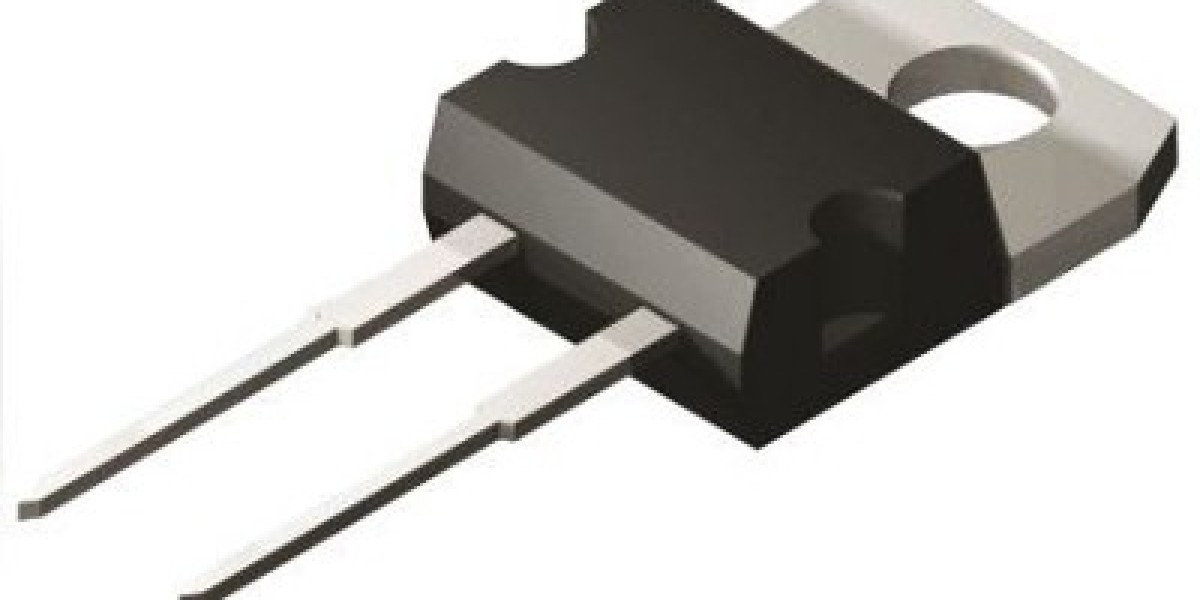

Silicon carbide (SiC) diodes have emerged as a key component in modern power electronics, enabling higher efficiency, lower energy losses, and improved system reliability. As industries continue to transition toward electrification, renewable energy, and advanced manufacturing technologies, the SiC Diodes Market is expected to experience sustained momentum. Unlike traditional silicon-based devices, SiC diodes can operate at higher temperatures, higher voltages, and faster switching frequencies, making them indispensable in demanding applications.
The Top 5 SiC Diodes Market Future Drivers highlight the technologies and industry trends that will shape the next phase of growth. These drivers reflect increasing investments in sustainable energy, transportation electrification, industrial automation, and digital infrastructure, all of which rely on efficient power conversion solutions.
1. Rapid Expansion of Electric Vehicles
The global automotive sector is undergoing a historic transformation as electric vehicles (EVs) become increasingly mainstream. This shift is one of the strongest growth drivers for the SiC Diodes Market because EV manufacturers continuously seek components that improve energy efficiency while reducing vehicle weight and charging times.
SiC diodes contribute significantly to onboard chargers, DC-DC converters, and traction inverter systems. Their ability to minimize switching losses improves overall vehicle efficiency, allowing manufacturers to maximize driving range without increasing battery size.
The expansion of public charging infrastructure also strengthens demand for SiC diodes. High-power fast chargers require advanced semiconductor components capable of handling elevated voltages and temperatures with exceptional reliability. As governments worldwide introduce stricter emission regulations and encourage electric mobility through incentives, SiC diode adoption is expected to accelerate further.
In addition, commercial electric trucks, buses, agricultural vehicles, and construction equipment increasingly utilize silicon carbide technology, expanding the addressable market beyond passenger vehicles.
2. Growing Investments in Renewable Energy Infrastructure
Renewable energy continues to reshape the global electricity landscape, creating substantial opportunities for the SiC Diodes Market. Solar farms, wind power installations, and energy storage systems all depend on efficient power conversion technologies that minimize transmission losses.
SiC diodes improve inverter efficiency by reducing switching losses while enabling compact system designs. Higher conversion efficiency directly translates into greater energy output and lower operational costs for renewable energy projects.
As countries pursue ambitious carbon neutrality goals, utility-scale renewable installations continue expanding. Battery energy storage systems are also becoming essential for stabilizing intermittent renewable generation, creating additional demand for high-performance power semiconductors.
Distributed energy resources, including rooftop solar installations and microgrids, further increase the requirement for reliable and efficient power electronics. SiC diodes support these systems by enabling better thermal management and improved long-term operational stability.
This transition toward clean energy remains one of the Top 5 SiC Diodes Market Future Drivers, ensuring consistent demand across residential, commercial, and industrial energy applications.
3. Expansion of Industrial Automation and Smart Manufacturing
Modern manufacturing facilities increasingly rely on automation technologies to improve productivity, precision, and operational efficiency. Industrial robots, programmable automation systems, variable frequency drives, and intelligent motor control equipment all require advanced power semiconductor devices.
SiC diodes enable higher switching frequencies while reducing energy losses in industrial equipment. This results in lower electricity consumption, reduced cooling requirements, and increased equipment lifespan.
The rise of Industry 4.0 has accelerated investments in digitally connected production facilities where machines operate continuously under demanding conditions. These environments require highly reliable electronic components capable of maintaining stable performance despite fluctuating operating temperatures.
Factories also seek compact equipment that occupies less floor space while delivering greater output. Since SiC-based power electronics generate less heat, manufacturers can reduce cooling hardware, resulting in lighter and more compact industrial systems.
As automation expands across automotive manufacturing, semiconductor fabrication, pharmaceuticals, food processing, and logistics, demand for SiC diodes is expected to grow steadily.
4. Increasing Demand from Data Centers and Digital Infrastructure
The digital economy continues expanding rapidly due to cloud computing, artificial intelligence, 5G networks, and edge computing. These technologies require massive data centers capable of processing enormous volumes of information while maintaining uninterrupted power availability.
Power efficiency has become a top priority for data center operators because electricity costs represent a major operational expense. SiC diodes improve the efficiency of power supplies, uninterruptible power systems (UPS), and power distribution units by minimizing electrical losses.
Higher efficiency also reduces cooling requirements, lowering operational expenses while improving sustainability. As hyperscale data centers continue expanding globally, semiconductor manufacturers are developing increasingly advanced SiC solutions optimized for high-density computing environments.
The emergence of AI computing clusters further increases power consumption, making efficient power conversion technologies even more valuable. Data center operators increasingly prioritize components that maximize energy utilization while supporting higher processing capacity.
Digital infrastructure investments therefore remain one of the most influential Top 5 SiC Diodes Market Future Drivers, supporting long-term industry expansion.
5. Advancements in Wide Bandgap Semiconductor Technology
Continuous innovation in semiconductor manufacturing remains a fundamental driver for the SiC Diodes Market. Improvements in crystal growth, wafer quality, fabrication techniques, and packaging technologies have significantly enhanced device performance while gradually reducing production costs.
Manufacturers continue investing in larger silicon carbide wafers, enabling improved manufacturing efficiency and higher production volumes. Better material quality also contributes to improved device reliability, lower defect rates, and longer operational life.
Advanced packaging solutions further enhance thermal management, allowing SiC diodes to operate effectively under increasingly demanding conditions. These technological improvements expand the range of applications where silicon carbide devices can outperform conventional silicon alternatives.
Research into next-generation power modules integrates SiC diodes with advanced power transistors, creating highly efficient solutions for electric mobility, aerospace, industrial machinery, renewable energy, and high-voltage power transmission.
As manufacturing capacity expands globally, economies of scale are expected to improve affordability, encouraging wider adoption across both established and emerging industries.
Emerging Opportunities Supporting Long-Term Growth
Beyond these primary drivers, several complementary trends will continue strengthening the SiC Diodes Market over the coming years.
Electrification across multiple industries is increasing demand for efficient power conversion systems. Rail transportation, marine propulsion, aviation electrification, and smart grid modernization all require semiconductor devices capable of handling higher voltages with exceptional reliability.
Healthcare equipment manufacturers are also adopting advanced power electronics to improve diagnostic systems and medical imaging equipment. Telecommunications infrastructure supporting expanding 5G networks requires increasingly efficient power supplies, creating another avenue for market growth.
Additionally, governments worldwide continue encouraging energy-efficient technologies through regulations, sustainability initiatives, and infrastructure investments. These policies indirectly support wider adoption of silicon carbide devices across multiple industrial sectors.
The integration of artificial intelligence into energy management systems also enhances opportunities for SiC-based power electronics by enabling smarter, more efficient electrical networks capable of dynamically optimizing power distribution.
Conclusion
The future of the SiC Diodes Market is closely tied to the ongoing transformation of global energy systems, transportation, manufacturing, and digital infrastructure. As industries pursue higher efficiency, lower emissions, and improved operational performance, silicon carbide technology is becoming an increasingly essential component of modern power electronics.
The Top 5 SiC Diodes Market Future Drivers electric vehicle expansion, renewable energy investments, industrial automation, digital infrastructure growth, and continuous semiconductor innovation—collectively create a strong foundation for long-term market development. Together, these drivers are expected to accelerate technology adoption across diverse industries while encouraging continued investment in research, manufacturing capacity, and advanced power electronic solutions.
As performance requirements continue rising across global industries, SiC diodes will remain at the forefront of efficient power conversion, enabling smarter, cleaner, and more reliable electrical systems for the future.