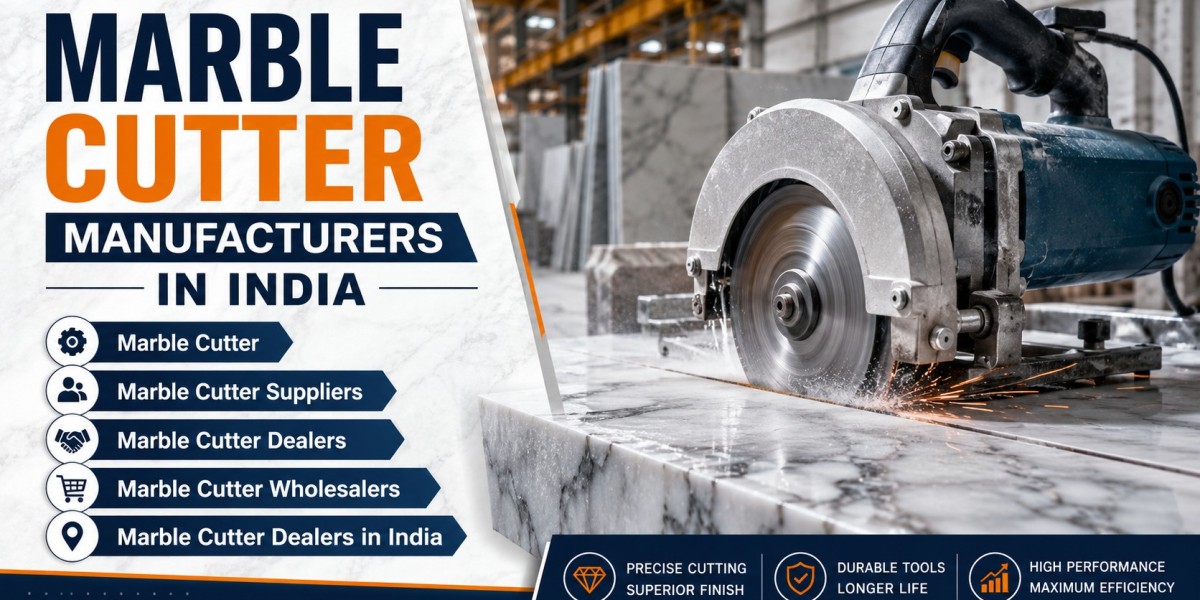

A Cheap Cutter Becomes Expensive After the First Bad Line
Halfway through a site job, the blade starts shaking, the edge chips, and the contractor blames the stone.
That is usually where the wrong Marble Cutter shows its real cost. Not at the counter. It shows up when one operator needs 70–80 straight cuts in a day and the machine starts heating, pulling sideways, or chewing the tile edge. India’s construction materials market is expected to reach USD 82.5 billion by 2028, so professional cutting work is not slowing down. Buyers who still compare only the lowest rate are already inviting margin loss.
The Spec Detail Most Buyers Skip Before Ordering
Size Is Not a Catalogue Choice
Ultra Touch lists marble cutter options in 4 inch, 5 inch, and 6 inch sizes, including 110 mm, 125 mm, and 150 mm models. That detail matters because blade diameter decides cutting depth, handling weight, and operator fatigue.
Most buyers ask, “Is it powerful?” That is too loose. Ask what it cuts daily: marble, granite, tile, sandstone, or mixed stone. Here’s the part buyers miss: the base plate must stay flat after repeated use, because a small tilt spoils edge accuracy faster than many motor issues.
Dust Control Is Part of Tool Selection
Speed is useful only when the blade, motor, and operator control stay balanced. A supplier who hides behind “heavy duty” without giving fitment details is wasting your time.
Respirable crystalline silica is a serious cutting risk; OSHA sets the permissible exposure limit at 50 μg/m³ as an 8-hour time-weighted average. Which means wet cutting habits, dust control, guards, and PPE should be discussed before purchase, not after a labour complaint.
Five Checks Before You Trust Any Supplier
Model fit: Good suppliers explain 110 mm, 125 mm, and 150 mm suitability. Bad answer: “All models do the same work.”
Warranty handling: Ask what happens if switches, bearings, or base plates fail. Bad answer: “We will see after complaint.”
Packaging: India ranked 38th in the World Bank’s Logistics Performance Index 2023, but poor cartons still damage site tools. Bad answer: no clear packing standard.
Spare parts: Carbon brushes, guards, flanges, and switches matter. Bad answer: “Parts can be arranged later.”
Landed value: Buying only on the lowest quote is lazy procurement. Bad answer: a rate sheet with no service policy.
Where the Right Marble Cutter Protects Your Margin
A better cutter does not just cut stone. It protects working time, replacement cost, and buyer confidence.
Cleaner edges reduce rejection risk. The global marble market was valued at USD 70.42 billion in 2024, and premium projects are less forgiving about chipped edges.
Correct size reduces fatigue. Which means fewer rushed cuts during long shifts.
Stable blade movement protects consumable cost. Vibration wears blades unevenly.
Dust planning protects reputation. Nobody tells you this at the counter, but unsafe dry cutting can become a worker-safety issue.
Consistent supply protects dealer trust. Dealers lose customers when replacement conversations drag.
Better stock planning protects cash flow. The India power tools market is projected to grow from USD 1.85 billion in 2025 to USD 3.8 billion by 2035, so availability will matter as much as price.
Why Indian Buyers Should Look Beyond the Nearest Quote
India has real stone movement behind cutter demand. CAPEXIL notes that India has over 200 granite shades and accounts for more than 20% of global granite resources.
For buyers searching Marble Cutter Manufacturers in India, the practical question is not only location. It is supply discipline. North India buyers may care about fast replenishment around Delhi NCR and Rajasthan stone belts; western and southern buyers may care more about transport handling and SKU continuity.
That is why Marble Cutter Suppliers, Marble Cutter Dealers, and Marble Cutter Wholesalers should judge availability by dispatch reliability, not catalogue thickness. A thick catalogue with weak stock is just decoration. Marble Cutter Dealers in India need predictable supply.
What We Learned From Real Tool Movement
At Ultra Touch, we work with power tools for buyers who cannot afford casual quality. We have been active in power tools since 1995, and that operating history matters when dealers want continuity, not one-season supply.
We learned one thing the hard way: a marble cutter carton can look fine outside, but transport vibration can still loosen small fittings if packing and pre-dispatch checks are treated casually.
We prefer a clearer discussion before dispatch because a wrong cutter sent quickly is still a wrong cutter.
Send us your required cutter size, monthly quantity, target market, delivery city, and whether the tool will cut marble, tile, granite, or mixed stone.
At Ultra Touch, we usually respond to B2B enquiries within 24 working hours. MOQ starts from 1 carton per selected size for standard B2B discussion; final carton quantity depends on SKU, stock position, and dispatch location. We will confirm model fit, pricing, packing, and supply schedule before billing.
For faster quotation, send size requirement, quantity, GST details, delivery pincode, and preferred dispatch timeline.
Conclusion
A Marble Cutter should be judged by cutting stability, size suitability, spare support, and dispatch reliability. The wrong machine creates chipped material, angry operators, and dealer-level disputes. With the global marble market projected to reach USD 92.23 billion by 2030, buyers who evaluate tools properly will protect both reputation and margin.
FAQs
1. Do dealers need to stock all sizes?
Not always. Marble Cutter Dealers should stock according to local demand. A tile-heavy market may move more 110 mm models, while a stone-heavy market may need larger sizes. Slow-moving stock can block cash if the mix is wrong.
2. What should Marble Cutter Wholesalers ask before bulk purchase?
Marble Cutter Wholesalers should ask for size-wise availability, carton packing, replacement policy, spare parts, and dispatch schedule. Price matters, but delayed replacement support can eat the margin saved on purchase.
3. Are Marble Cutter Manufacturers in India suitable for B2B buyers?
Yes, if they can prove consistency in supply, model clarity, and after-sales handling. Marble Cutter Manufacturers in India are useful for dealers and wholesalers who want faster communication and India-focused logistics.
4. How do dealers reduce customer complaints in India?
They should sell the right size for the customer’s actual work, not the model with the highest margin. Indian dealers also need to explain blade compatibility and basic safety practice before the sale.
5. Can one Marble Cutter handle marble, granite, and tiles?
Some models can handle mixed use with the right blade and operator control. Still, granite is harder on blades and motors than standard tile work. Suppliers should be clear about use limits instead of promising “all material, no problem.”