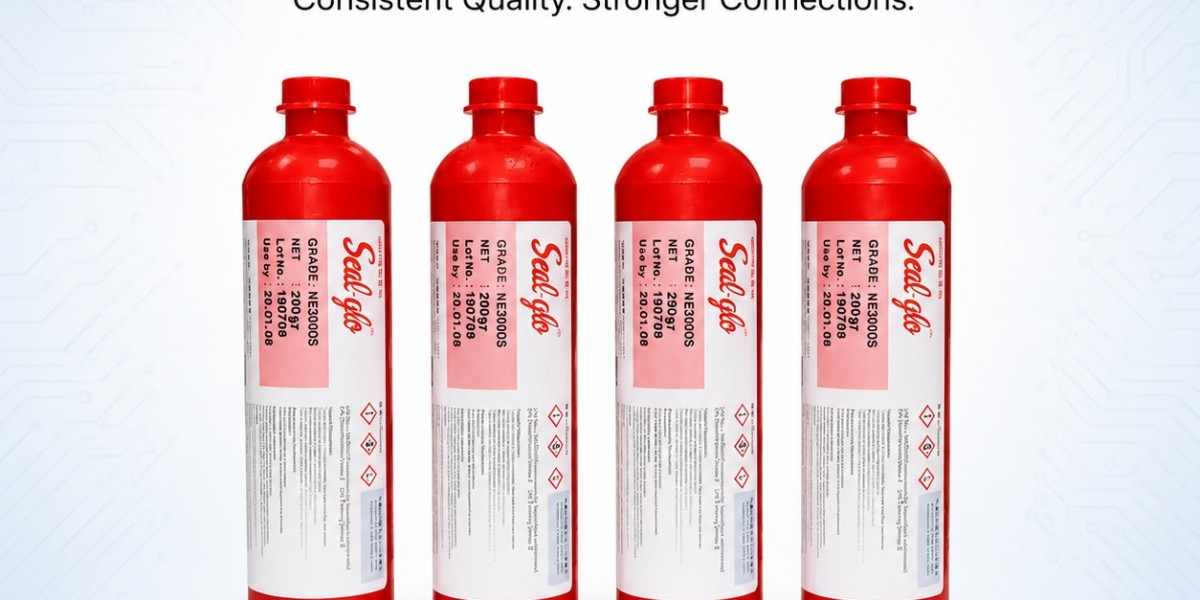

A production manager at a Faridabad EMS unit asked one question last month that most suppliers dread answering honestly. Here's the question: how do you know if your solder paste manufacturer is actually a manufacturer, and not just someone repackaging a batch they never formulated? Most procurement teams never ask for it. That's the real problem. They compare price per kilogram, glance at a brochure, place the order, and move on to the next line item. Nobody checks the actual origin of the batch. Nobody asks who controlled the reflow trials before the paste shipped. Three months have passed. Viscosity drifts without warning. Print definition on fine-pitch boards starts slipping, and stencil settings that worked fine last quarter suddenly don't. Engineers get blamed first, usually. The machine gets recalibrated, then recalibrated again. Nobody traces it back to the one place it actually started — a solder paste manufacturer who was never really manufacturing anything, just relabeling someone else's chemistry. And yet, that single unanswered question is exactly where sourcing decisions go wrong, long before the invoice ever gets flagged.
The Spec Line That Kills Yield Six Months Later
Particle size distribution gets ignored constantly. Buyers fixate on alloy composition — SAC305, SAC405 — and skip the mesh classification entirely. Type 3 versus Type 4 particle size changes print consistency on fine-pitch boards more than most spec sheets admit.
Lead-Free Solder Paste — SAC305 remains standard for RoHS-compliant consumer and industrial assemblies.
Water Soluble Solder Paste — faster cleaning cycles, but flux residue turns corrosive if wash steps lag by even a few hours.
High Temperature Solder Paste — specified where thermal cycling repeats, automotive control units especially.
Surface Mount Solder Paste — fine-mesh formulations engineered for dense 01005 and 0201 component layouts.
Working life and open time get buried in footnotes. Ask for both numbers in writing, not verbally.
Ask This Before You Ask About Price
Five questions will tell you almost everything you need to know about a supplier. If the answer to even one comes back vague, that's your signal to pause the conversation, not push past it.
Who formulated this paste — you, or someone else? Bad answer: "We're a leading solder paste manufacturer" with no factory address offered.
What's your average viscosity variance across three consecutive lots? Bad answer: "Within spec." That's not a number, that's a dodge.
Can I get COA documentation matching the actual batch, not a template? Bad answer: silence, or a PDF with no lot number.
What happens if paste arrives outside cold-chain range? Bad answer: "It should still be fine." Should isn't a policy.
Do you hold regional stock, or import on order? Bad answer: "We can arrange it" — meaning a six-week wait nobody mentioned upfront.
Where the Money Actually Hides in a Solder Paste Contract
Nobody budgets for requalification time. That's the mistake. Verified batch consistency protects your existing reflow profile, so lines don't need re-tuning every delivery. Documented particle size distribution reduces bridging defects on fine-pitch boards, which matters more as component density climbs. Transparent COA paperwork shortens your own audit prep, especially for automotive and medical accounts where traceability gets checked line by line.
Regional inventory from established solder paste suppliers in India closes the import-delay gap that catches procurement teams off guard every monsoon season. And working with solder paste dealers who disclose manufacturing origin — rather than relabeling imported stock — avoids a compliance conversation you don't want during ISO recertification. None of that shows up on a comparison spreadsheet. All of it shows up on your production floor.
About Us
We're an authorized direct importer and stocking wholesaler of SMT equipment, soldering systems, and solder paste based out of Noida, working across India's PCB assembly and EMS sector. We don't just supply solder paste manufacturers' formulations — we keep the equipment and consumables ecosystem around it stocked too: printers, stencil cleaners, dry cabinets, ESD protection. That integration is deliberate. We've watched too many factories chase paste quality while ignoring the printer settings that undo it.
Conclusion
Solder paste sourcing rarely fails because of alloy choice. It fails when nobody asks who manufactured the batch, under what viscosity tolerance, with what shelf life — and that question needs answering before the invoice arrives, not after a defect report lands. So ask it early. Send us your current paste specification, monthly consumption volume, and board density — 0201 or standard pitch. We reply within one business day, with trial orders starting at 5 kg and no sample fee for verified EMS or OEM accounts.
FAQs
Is there an actual difference between solder paste manufacturers and solder paste suppliers in India?
Yes. Manufacturers formulate and control batch chemistry. Suppliers may import, relabel, or distribute someone else's formulation. Ask which one you're buying from before you sign anything.
Can solder paste dealers provide trial quantities before a bulk commitment?
Most legitimate ones offer 1–5 kg trial lots. A dealer refusing any sample at all is worth questioning before you commit to volume pricing.
Does water soluble solder paste need different storage than no-clean formulations?
Yes — tighter humidity control, shorter open time. Skip that discipline and flux residue issues show up within weeks.
Is high temperature solder paste only relevant for automotive boards?
Mostly, though some industrial and aerospace applications specify it too. Check your thermal cycling requirement before assuming standard SAC305 holds.
How do I confirm a supplier isn't repackaging imported stock under their own name?
Ask for the original manufacturer's name and matching batch documentation. Refusal to disclose that means you're dealing with a distributor, not a producer.