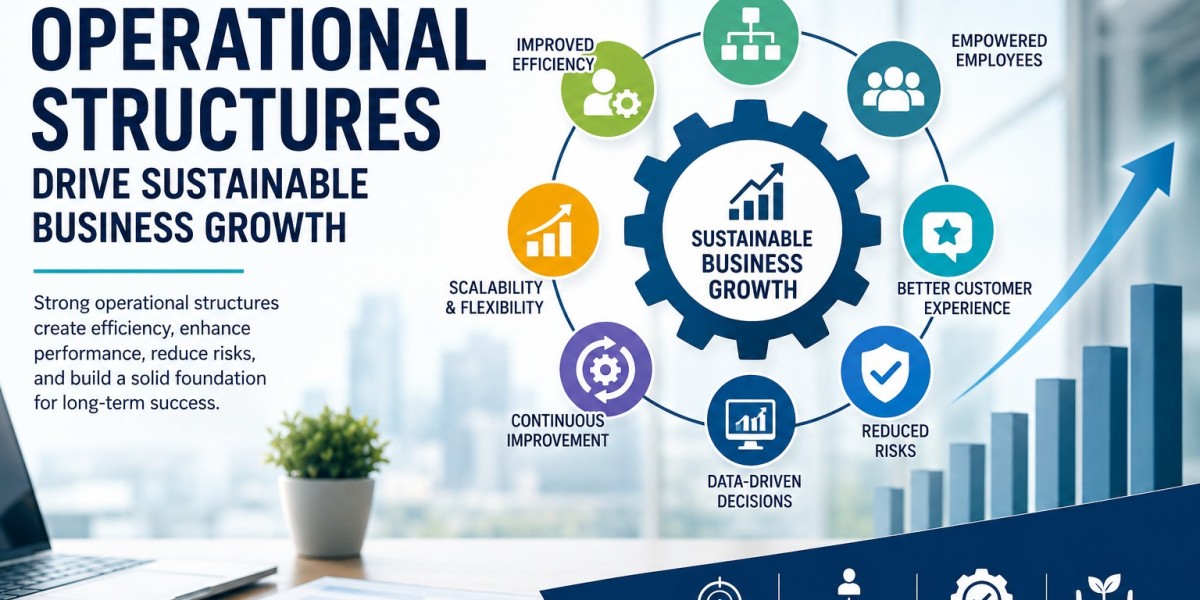

How Strong Operational Structures Drive Sustainable Business Growth
In today's competitive business environment, growth is often viewed as the ultimate measure of success. However, rapid expansion without a solid operational foundation can create significant challenges. Many organisations experience increased workloads, communication breakdowns, declining service quality, and rising costs as they grow. While sales and revenue are important indicators of progress, sustainable success depends heavily on the systems and processes operating behind the scenes.
This is where Operational Structures become essential. Strong operational frameworks provide the foundation that allows businesses to scale efficiently, maintain quality standards, and adapt to changing market conditions. Whether a company is a start-up, a growing SME, or an established enterprise, investing in effective operations creates the stability required for long-term success.
For businesses seeking sustainable growth, professional consultants and experienced business advisors frequently emphasise the importance of strengthening operational foundations before pursuing aggressive expansion strategies. A well-structured operational model enables organisations to grow with confidence while maintaining control over performance, resources, and customer satisfaction.
Understanding Operational Structures in Business
Operational structures refer to the systems, processes, roles, responsibilities, and workflows that govern how a business functions on a daily basis. They define how work is completed, how decisions are made, and how different departments collaborate to achieve organisational goals.
Strong operational structures typically include:
Clearly defined organisational roles
Standardised business processes
Effective communication channels
Performance monitoring systems
Resource management frameworks
Risk management procedures
Technology and automation tools
These components work together to create consistency, efficiency, and accountability throughout the organisation.
Without structured operations, businesses often rely on informal processes that become increasingly difficult to manage as the company grows.
Why Sustainable Growth Requires More Than Increased Sales
Many businesses focus heavily on sales growth while overlooking operational readiness. Although increased revenue is positive, growth can quickly become problematic when operational capabilities fail to keep pace.
For example, a company may experience a significant increase in customer demand but struggle to fulfil orders efficiently. Delivery delays, customer complaints, employee burnout, and declining service quality can soon follow.
Sustainable growth occurs when revenue expansion is supported by operational capacity. Businesses need systems that can handle increased activity without sacrificing performance or customer experience.
This is why Operational Structures play such a critical role. They ensure that growth is manageable, controlled, and profitable rather than chaotic and costly.
Enhancing Efficiency Through Structured Processes
Efficiency is one of the most valuable benefits of strong operational systems. When employees understand their responsibilities and follow established processes, work is completed more effectively and consistently.
Structured processes help organisations:
Reduce duplication of effort
Eliminate unnecessary tasks
Improve productivity
Minimise errors
Accelerate decision-making
Improve customer service delivery
For instance, a business with documented workflows can onboard new employees more quickly because expectations and procedures are clearly defined. This reduces training time and improves consistency across teams.
As organisations grow, these efficiency gains become increasingly important. Small inefficiencies that may seem insignificant today can create substantial costs when multiplied across larger operations.
Supporting Scalability and Expansion
One of the greatest challenges growing businesses face is scalability. Expansion often introduces new employees, customers, products, suppliers, and operational complexities.
Without strong foundations, growth can overwhelm existing systems.
Effective Operational Structures create a scalable framework that supports expansion while maintaining stability. Standardised procedures and clearly defined responsibilities enable businesses to replicate successful practices across departments, locations, and teams.
Scalable operations allow organisations to:
Manage larger customer volumes
Expand into new markets
Introduce new products or services
Increase workforce size efficiently
Maintain consistent service quality
Businesses that prioritise operational readiness often find it easier to adapt and expand without disrupting existing operations.
Improving Employee Performance and Accountability
Employees perform best when expectations are clear. Ambiguity often leads to confusion, reduced productivity, and workplace frustration.
Strong operational frameworks establish:
Clear job responsibilities
Defined reporting structures
Performance measurement systems
Communication protocols
Accountability standards
When team members understand their roles and objectives, they can focus on delivering results rather than navigating uncertainty.
Additionally, performance management systems allow leaders to identify strengths, address challenges, and support employee development more effectively.
Professional business consultants frequently recommend operational improvements because they create environments where employees can work more confidently and productively.
Strengthening Customer Experience
Customer satisfaction remains one of the most important drivers of long-term business success. Regardless of industry, customers expect consistency, reliability, and quality service.
Operational excellence directly influences customer experience.
Well-designed operational systems help businesses:
Respond faster to enquiries
Deliver products on time
Resolve issues efficiently
Maintain quality standards
Meet customer expectations consistently
When processes are organised and predictable, customers enjoy a smoother experience. This often leads to stronger customer loyalty, positive reviews, and increased referrals.
In contrast, weak operational practices frequently result in service disruptions that damage reputation and hinder growth opportunities.
Reducing Business Risks
Every business faces operational risks. These may include compliance failures, process breakdowns, financial inefficiencies, cybersecurity threats, or supply chain disruptions.
Strong operational structures provide safeguards that reduce these risks.
Key risk management benefits include:
Improved regulatory compliance
Better financial oversight
Enhanced data security
Stronger internal controls
Faster issue identification
More effective contingency planning
Businesses with robust operational frameworks are often better prepared to respond to unexpected challenges. This resilience becomes especially valuable during economic uncertainty or periods of rapid change.
Leveraging Technology for Operational Excellence
Technology has transformed how businesses manage operations. Modern tools allow organisations to automate routine tasks, analyse performance data, and improve collaboration across teams.
Common operational technologies include:
Customer relationship management systems
Enterprise resource planning software
Project management platforms
Payroll and accounting systems
Workflow automation tools
Data analytics solutions
However, technology alone cannot solve operational problems. Businesses must first establish effective processes before implementing digital solutions.
Strong operational structures ensure that technology investments deliver maximum value by supporting clearly defined workflows and objectives.
Creating a Culture of Continuous Improvement
Sustainable growth requires ongoing adaptation. Markets evolve, customer expectations change, and competitive pressures increase over time.
Successful organisations view operational improvement as a continuous process rather than a one-time project.
A culture of continuous improvement encourages teams to:
Identify inefficiencies
Suggest process enhancements
Measure performance regularly
Learn from challenges
Embrace innovation
By regularly reviewing operations, businesses can maintain competitiveness while improving efficiency and service quality.
Professional advisors often emphasise continuous improvement because it helps organisations remain agile and responsive in changing business environments.
The Strategic Value of Operational Consultants
Many organisations recognise the importance of operational improvement but struggle to identify where changes are needed. This is where experienced consultants can provide significant value.
Business consultants bring external expertise, objective analysis, and industry best practices that help organisations strengthen their operational foundations.
Professional consulting services may assist with:
Process mapping and optimisation
Organisational design
Performance measurement
Change management
Technology implementation
Risk assessment
Growth planning
By partnering with knowledgeable professionals, businesses can accelerate operational improvements and position themselves for sustainable expansion.
Key Signs Your Business Needs Stronger Operational Structures
Businesses may benefit from operational improvements if they experience:
Frequent workflow bottlenecks
Rising operational costs
Communication challenges
Inconsistent customer experiences
Employee confusion regarding responsibilities
Difficulty scaling operations
Missed deadlines or performance targets
Recognising these warning signs early allows organisations to address underlying issues before they impact long-term growth.
Conclusion
Long-term success is rarely achieved through sales growth alone. Sustainable business performance depends on the strength of the systems, processes, and people supporting daily operations.
Effective Operational Structures provide the framework businesses need to improve efficiency, manage risks, support employees, enhance customer experiences, and scale successfully. Organisations that invest in operational excellence create a stronger foundation for future growth while maintaining stability and control.
As markets continue to evolve, businesses that prioritise Operational Structures will be better equipped to adapt, compete, and thrive. Whether through internal improvements or guidance from experienced consultants and professional advisors, strengthening operational foundations remains one of the most valuable investments any organisation can make for sustainable business growth.