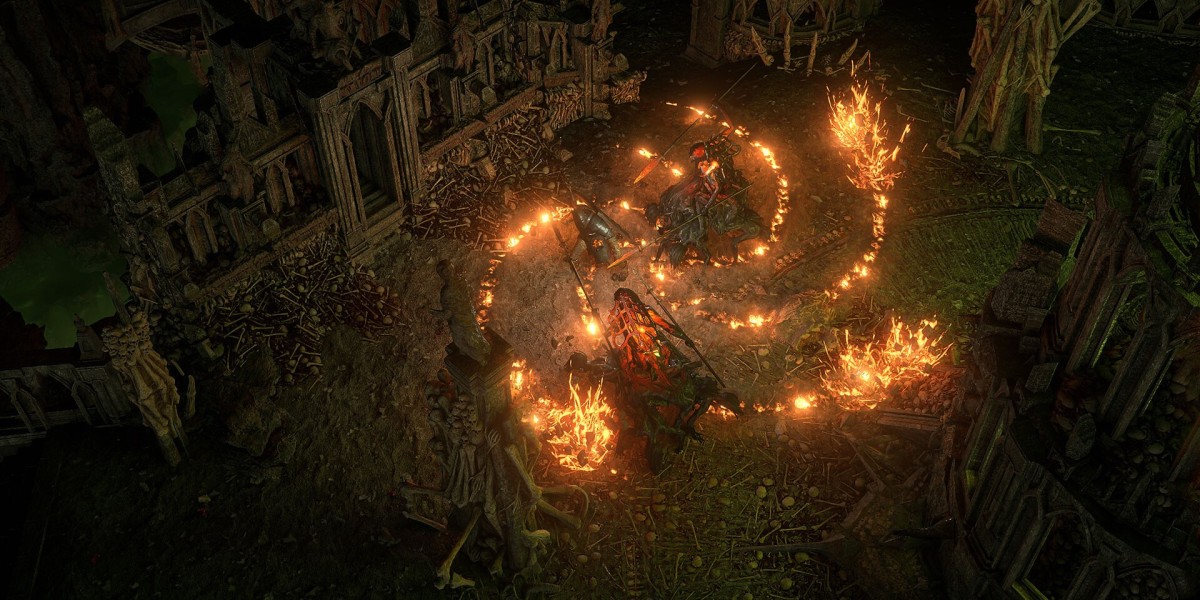

Playing Spark Stormweaver feels a bit messy at first, in a good way. You throw out Sparks, they bounce through halls, and half the screen starts crackling before you've even seen every monster. The build doesn't need some strange trick to get going, but it does reward smart upgrades, especially when you start using POE 2 Currency to improve your staff, Energy Shield pieces, and resistance gear. Early on, your job is simple: keep casting, keep moving, and don't let your mana bar hit rock bottom.
How the Build Actually Plays
Spark is the main skill, and it stays that way for most of the journey. It works best in tight spaces, doorways, boss arenas with walls, and any place where the projectiles can bounce back into enemies. You'll usually pair it with supports like Unleash, Rapid Casting, Considered Casting, and a projectile speed option. That setup gives you a steady flood of lightning without making the skill feel clunky. Against packs, you can often cast once or twice and move on. Against bosses, you'll need to layer your tools instead of standing still and hoping Spark does all the work.
Gear That Matters Most
Your weapon does a lot of the heavy lifting. Look for spell damage, lightning damage, mana regeneration, and later, cast speed if you can get it without giving up too much. A weak staff makes the whole build feel flat, so upgrade it whenever your damage starts to fall behind. For armour, Energy Shield is the priority. You're not trying to tank hits with armour, and you're not dodging everything through evasion. You want strong Energy Shield rolls, capped elemental resistances, movement speed on boots, and enough mana recovery to keep Spark flowing. Rings and amulets can fix missing attributes, but don't ignore mana regeneration there either.
Skills and Boss Setup
The support package is what turns Spark from a basic spell into a proper screen-clear tool. Orb of Storms is great for adding damage while you keep casting nearby. Frost Bomb helps by applying exposure, which makes enemies take more elemental damage. Elemental Weakness is another strong layer, especially when rares or bosses start resisting your hits. Mana Tempest is powerful, but it can drain you fast, so don't press it just because it's available. In a boss fight, a smooth pattern is Frost Bomb, Orb of Storms, curse, Mana Tempest, then Spark while repositioning. If you stay planted too long, you'll feel how fragile an Energy Shield caster can be.
Passives and Late Game Direction
In the campaign, take practical nodes first. Spell damage, cast speed, mana regeneration, and Energy Shield are all useful right away. There's no need to rush fancy scaling if your mana can't keep up or your shield disappears in one hit. As you move into the mid game, elemental damage clusters and Orb-related passives start to make more sense. Later, many players shift toward a lightning and cold version. That can mean damage conversion, freeze and chill investment, and more critical strike scaling. It's safer than pure lightning because frozen enemies don't swing back. Just make sure your setup can still shock, since Stormweaver gets a lot of value from shock-based scaling.
Final Thoughts
Spark Stormweaver is a strong pick if you like active caster gameplay without juggling ten buttons every fight. It clears well, bosses respect it when your setup is layered properly, and it scales nicely with gear. The build does ask you to pay attention to mana and positioning, though. If you burn everything inside Mana Tempest and then get clipped, things can go wrong quickly. Upgrading key slots matters, and players who compare prices or look for POE 2 Chaos Orbs for sale often do it to speed up weapon, ring, and Energy Shield improvements. Keep the basics solid, upgrade in small steps, and Spark will carry a long way.