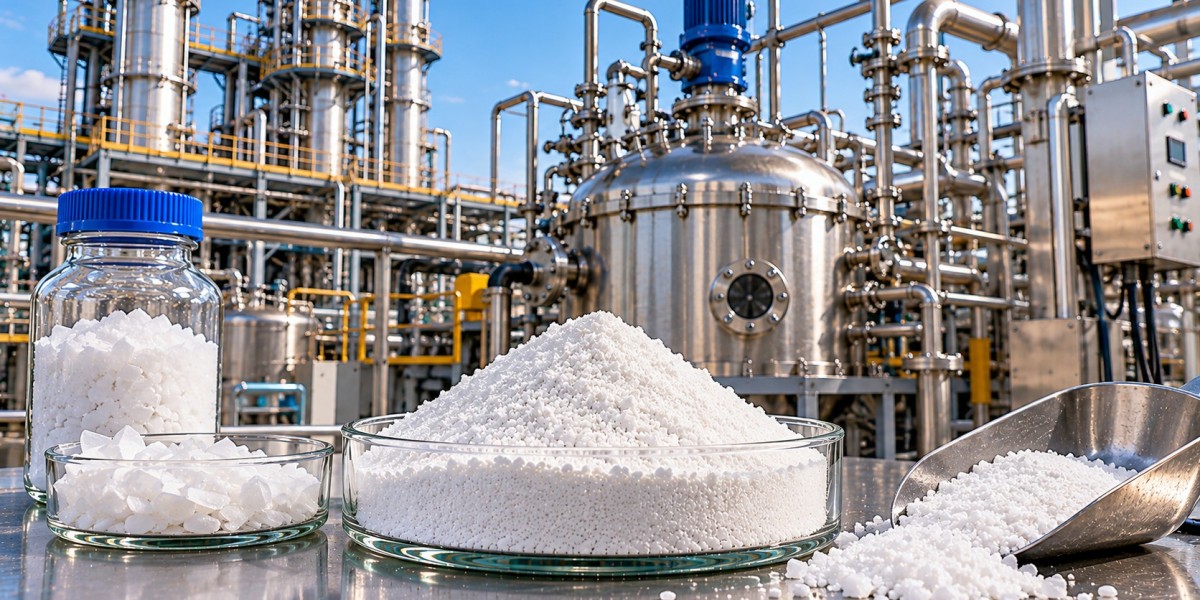

Anyone weighing an aromatic chemicals project needs a clear read on Trimellitic Anhydride Production Cost before committing capital. TMA is a white, flaky intermediate that ends up mostly in high-temperature plasticizers for wire and cable, plus polyester resins, coatings and polyamide-imide polymers. It's a niche product with a short list of producers, and the economics depend heavily on one hydrocarbon feedstock.
So why should brokers, advisers and lenders care about the detail? Because TMA is a derivative of a derivative. Its price follows pseudocumene, which follows aromatics and crude oil, and the plant sits in the middle absorbing every swing. A project that looks comfortable on a spread assumption can lose it quickly.
Understanding Trimellitic Anhydride Production Cost: What the Report Covers
A production cost study starts with the process and builds outward. It follows the material from feedstock intake through oxidation, dehydration and purification to packed flakes, then assigns a cost to everything consumed along the way. Raw materials, utilities, site infrastructure, machinery, manpower, packaging and transportation each get their own treatment. The goal of a Trimellitic Anhydride Production Cost study is to show where each unit of spend lands, and how much of it is feedstock versus energy and corrosion-resistant equipment.
That layout is what makes a Trimellitic Anhydride Production Cost Report useful for comparison. You can put one catalyst system against another, or one location against another, without guessing. Corporate advisers often use it to check whether a planned capacity lines up with plasticizer and resin demand in the target region.
Raw Materials Required
Pseudocumene, chemically 1,2,4-trimethylbenzene, is the main feedstock and it dominates the cost structure. It's recovered from the C9 aromatic fraction of reformate and steam cracker streams, so its availability depends on refinery and petrochemical operations nearby. Purity matters, since isomers and other aromatics in the feed cause by-products and colour problems later.
Air supplies the oxygen for the reaction. Acetic acid acts as the reaction solvent, and a catalyst system, usually cobalt and manganese salts with a bromine promoter, drives the oxidation. Some acetic acid is lost through combustion and vent streams, so it's a genuine consumable. Water, steam and cooling are steady utility inputs. Packaging is a smaller line, typically bags or bulk containers, though TMA is moisture sensitive and needs sealed packing.
The Industrial Production Process
Commercial TMA is made by liquid-phase oxidation of pseudocumene with air. It's a demanding reaction, hot and corrosive, and it doesn't tolerate poor control.
Pseudocumene, acetic acid and catalyst are fed into an oxidation reactor operated at elevated temperature and pressure. Air is bubbled through, and all three methyl groups are oxidized to carboxylic acids, giving trimellitic acid. The reaction is exothermic, so heat removal is part of the design. The product slurry is cooled, and crude trimellitic acid is crystallized and separated by centrifuge or filter. Mother liquor with catalyst and solvent is recycled, and the off-gas is treated to remove organics and bromine compounds.
The acid is then converted to the anhydride by heating, which drives off water. Crude anhydride goes through vacuum distillation or a similar purification step to remove colour bodies and residual acids, and the pure melt is formed into flakes or cast into other solid forms. Handling is fast and dry, because the anhydride picks up moisture and turns back into acid.
Older routes using nitric acid oxidation exist, but the air oxidation route is the industrial standard. It's cleaner and fits large-scale continuous operation better.
Capital Investment and Plant Setup Cost Factors
Land and site come first. A TMA plant needs power, steam, cooling water, safe storage for flammable aromatics and an effluent system, with access to a pseudocumene supply as the biggest location driver. Being inside or next to an aromatics complex can cut feedstock logistics noticeably.
Machinery is the heavy block of capital. Oxidation reactors, crystallizers, centrifuges, dehydration and distillation units, flakers, and off-gas treatment all add up. Bromide and acetic acid are highly corrosive at process temperatures, so titanium or high-grade alloys are needed in many areas, and that pushes the price well above ordinary stainless steel. Engineering, installation and commissioning sit on top. Safety systems for flammable vapour, dust and hot melt handling aren't optional.
Working capital gets underestimated. Feedstock stocks, catalyst inventory, finished goods and customer receivables all tie up cash. A realistic trimellitic anhydride plant setup cost estimate has to carry that buffer next to the visible build cost.
Operating Cost Factors
Variable costs follow production volume. Pseudocumene leads by a wide margin, followed by acetic acid make-up, catalyst, steam, electricity, cooling water and packaging. Because feedstock is such a large share of spend, any change in aromatics pricing moves Trimellitic Anhydride Production Cost faster than anything else on the sheet.
Fixed costs stay put regardless of output. Salaries for operators, engineers and supervisors, insurance, licences, safety and environmental compliance, and site overheads belong here. The plant runs continuously with modest headcount, but the skills needed to run a corrosive high-temperature unit safely aren't easy to replace.
Maintenance is a steady drain. Corrosion, fouling and wear on reactors, heat exchangers and centrifuges mean regular inspection and part replacement, and unplanned downtime in a continuous plant is expensive. Depreciation spreads the equipment cost over its life, and financing charges depend on the debt share. A careful trimellitic anhydride production cost analysis separates each of these so lenders can see the real break-even.
What Pushes Cost Up or Down
Feedstock pricing is the biggest lever, full stop. Pseudocumene follows crude oil and the wider aromatics market, and it can also be pulled toward other uses such as gasoline blending. A producer with integrated or long-term supply holds an edge that no amount of process cleverness can match.
Yield and solvent loss come next. Every bit of pseudocumene burned to carbon oxides or acetic acid lost in vent gas is money out. Better catalyst systems, tighter temperature control and efficient recovery reduce that waste. Technology also affects product colour, and colour decides which buyers will take the material. Scale spreads fixed cost, though only if plasticizer and resin customers can absorb the volume. A large unit running half empty is worse than a smaller one that stays full.
Region shapes the rest. Energy tariffs, labour rates, environmental limits, freight and taxes vary widely, so the same design can produce a very different trimellitic anhydride manufacturing plant cost depending on where it's built.
Frequently Asked Questions
Q: What's the biggest cost in making trimellitic anhydride?
Pseudocumene. Nothing else comes close.
Q: Who actually buys TMA?
Mostly plasticizer makers, who convert it into trimellitate esters for heat-resistant PVC used in wire, cable and automotive interiors. Polyester and alkyd resin producers, powder coatings and polyamide-imide makers take much of the rest. Demand therefore rides on the electrical, auto and construction sectors. It's smart to check customer concentration before trusting any volume assumption, because a few large buyers can swing a whole plant's utilization.
Q: Why are there so few producers?
Barriers are high. The process is technically demanding and capital heavy, and technology know-how isn't freely licensed.
Q: How does a detailed study help before I invest?
It replaces rough guesses with structured numbers. A proper look at Trimellitic Anhydride Production Cost shows how sensitive the project is to feedstock prices, where break-even sits and how financing choices change returns. It also exposes weak assumptions early, which is when they're cheapest to fix.
Q: What should I check first when reviewing a proposal?
Start with pseudocumene supply and pricing, then look at the technology source and claimed yield. After that, check energy and steam costs. If the quoted trimellitic anhydride plant setup cost looks unusually low, ask what's been left out, especially corrosion-resistant materials, off-gas treatment, working capital and commissioning.
Why a Professional Report Matters
Specialty chemical plant decisions are hard to reverse. Once the oxidation unit is built and feedstock contracts are signed, you're in for years. That's why the quality of the numbers matters so much.
A well-prepared Trimellitic Anhydride Production Cost study gives investors, advisers and lenders a shared factual base to work from. It lets you stress test feedstock scenarios, negotiate financing and catch weak assumptions before they turn into losses.